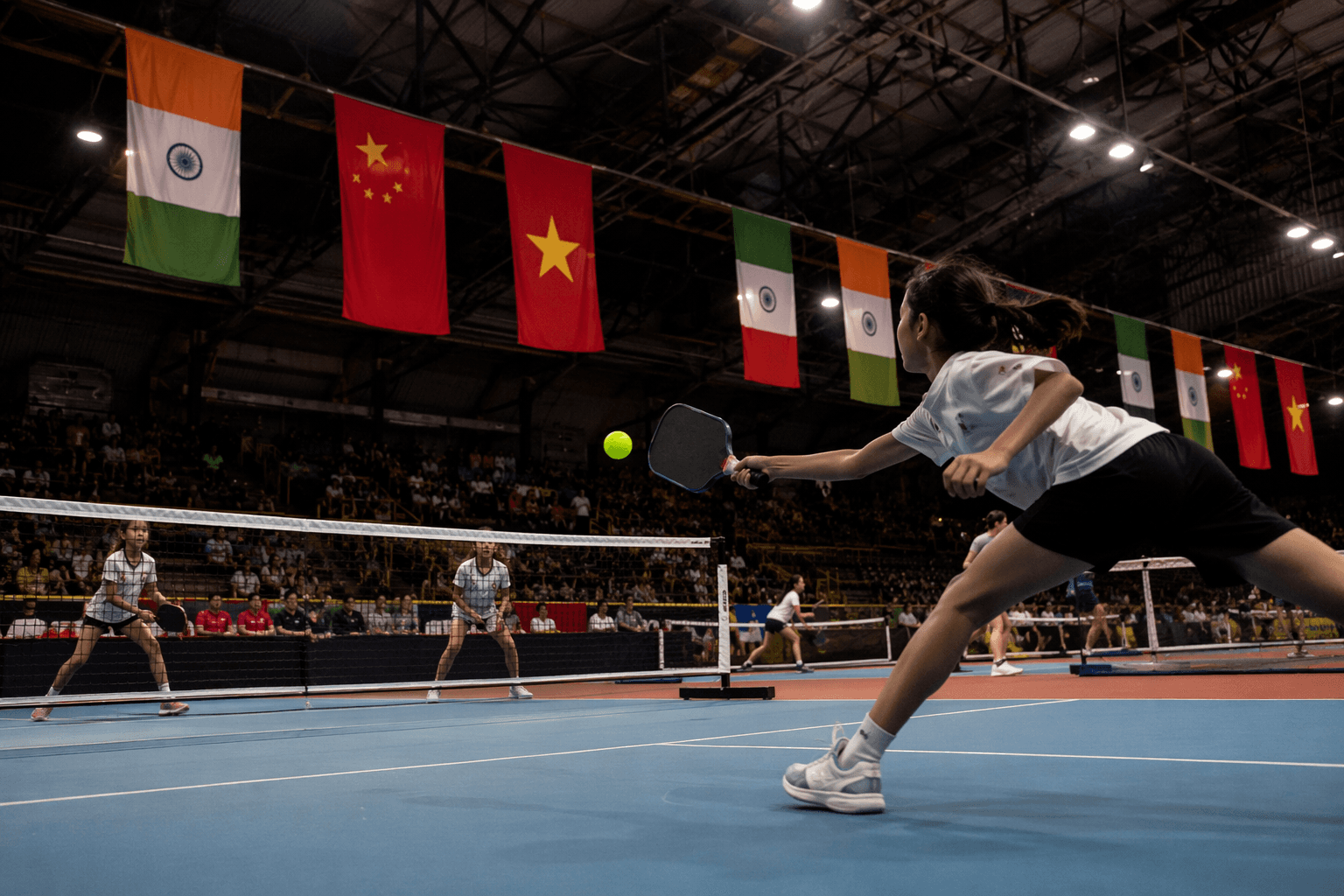
PPA Tour Asia explains rankings and seeding in growing pro circuit
PPA Tour Asia is using rankings, medals and seeding to turn a fast-growing sport into a regional circuit with real stakes, not just a travel schedule.

PPA Tour Asia is doing more than staging events in different countries. By pairing rankings, a medal ladder and selection seeding with results and news pages, it is building the competitive architecture that can make pickleball in Asia feel like one circuit instead of a string of isolated stops.
Why the rankings page is the backbone
In a young pro tour, rankings are not just a spreadsheet. They decide who carries momentum from one stop to the next, who gets labeled a contender and who has to claw through tougher paths just to stay visible. For PPA Tour Asia, that matters because the tour opened its 2025 calendar with five initial tournaments, starting in Malaysia before moving into an East Asian swing that included China and Japan.
That spread creates a simple problem for any region-wide circuit: results in one market need to mean something in the next. Rankings solve that by giving every performance a shared reference point, so a strong run in Malaysia is not forgotten when the tour shifts to China or Japan. PPA Tour Asia’s own June 9, 2025 research post sharpened that logic by putting scale behind it, saying about 1.9 billion people across 12 Asian territories had heard of pickleball and close to 812 million had tried it.
Those numbers explain why the rankings page is more than administrative housekeeping. When a sport has that kind of reach, even in a region where it is still organizing itself around pro events, the ranking table becomes the season’s narrative line. It tells players where they stand and gives sponsors, event hosts and fans a way to measure whether the circuit is building repeat stars rather than one-off winners.
How the medal ladder changes the meaning of the season
The medal ladder adds a different kind of pressure. Instead of only caring about the last match, it gives the tour a visible tally of podium finishes and season-long distinction, which rewards consistency as much as peak form. That changes how players approach the calendar because every event can add to a broader résumé, not just a single trophy case.
For fans and commercial partners, the medal ladder makes the season easier to follow. A player who collects medals across multiple stops is easier to market than one who flashes for a weekend and disappears, and a tour that can track podiums across borders has a cleaner story to sell to hosts and sponsors. PPA Tour Asia’s 2026 medal rollout underlines that point: Pickleball.com described the design as a three-piece podium medal that interlocks, a small but deliberate sign that the tour wants the podium to carry its own identity.
That kind of branding matters in a region where the tour is still trying to define itself. A medal ladder gives each stop a cumulative consequence, so the season does not reset every time the tour lands in a new city. It also gives the tour a visual language that can travel with it, from Malaysia to China to Japan and beyond.
Why seeding shapes the real value of the draw
Seeding is where the tour turns performance into bracket structure. If the top players are placed correctly, the early rounds are less chaotic and the late rounds are more likely to produce the matchups fans actually want to see. That protects the integrity of the draw and helps the tour avoid the kind of lopsided early exits that can drain value from a title run.
PPA Tour Asia’s selection and seeding page is framed around tournament pro event entry and placement, which tells players that results are not just about winning matches but also about earning position. That is crucial in a developing circuit because seeding can determine whether a strong player gets a favorable path or has to battle top opposition immediately. It also gives regional players a clearer sense of the level they are entering when they join an event with international fields.
The business case is obvious. Better seeding helps preserve marquee matchups for later rounds, which improves event visibility and gives broadcasters, venues and sponsors a cleaner competition arc. It also makes the circuit look professional in the way mature tours do: rankings feed seeding, seeding shapes the bracket, and the bracket produces results that feed back into the rankings.
The calendar shows the plan, not just the dates
PPA Tour Asia’s 2025 schedule tells the same story from another angle. The tour announced the calendar on May 6, 2025, with five initial tournaments, signaling that it wanted a season structure rather than a one-off exhibition run. Starting in Malaysia and then moving into China and Japan gave the tour a regional backbone from the start.
That matters because a circuit builds credibility through repetition and geography. When the same players, rankings and seeding logic travel across multiple countries, the tour begins to look like a system instead of a collection of independent events. The existence of separate pages for rankings, medal ladder, selection seeding, how it works, results and news shows that PPA Tour Asia wants readers to follow a full season, not just a weekend bracket.
The calendar, in other words, is only the visible layer. The more important piece is the structure underneath it, which lets the tour connect each stop to the next one and give every result a place in the larger season.
What the first season already showed
The inaugural PPA Tour Asia season closed with season-ending rankings, and Pickleball.com reported that Hong Kit Wong finished with two No. 1 rankings. That kind of finish is exactly what a ranking system is supposed to surface: not just a champion at one event, but a player whose performance held up across an entire season.
That first-year outcome matters because it shows the tour can produce a meaningful competitive ladder quickly. If one player can finish the inaugural season with multiple top spots, then the system is already doing the work of separating elite performers from the rest of the field. It also gives the tour a first set of season-defining names to build around as it expands deeper into Asia.
PPA Tour Asia’s push is ultimately about legitimacy. Rankings define standing, the medal ladder defines season-long success, and seeding defines the quality of the draw. Together, those pieces are what turn a fast-growing pickleball calendar into a credible regional circuit with stars, stakes and continuity.
This article was produced by Prism’s automated news system from verified source data, official records, and press releases, then run through automated quality and moderation checks before publishing. The system is built and supervised by the people who set the standards it runs under. Read our full AI policy.
Did this article answer your question?