PPA Tour Asia spreads across six stops in 2026 run
Six stops from July to October turn PPA Tour Asia’s 2026 run into a live map of its key markets, capped by Hong Kong’s first Slam.

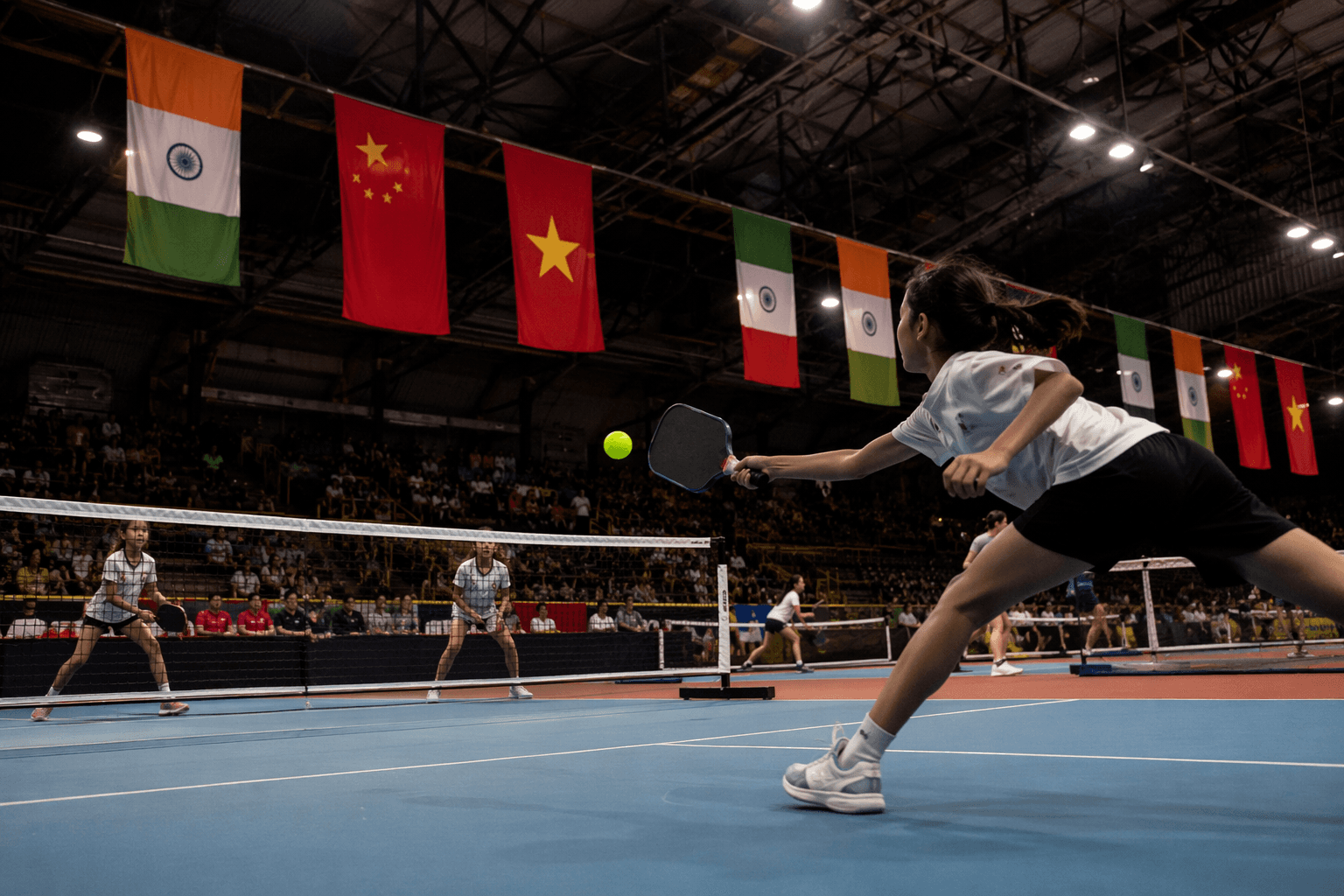
Six stops, four months, and a route that stretches from Tokyo to Hong Kong make the back half of PPA Tour Asia’s 2026 season feel less like a calendar and more like a regional map. The schedule runs from July through October and reaches Japan, Singapore, Vietnam, China, Malaysia, and Hong Kong, a spread that shows where the circuit believes the sport can build real audiences, sponsor value, and repeat hosting demand.
A calendar built to show where the sport is taking hold
The clearest takeaway from the remaining 2026 slate is that PPA Tour Asia is no longer behaving like a tour with one or two centerpieces. By pushing events across multiple countries, the circuit is presenting Asia as a connected professional market rather than a collection of isolated stopovers. That matters because a six-stop run gives players a sustained competitive window and gives local organizers a reason to build beyond a one-off showcase.
The calendar also sits inside a broader expansion story. UPA Asia and PPA Tour Asia were announced in November 2024 as part of a regional push, and the tour opened its 2025 schedule with five initial tournaments before expanding further. The 2026 back half builds on that momentum, showing a calendar that now has enough depth to move from launch mode into market development mode.
Why Japan, Singapore, and Hong Kong carry extra weight
Japan and Singapore stand out as the kind of markets that give a young circuit immediate credibility. Japan already has the profile to support marquee event branding, and the Sansan Tokyo Open gives the country a clear place on the 2026 route. Singapore is set to host its first PPA Tour Asia pickleball event in July, a notable marker for a city that can serve as both a business hub and a gateway to the wider region.
Hong Kong may be the most important signal of the lot. PPA Tour Asia describes the Hong Kong Slam as the season closer and the first-ever Slam in Hong Kong, and the event is scheduled for August 21-24 at Kai Tak Sports Park. Putting a Slam in a newly opened, high-profile complex gives the tour a showcase venue with the kind of visibility that can help define the season’s public image.
Vietnam and Malaysia show the tour’s Southeast Asia play
Vietnam is not just on the map once. The 2026 calendar includes the MB Hanoi Cup and the MB Ho Chi Minh City Open, which gives the country two separate anchor points in the season. That kind of repetition matters because it suggests a market with enough traction to support more than one elite-level stop, and it creates a natural bridge between northern and southern audiences.
Malaysia, through the Panas Kuala Lumpur Open, plays a different role. Kuala Lumpur gives the tour a capital-city stage in a market that can connect players, sponsors, and fans across Southeast Asia. Together with Vietnam, it shows that the circuit is not relying only on the biggest global-brand cities. It is also looking for places where pickleball participation and commercial interest can be built into something durable.
China’s place on the route matters even without the headline event
China appears in the list of remaining markets, and that alone is meaningful. A country with that scale signals that PPA Tour Asia is not limiting itself to established pickleball enclaves, but is trying to plant flags in the region’s most consequential consumer market. Even without a named tournament in the details now circulating, China’s inclusion broadens the tour’s footprint and reinforces the idea that the circuit is thinking in continental terms.
That approach lines up with the larger audience picture around the sport. UPA Asia and YouGov Singapore released research on June 9, 2025 saying about 1.9 billion people in 12 Asian territories have heard about pickleball, while close to 812 million people in Asia have played or are interested in playing. Those numbers explain why a tour would want multiple regional entry points rather than a single flagship stop.
What the 2026 run says about the business of pickleball in Asia
The shape of this schedule shows a tour trying to do three things at once. It wants elite competition, because the stops give pros a meaningful run across several months. It wants market testing, because each country stop offers another chance to see where attendance, sponsorship, and local participation can grow. And it wants storylines, because fans can follow the season as a chain of regional milestones instead of a disconnected set of results.
That is why the Hong Kong Slam, the Tokyo Open, the Singapore debut, and the double-header presence in Vietnam matter so much. They are not just dots on a calendar. They are markers of where PPA Tour Asia believes the sport’s next strongholds are forming, and they make the 2026 season feel like a true regional campaign rather than a touring exhibition.
This article was produced by Prism’s automated news system from verified source data, official records, and press releases, then run through automated quality and moderation checks before publishing. The system is built and supervised by the people who set the standards it runs under. Read our full AI policy.
Did this article answer your question?