Seoul expands pickleball with public courts, family programs and new venues
Seoul's Han River courts signal pickleball's jump from club pastime to civic infrastructure, with family programming and newcomer zones built for daily public use.
Pickleball moves into Seoul’s public commons
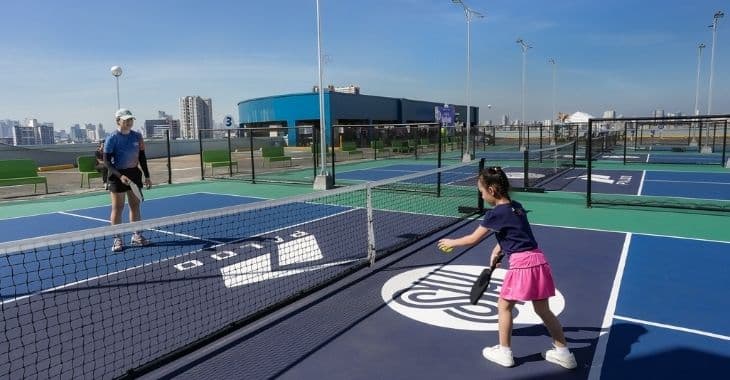
Seoul’s biggest pickleball statement is not a trophy or a celebrity endorsement. It is a 14-court complex at Gwangnaru Hangang Park, a public site on the Han River that opened on April 16 and was built to be used like ordinary city infrastructure, not a private club. That matters in South Korea because the sport’s next stage is no longer about proving that a small enthusiast base exists. It is about whether pickleball can live in the same shared spaces as walkers, families, office workers and longtime park users, and still feel like part of the city rather than a novelty imported from elsewhere.
The Gwangnaru site covers about 4,000 square meters, and Seoul city officials framed it as a public recreational sports space. The opening was designed to make the sport legible to newcomers from the start: it includes a Pickleball Story Zone explaining the sport’s history and rules, an equipment trial area, shaded seating, benches, drinking fountains and fencing. In other words, this is not just a place to play. It is a place to learn, watch, borrow context and see whether pickleball fits into everyday life along the river.
Who gets access, and how Seoul is broadening the base
The most revealing part of Seoul’s approach is the programming. The city opened with Three-Generation Family Pickleball, Easy Pickleball for beginners, and Global Pickleball for foreign participants. That mix tells you exactly who officials want on the courts: grandparents, parents, children, first-timers and residents who may already be comfortable in Seoul but are still finding a social entry point into local recreation.
That is also where pickleball’s appeal has been strongest. The sport is cheaper than tennis, easier for beginners to rally in quickly, and less punishing on the body and calendar. Those advantages have pulled in younger office workers, foreign residents and former tennis players, widening the social base of the game in a city where access to time and space often decides which sports survive. In Seoul, pickleball is being sold as a practical activity as much as a competitive one, which is exactly why public infrastructure is such a powerful lever for growth.
What changes when park courts become pickleball courts
Seoul’s pickleball expansion also shows a more delicate shift: the repurposing of court space once associated with jokgu, Korea’s foot-volleyball tradition. That transition is not just cosmetic. It reflects how urban parks adapt when a new sport arrives with different rules, different movement patterns and different expectations for who should be there. The courts are now shared by players of different ages, and the city’s design choices suggest an effort to absorb the sport into existing park life rather than displace it.
That matters for everyday users because pickleball changes the rhythm of a park. It brings shorter, louder, more social bursts of play, and it creates new demand for beginner-friendly access at the same time as regular players want consistent court time. Seoul’s answer has been to build visible infrastructure, add educational signage and create programming that lowers the barrier to entry. The city has also signaled that it will keep expanding sports infrastructure, a commitment that could shape future court allocation across riverside parks, neighborhood facilities and indoor venues.
How the game got here
The sport’s Korean timeline is surprisingly short, and that speed is part of the story. Association material says pickleball was first introduced in Korea around 2016 through Yonsei University professor Hur Jin-moo’s Yonsei Pickleball Club. Kang Shin-gyeom then started the Gwangju Pickleball Club in 2017, and the Korea Pickleball Association was founded in 2018. That sequence is important because it shows how quickly a niche campus and club activity can become organized enough to support public facilities, competition and regional visibility.
Former tennis figures have also helped build the ecosystem. Cho Min-jung, a former Korea Tennis Association board member, converted an indoor tennis facility into a dedicated pickleball venue called the Pickle Box. That kind of move is often how an emerging sport crosses the gap from improvisation to permanence. It brings credibility, court knowledge and a ready-made understanding of how to market the game to people who already know racket sports but need a lower-friction way in.
Competition is giving the sport more weight
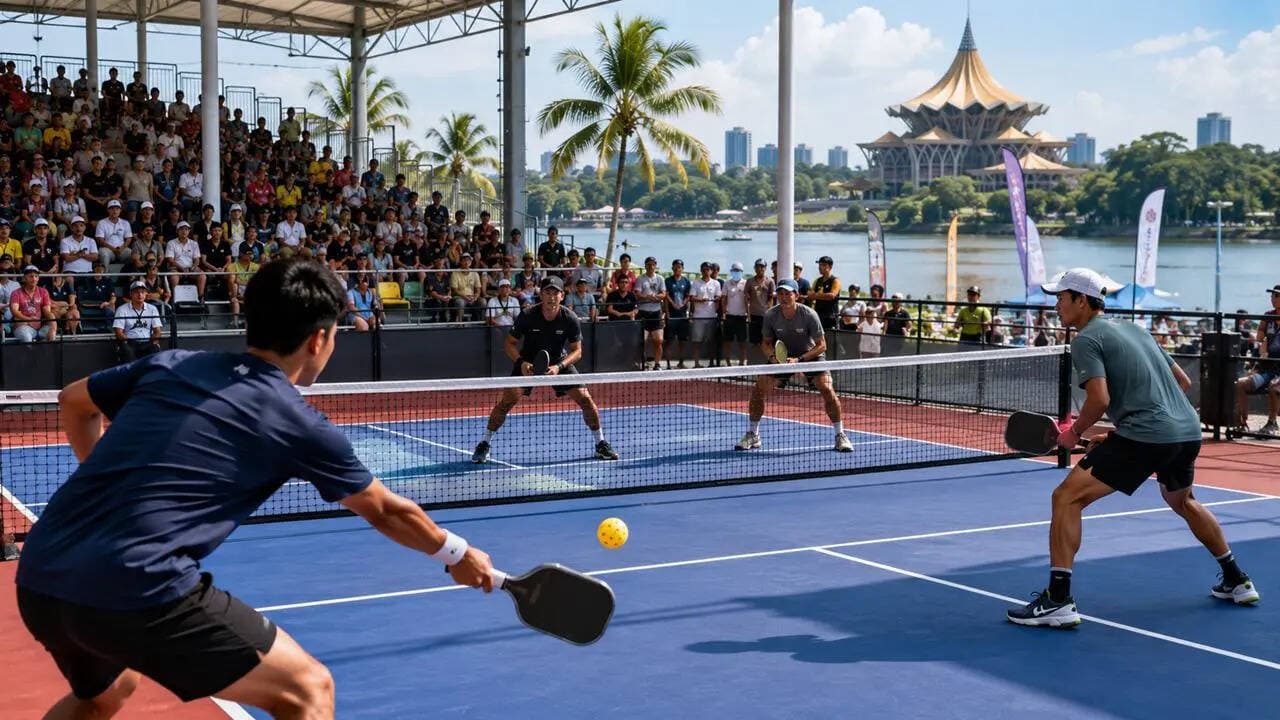
Seoul’s public-court push is happening alongside real competitive results. South Korea’s men’s and women’s teams won bronze at the 2024 Asian Open in Vietnam, giving the sport a result that reaches beyond recreational use and into national representation. That kind of performance matters because it changes how city officials, universities and sponsors think about the game. A sport with medals can justify facilities in a way a trend cannot.
Facility building has also accelerated outside the capital. Wonju in Gangwon Province opened Oak Valley Pickleball Park in late 2025, and it was the largest dedicated pickleball facility in South Korea before Seoul’s Han River complex surpassed it. The size of that sequence is telling. It shows a country building from regional centers outward and then scaling up in the capital, a pattern that other Asian markets often follow when a sport is moving from proof of concept to system-wide adoption.
Why the Seoul model could travel across Asia
South Korea’s pickleball rise is being watched closely because it combines three ingredients that matter across urban Asia: public land, low-cost access and social legitimacy. The celebrity effect helps too. Visibility from names such as Jun Hyun-moo and Choo Sung-hoon, plus broader BTS-linked discussion of the sport, has pushed pickleball further into mainstream conversation. But the real engine is not fame. It is the way Seoul is turning courts into civic assets that serve families, beginners and foreigners without asking them to find a private club first.
That is what makes Gwangnaru Hangang Park more than a new venue. It is a template for how municipalities, campuses and mixed-use districts might think about pickleball next. A sport that once lived in clubs and converted tennis halls is now occupying public riverfront space, with a story zone, trial area and family programming to match. If other Asian cities want to know how pickleball becomes durable rather than fleeting, Seoul is making the answer visible in real time.
This article was produced by Prism’s automated news system from verified source data, official records, and press releases, then run through automated quality and moderation checks before publishing. The system is built and supervised by the people who set the standards it runs under. Read our full AI policy.
Did this article answer your question?