Three-day Picklrs Open Showdown 2026 at Pickleball Lamunin draws 300 players
Fans will learn how the Picklrs Open Showdown 2026 at Pickleball Lamunin brought roughly 300 players together, expanded coaching capacity, and signalled wider growth for pickleball in Brunei and the region.

1. Event overview
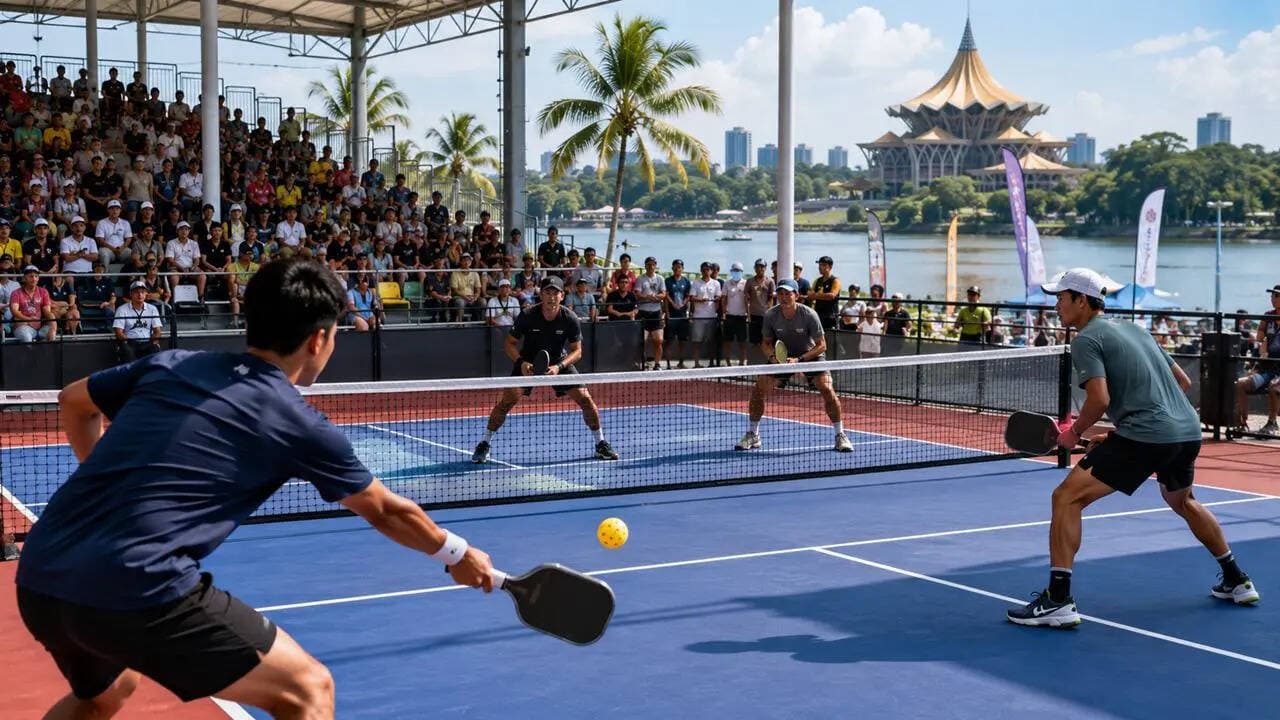
The Picklrs Open Showdown 2026 drew around 300 competitors to Pickleball Lamunin (Brunei) for a focused, three-day festival of play that blended competition and capacity building. The event ran from 30 January to 1 February 2026 and offered a platform for players across levels to test skills in a tournament setting while organisers staged parallel education programmes. The sheer scale, organisers reported roughly 300 participants, made the event one of the most visible showcases of the sport in the country this season.
2. Competition categories
The tournament featured eight categories: 100+ mixed doubles, novice mixed doubles, men’s singles (open), women’s singles (open), intermediate men’s doubles, intermediate women’s doubles, 45+ men’s doubles, and intermediate mixed doubles. That spread reflects deliberate inclusivity: age-only brackets (100+, 45+), gendered singles and doubles, and clear entry points for novices and intermediates. Structuring the draw this way helps create upward mobility for players, allowing newer entrants to gain experience without immediately facing elite open draws.
3. Prize money and competitive benefit
“With a total prize pool exceeding BND5,000, the competition offered players valuable exposure to higher-level matches.” That combination of tangible stakes and competitive variety matters: the prize pool signals commitment from organisers and helps justify travel and time costs for participants, while the tournament’s intensity gives players meaningful match-play. “Participants encountered a range of playing styles and the kind of competitive pressure that builds match confidence and hones skills,” which in turn accelerates player development and raises the baseline quality of local competition.
4. Coaching and referee development
“In addition to the tournament, the organisers conducted Level 1 coaching and referee programmes, resulting in 24 Level 1 coaches and 5 referees being certified.” That certification haul is as important as the on-court action: a larger, credentialed coaching and officiating pool strengthens grassroots infrastructure, standardises coaching methods, and professionalises tournament delivery. For an emerging pickleball scene, certified coaches and referees are the scaffolding that lets the sport scale responsibly, improving player safety, skill progression pathways, and the credibility of future events.
5. Support network and partnerships
“These efforts were made possible with support from the Ministry of Culture, Youth and Sports, the Ministry of Home Affairs and the Asia-Pacific Pickleball Alliance.” Government backing plus regional alliance involvement is a potent combination: it provides funding, administrative legitimacy, and a pathway to cross-border collaboration. For organisers, such partnerships reduce operational risk and open doors to larger regional circuits; for athletes they create opportunities for coaching exchanges and ranking recognition beyond national borders.
6. Civic visibility and prize presentation
“Acting Tutong District Officer Awangku Arif bin Pengiran Haji Ahmad served as the guest of honour and presented prizes to the top three finishers in each category.” High-level civic presence matters symbolically, it sends a message that pickleball is worthy of public investment and recognition. The act of a district official presenting prizes helps normalise the sport in local cultural calendars and boosts media visibility, which in turn attracts sponsors, volunteers, and new participants.
7. Player experience and match dynamics
While detailed match scores and winners were not published in the available material, the organisers emphasised competitive learning: “Participants encountered a range of playing styles and the kind of competitive pressure that builds match confidence and hones skills.” From a performance-analysis perspective, events like this expose players to tempo variations, tactical diversity, and pressure scenarios, key inputs for coaches and athletes plotting year-on-year improvement. Team dynamics in doubles brackets likely leaned on communication, court coverage strategies, and adaptive formations as players negotiated mixed experience levels, though precise tactical trends will require match footage or score sheets to confirm.

8. Participation scale and logistics
“Approximately 300 players participated in the three-day Picklrs Open Showdown 2026,” making it a sizeable local staging that tested organisational capacity across scheduling, court allocation, and participant management. Running eight categories across three days demands tight logistics, court turnarounds, warm-up access, and referee assignment, which the certification drive directly addresses by enlarging the officiating pool. The event’s scale also hints at latent demand: venue utilisation and category diversity suggest organisers can expand field sizes, add age or skill brackets, or develop feeder events to maintain momentum.
9. What the reporting leaves unanswered (and why it matters)
The public briefing did not publish winners, match scores, or category-by-category entry counts, so performance narratives remain incomplete. For journalists and sport planners the missing items are critical: names of champions, prize distribution details within the “exceeding BND5,000” pool, and whether international players participated all shape the story of competitive depth and the event’s draw. Securing those details will clarify who is emerging as a regional force, how funds are incentivising participation, and how future events should be structured to maximise development returns.
10. Cultural context and social implications
“Such a turnout highlights the steady growth of pickleball in Brunei.” The mix of younger open events, novice draws, and veteran categories like 45+ and 100+ speaks to pickleball’s cross-generational appeal and its potential as a community sport. In social terms, the tournament promotes active lifestyles, provides structured social interaction, and creates new volunteer and coaching roles. Government support amplifies those benefits by linking sport to cultural and youth development objectives, while certified coaches create educational pathways that can touch schools, workplaces, and community centres.
11. Industry trends and regional significance
The involvement of the Asia-Pacific Pickleball Alliance signals a regionalisation trend: tournaments are no longer isolated, and alliances enable calendar coordination, shared standards, and potential ranking systems. For commercial stakeholders, moderate prize pools combined with government backing indicate a hybrid funding model, public support supplemented by event revenue or private sponsorship, typical of sports in growth phases. As more Level 1 coaches and referees enter the ecosystem, expect a gradual shift from ad hoc tournaments to more regularised circuits with clearer talent pipelines.
12. Practical takeaways for players and organisers
For players: use intermediate and novice categories strategically to build match toughness, and prioritise events that offer certified coaching clinics to accelerate skill learning. For organisers: leverage certified personnel to improve event quality, push for transparent result reporting to attract media and sponsors, and capitalise on government partnerships to expand grassroots programming. The combination of competition, certification, and civic endorsement seen at Pickleball Lamunin creates a replicable model for other communities aiming to grow the sport responsibly.
13. Closing perspective
Picklrs Open Showdown 2026 delivered more than matches; it combined competitive exposure, workforce development, and institutional support into a compact three-day launchpad. For players and organisers, the practical wisdom is simple: treat tournaments as dual investments, into both immediate performance and long-term capacity, so that each event raises the standard of play while building the people who sustain the sport.
This article was produced by Prism’s automated news system from verified source data, official records, and press releases, then run through automated quality and moderation checks before publishing. The system is built and supervised by the people who set the standards it runs under. Read our full AI policy.
Did this article answer your question?