Typti Debuts: Foam-Ball Racket by Steve Bellamy Promises Quieter, Longer Rallies
Typti launches a foam-ball racket sport by Steve Bellamy to cut noise and create longer rallies, aiming to shift paddle-sport dynamics and ease neighbourhood complaints.
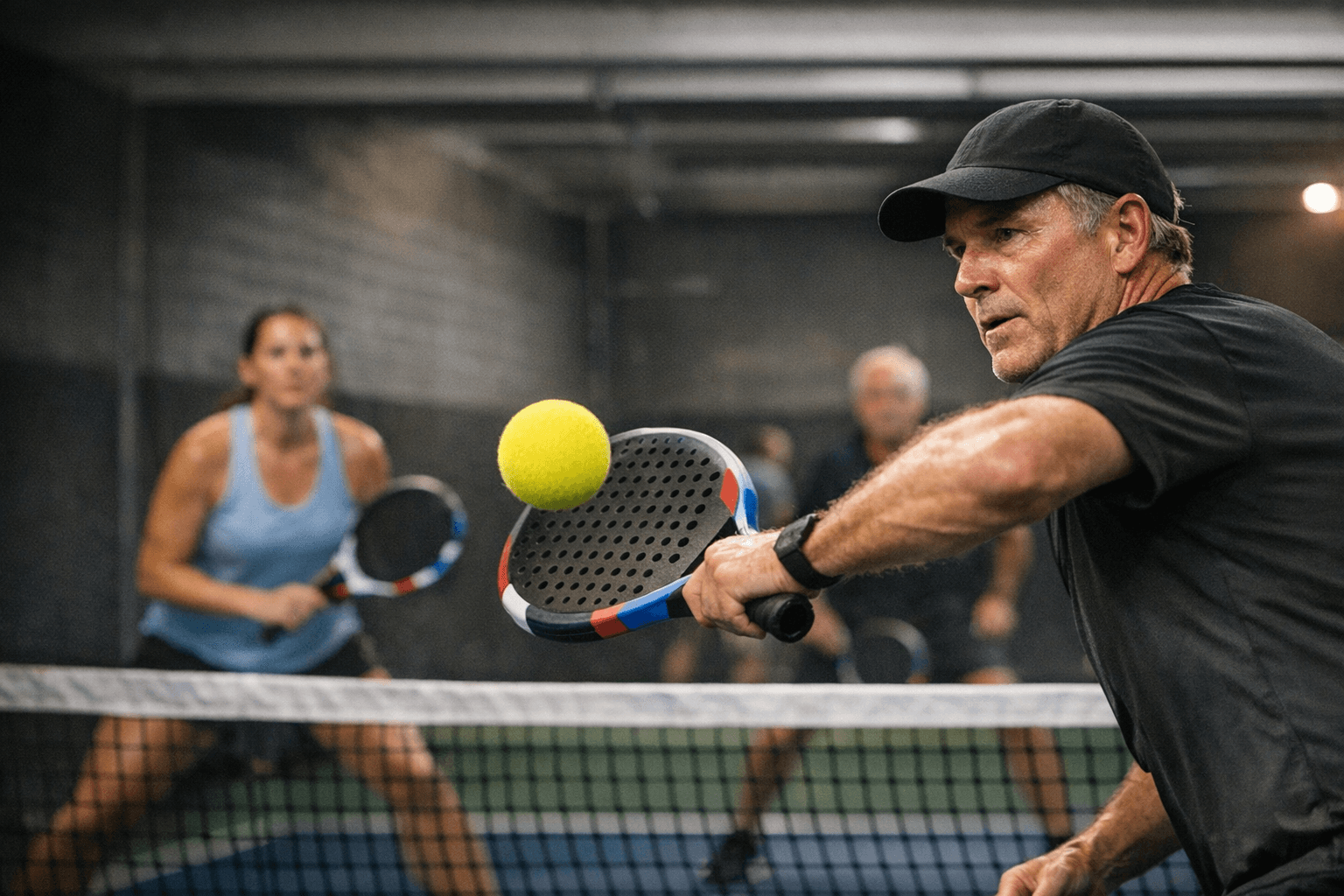
Steve Bellamy has unveiled Typti, a new racket sport played on a pickleball court but using a foam ball and a strung racket designed to produce longer rallies and less net-chop. The launch, announced Jan 20, 2026, positions Typti as both a response to pickleball's noise controversies and a bid to create a faster-growing professional circuit.
Backers include high-profile investors such as Tony Pritzker, Chris Pine and Tony Robbins, signaling deep-pocketed intent to commercialize the sport. The rollout includes a debut competition scheduled for Feb 25 at the Calabasas Pickleball Club and plans for a pro circuit with prize money starting at US$100,000. The commercial model centers on tournament fees and equipment sales, with the strung racket and foam ball at the core of Typti's revenue strategy.
On court, the foam ball changes the math of play. Compared with the polymer pickleball, the softer ball reduces the biting edge that causes net-chop, leading to longer baseline and midcourt exchanges. That shifts tactical emphasis away from dink-and-kitchen skirmishes toward sustained rallies and shot construction. Players with tennis backgrounds may find the transition easier because strung rackets restore string-bed feel and spin control absent in hard-paddle play. For current pickleball pros, the new dynamics will demand adjustments in footwork, endurance and shot selection.
Typti's promise of lower noise addresses a recurring community concern in dense urban areas across Asia and beyond. Noise complaints have driven court closures and tight scheduling in many municipalities; a quieter alternative could ease friction between players and neighbours and unlock evening hours in mixed-use developments. That has clear implications for clubs and local governments balancing recreational demand with residential tolerance.
But the sport's business model also raises trade-offs. Equipment-driven revenue and tournament fees favor organized clubs and investor-backed circuits, potentially accelerating the professionalization of another paddle-sport niche while marginalizing low-cost community play. Celebrity investors and sizable prize purses will attract media attention and sponsorship, heightening stakes for players and operators. Courts could see competition between Typti and pickleball for booking slots, and manufacturers may face a race to produce approved foam balls and strung rackets at scale.
For Asia, where population density and noise regulation are acute factors, Typti could be adopted as a pragmatic alternative that preserves rally-based fun without the same acoustic footprint. Clubs should consider trial sessions, player clinics and scheduling pilots ahead of the Calabasas debut to gauge demand and surface-level rule refinements. Coaches will need to develop specific drills that blend pickleball strategy with racket-string technique.
Typti's launch is both an experiment in play and a business test. If foam-ball rallies catch on, expect a rapid cycle of tournaments, equipment iterations and local rulebooks. For players and clubs, the next step is hands-on experience: the Feb 25 event will offer the first real data on whether quieter rallies translate into sustainable growth and a viable professional pathway.
This article was produced by Prism’s automated news system from verified source data, official records, and press releases, then run through automated quality and moderation checks before publishing. The system is built and supervised by the people who set the standards it runs under. Read our full AI policy.
Did this article answer your question?