Uông Bí Hosts Giải Pickleball Chào Xuân 2026 with Nearly 170 Players
Fans will learn how nearly 170 players converged in Uông Bí and what the tournament reveals about pickleball’s grassroots momentum in Quảng Ninh.
1. Player turnout and participation
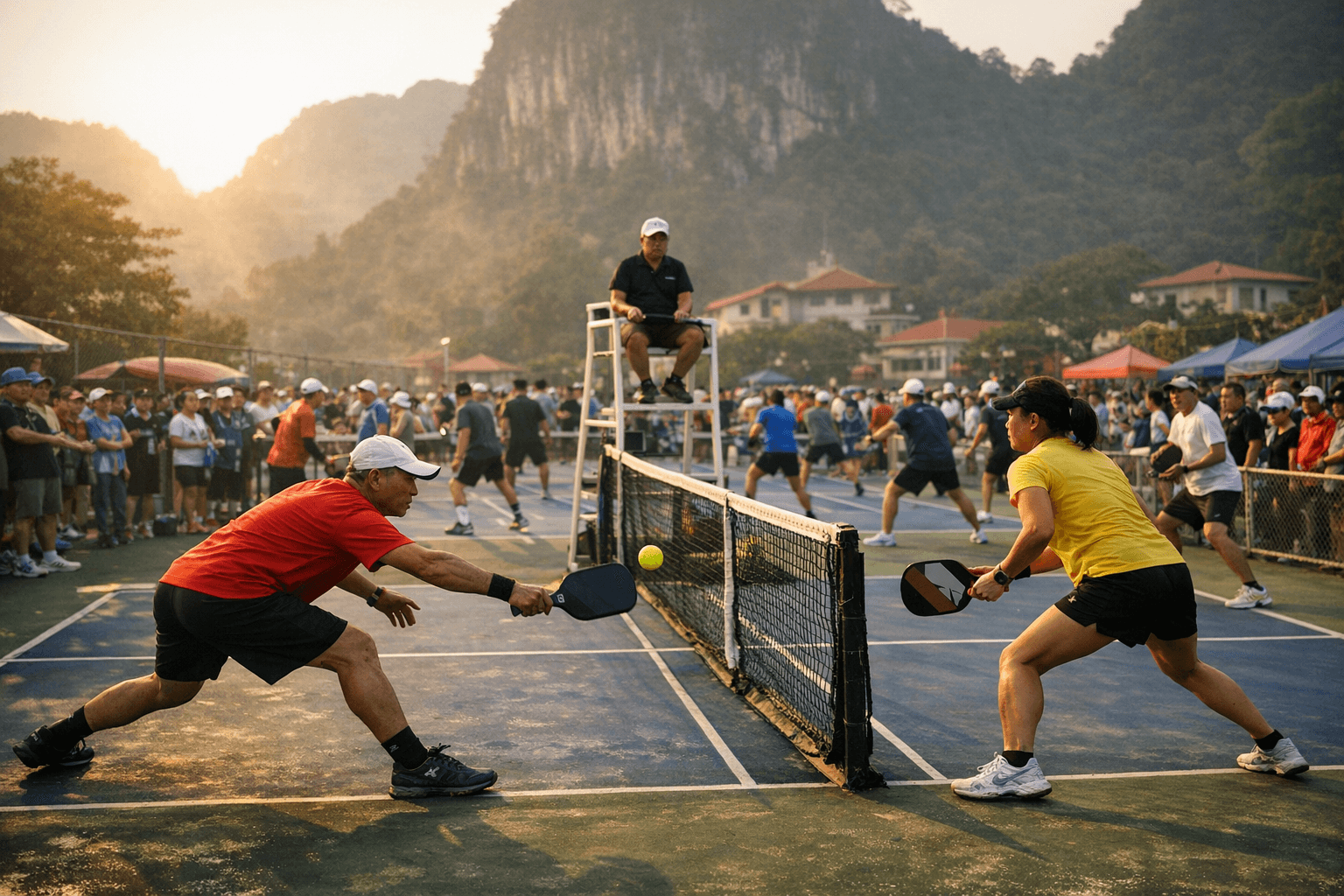
Nearly 170 athletes from clubs across Quảng Ninh and beyond played at the Giải Pickleball Chào Xuân 2026, a substantial field for a provincial-level event that demonstrates wide local interest and growing club networks. The mix of home clubs and visiting club-level entrants created depth across divisions, ensuring that matches were competitive from the first serve. High turnout also signals rising membership in local clubs and healthier pipelines for talent identification.
2. Venue and logistics: Anh Tuấn - Thanh Sơn 7 complex
Organizers staged the tournament at the Anh Tuấn - Thanh Sơn 7 pickleball complex, using the venue to accommodate the large entry list while maintaining smooth scheduling across courts. Local-government reporting emphasized careful logistics and adherence to regulations, which translated into timely starts, orderly court rotations, and a visible commitment to player safety. Efficient venue management is increasingly a selling point as more tournaments aim to attract regional circuits and club teams.
3. Division structure and competitive format
Organizers ran multiple divisions tailored to different skill levels, a structure that broadened access and preserved competitive balance so newcomers and seasoned players alike found appropriate matches. Multiple divisions encourage incremental development, players can measure progress within a level before moving up, while also allowing clubs to field larger squads that gain match experience. For the community, tiered play keeps engagement high because everyone gets meaningful court time, not just high-stakes matchups.
4. Opening ceremony and local leaders’ presence
Local officials and youth union representatives attended the khai mạc (opening) ceremony, signaling municipal support and giving the event civic weight beyond sport. That presence helps legitimize pickleball as part of local cultural programming and underscores public investment in grassroots recreation. Visibility from officials also helps tournaments secure future permits, modest funding, and promotional channels that broaden audience reach.
5. Community festival and new year meaning
The competition functioned as a community sports festival marking the new year, blending friendly rivalry with seasonal celebration and positioning pickleball as a social fixture for communal renewal. Framing the tournament as a Chào Xuân event amplified attendance from families and casual spectators who treat the courts as a public gathering space. This festival approach deepens pickleball’s cultural footprint, linking sport with local rituals and holiday rhythms.
6. Game outcomes and player performances
Matches across the divisions showcased a mix of tactical maturity and athletic enthusiasm: experienced club players controlled rallies with consistent dinks and strategic positioning, while newer entrants relied on pace and aggression to unsettle opponents. Without publishing specific winners, the general pattern was clear, upper divisions displayed cleaner shot selection and court awareness, whereas lower tiers featured high-energy exchanges and steeper learning curves. These divergent performance profiles point to where coaching resources and practice structures can make immediate impact.
7. Team dynamics and club strategies
Clubs traveling to Uông Bí brought evident preparation and cohesion, with team captains managing rotations and pairing combinations to maximize matchups. Dynamic intra-club coaching, short sideline adjustments and targeted pairings for doubles, helped some teams turn narrow deficits into wins, highlighting the importance of tactical depth and communication. The event’s club-centric makeup reinforces the value of internal development systems: clubs that invest in regular drills, mixed pairings, and match-play scenarios will keep rising through the divisions.
8. Safety, sportsmanship, and governance
Organizers emphasized safe conduct and sportsmanship alongside technical adherence to tournament regulations, creating an environment that prioritized athlete welfare and fair play. The combined focus on rules compliance and respectful on-court behavior is crucial as the sport expands, maintaining a wholesome culture makes pickleball more inviting for families and municipal partners. Good governance at this scale also models standards for smaller club-run events across the province.
9. Industry trends and business implications
A nearly 170-player turnout and visible municipal backing underscore pickleball’s commercial trajectory in Asia: demand for dedicated complexes, coaching services, and tournament operations is growing. For entrepreneurs and local governments, the event highlights opportunities in court construction, equipment retail, youth programming, and weekend-event tourism. As tournaments scale, sponsorship packages and local business tie-ins (food stalls, gear demos, hospitality) will become more viable revenue streams.
10. Cultural context and social significance in Quảng Ninh
Pickleball’s rise in Quảng Ninh ties into broader cultural trends favoring accessible, intergenerational sports that fit community life and holiday calendars. The Chào Xuân framing reframes pickleball from an imported pastime into a local festival activity, one that connects young players from youth unions with older recreational members. This social crossover fosters community cohesion and positions the sport as a tool for public health, inclusion, and neighborhood identity-building.
11. Broader implications and practical takeaways for players and clubs
The Uông Bí Open offers clear lessons: clubs should prioritize structured divisions to retain members, invest in basic coaching on tactics like kitchen control and communication for doubles, and coordinate logistics early to maximize player experience. For players, the takeaway is simple, seek match play in tiered events to accelerate learning, and treat festival-style tournaments as opportunities to build networks and club reputations. Municipal organizers can view this model as a replicable template for pairing civic celebration with grassroots sport development.
Final thought: the Giải Pickleball Chào Xuân 2026 served both as a spirited competition and a blueprint for sustainable growth, serve consistently, dink with intent, and build the club ecosystem around community values.
This article was produced by Prism’s automated news system from verified source data, official records, and press releases, then run through automated quality and moderation checks before publishing. The system is built and supervised by the people who set the standards it runs under. Read our full AI policy.
Did this article answer your question?