USA Pickleball launches RFID paddle field testing programme as Asia model
USA Pickleball and Pickleball Instruments launched an RFID paddle field-testing programme to verify paddle performance at amateur events, a model Asia federations could adopt.

USA Pickleball has partnered with Pickleball Instruments to launch an RFID paddle field-testing programme aimed at verifying paddle performance at amateur events, a move designed to protect competitive integrity from grassroots to club play. The programme was set to debut at Golden Ticket events in the US and uses on-site testing to measure coefficient of friction, deflection, and weight and balance, with future phases planned to include PBCoR and spin metrics.
Each paddle tested receives an RFID sticker that allows players and officials to access the test data. A companion app, planned for release before March 2026, will enable players to track paddle performance over time and build a data trail for individual paddles. The field-testing protocol aims to create transparency around equipment performance and to make verification portable for tournament organisers who lack lab resources.
The immediate impact is practical. At Golden Ticket events, match-day officials will be able to confirm that a paddle’s friction and deflection fall within expected ranges before a player steps onto the court. That matters for dinks, third-shot drops and serves where subtle differences in surface grip and deflection can change ball trajectory and spin. For amateurs competing in ranking events, knowing paddle specifications are validated reduces disputes over equipment and limits the competitive edge from counterfeit or modified paddles.
There are clear business implications for manufacturers and retailers. Paddle brands will face a new, visible compliance layer, and smaller makers who have invested in consistent manufacturing stand to gain credibility. Conversely, sellers of unregulated or counterfeit paddles will encounter greater scrutiny from tournament officials and players using the app to verify gear. Pickleball Instruments moves further into the certification space, while USA Pickleball positions itself as a standards enforcer at event level.
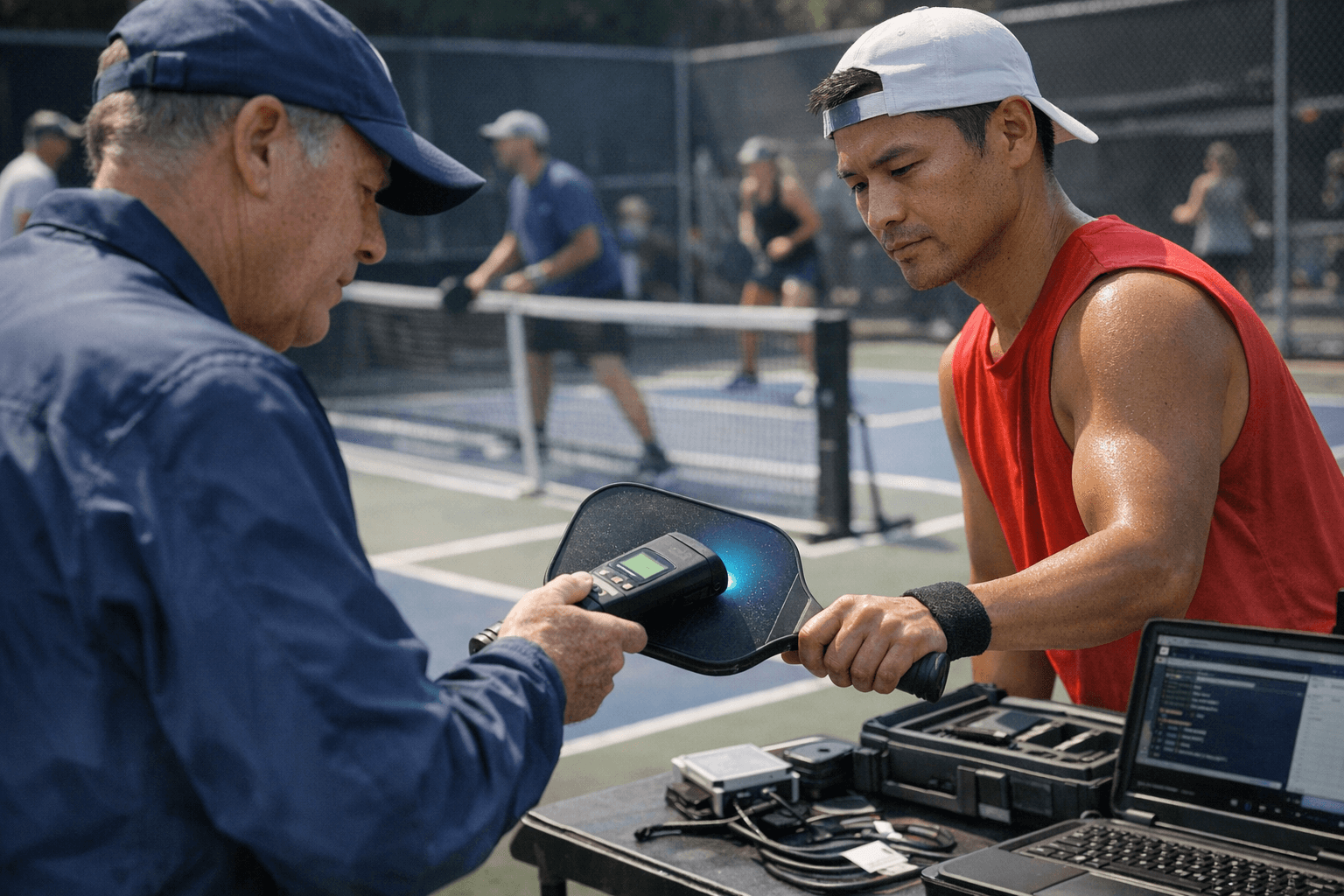
For Asia, where pickleball participation has surged in urban centres and across clubs, the programme offers a replicable model. Federations and tournament organisers in Asia can study the RFID workflow to standardise pre-tournament equipment checks and to curtail the circulation of counterfeit paddles at grassroots events. Adoption will require investment in on-site testing kits and training for officials, and organisers must weigh costs against the long-term benefits of cleaner competition.
A practical concern is accessibility: smaller clubs will need affordable pathways to deploy testing. Data privacy and ownership of paddle performance records will also require clear policies when the app launches. Still, the initiative marks a turning point in how equipment is regulated at amateur levels. For players in Asia, the next steps will be watching whether regional federations adopt similar field-testing and how quickly the app and RFID tagging scale into everyday tournament operations.
This article was produced by Prism’s automated news system from verified source data, official records, and press releases, then run through automated quality and moderation checks before publishing. The system is built and supervised by the people who set the standards it runs under. Read our full AI policy.
Did this article answer your question?