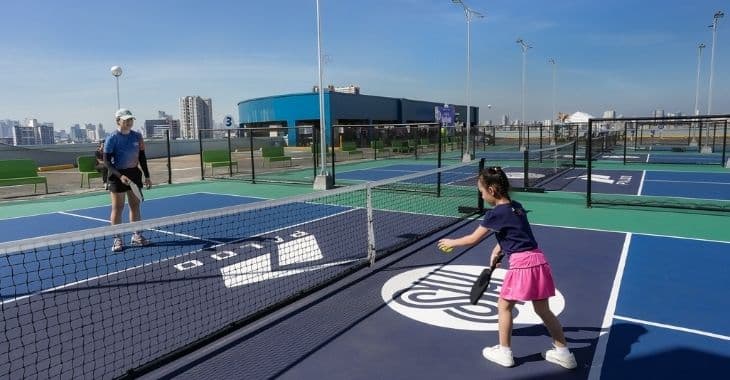
Vietnam’s pickleball boom turns sport into a cultural talking point
Vietnam’s pickleball boom is now shaping social status, dating talk, and big-event economics, with Da Nang and Hà Ni at the center.
Vietnam’s pickleball surge is doing something most sports only dream about: it is escaping the court and becoming a social language. A June 16 Threads post about whether badminton or pickleball reveals how someone behaves under pressure, especially in relationships, went viral with more than 650,000 views, and that reaction says a lot about where the sport sits now in urban Vietnam. It is no longer just a game for weekends and rec centers. It is turning into a marker of temperament, teamwork, and even romantic compatibility.
Pickleball as social currency
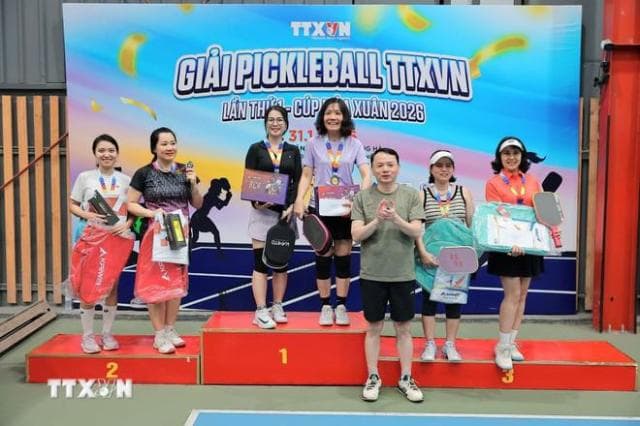
The cultural shift matters because it shows how quickly pickleball has moved from novelty to shorthand. AJU Press reported a Spring Cup tournament in Vietnam with 60 players in men’s and women’s doubles, but the bigger story was the way the sport fed a national conversation about personality and pressure. In a market where younger participants are driving interest, pickleball is being amplified by celebrities and influencers such as Jun Pham and Miss Vietnam Thieu Bi, giving it the kind of visibility emerging sports usually spend years chasing.
That visibility also changes what the sport means off the court. When a sport starts appearing in discussions about dating, composure, and teamwork, it becomes more than recreation. It becomes a lifestyle signal, one that can influence how young people socialize, where they spend money, and which activities carry status in fast-growing cities like Hà Ni, Da Nang, and Ho Chi Minh City.
The tournaments showing the scale
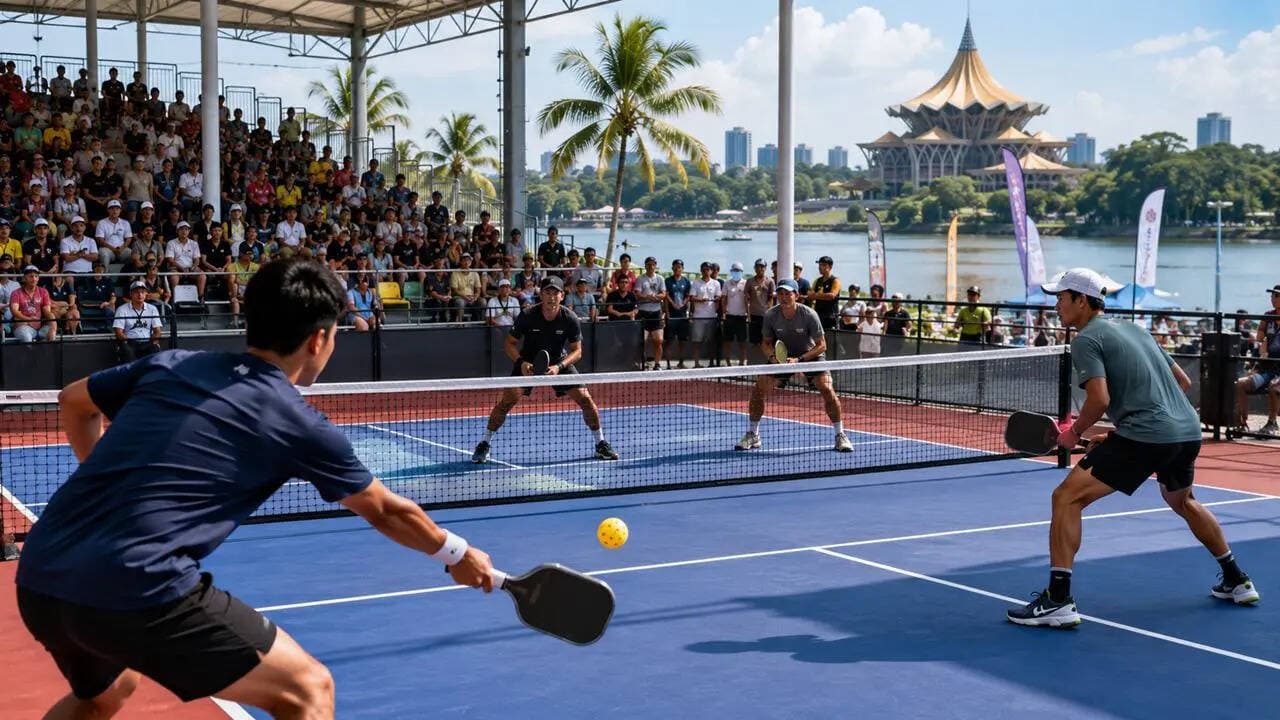
The clearest evidence that this is not just online chatter is the tournament calendar. Vietnam News reported that the first Vietnam Pickleball Open Cup Future Stars 2026 by Pharmacity ended on January 4 in Hà Ni and drew around 450 athletes selected from more than 800 registrations. That is a serious funnel for a junior event, and Vietnam News described it as the largest junior pickleball tournament yet held in Vit Nam.
The same pattern shows up in the elite end of the sport. Vietnam News said the A.O. Smith Pickleball Open 2025 in Hà Ni drew about 700 participants and carried a prize pool of VNĐ1 billion, about US$37,900. That mix of large participation and real money tells you the market is maturing fast: the sport is no longer surviving on curiosity alone, and it is starting to support competitive structures that can attract both amateurs and top players.
For a sport still building its identity in Asia, those numbers matter more than a one-off scoreline. A junior field of 450 from more than 800 registrations means there is depth coming behind the current wave. A 700-player open with prize money means the adult game already has enough traction to justify bigger venues, stronger sponsorship, and more ambitious tournament planning.
Da Nang is the regional test case
If Hà Ni shows participation, Da Nang is becoming the proof of scale. The biggest marker came in October 2025 at the MB Vietnam Cup, where Championship Saturday drew a Guinness World Record crowd of 7,906 fans. The record announcement credited organizer America & Asia Connect Co. Ltd and the Da Nang Pickleball Federation, and that matters because it shows the sport can pull spectators, not just players.
Da Nang is also where Vietnam’s pickleball story intersects with the sport’s global ambitions. The Heineken Pickleball World Cup 2026 is scheduled for August 30 through September 6 in Da Nang, and it will be the first Pickleball World Cup held in Asia. Organizers expect 4,000 players from 80 countries, and the title sponsorship has been formally confirmed under the Heineken Pickleball World Cup name. That is a different level of proof entirely: not only a strong local scene, but a host city being asked to carry a truly international event.
For Vietnam, that is a huge signal. A sport does not get a world cup on Asian soil unless the market is big enough to support it. Da Nang is now acting as the place where mainstream crowds, sponsor interest, and international touring ambition all meet in one venue.
Vietnam inside the wider Asian rollout
Vietnam’s rise also fits a broader regional buildout. In November 2024, PPA Tour and Major League Pickleball announced PPA Asia and MLP Asia, naming Vietnam among the markets targeted for launch. Pickleball.com said the 2025 PPA Tour Asia rollout would include major Asian markets such as China, Vietnam, Japan, and Singapore, which puts Vietnam in the center of a region-wide commercial push rather than on the edge of it.
There is a governance layer to this too. On December 2, 2024, the Asia Federation of Pickleball said it unanimously supported the merger of the International Pickleball Federation and the World Pickleball Federation. That kind of restructuring usually follows growth, not the other way around. When the administrative architecture starts changing at the same time that tournament crowds, junior fields, and sponsor-backed events are expanding, the sport is moving from experiment to institution.
That is why Vietnam stands out. The country is not just producing viral posts and crowded brackets. It is helping define what pickleball looks like when it becomes part of everyday culture, consumer identity, and serious event planning at the same time. In Asia, that is the real marker of mainstream adoption, and Vietnam is already playing at that level.
This article was produced by Prism’s automated news system from verified source data, official records, and press releases, then run through automated quality and moderation checks before publishing. The system is built and supervised by the people who set the standards it runs under. Read our full AI policy.
Did this article answer your question?