Artistic roller skating evolved from figures, freestyle and dance
Artistic roller skating is really three traditions in one: figures, freestyle and dance. That split still drives how skaters train, judge and win at the world level.
Artistic roller skating makes the most sense when you read it as three sports sharing one rink. Figures, freestyle and dance developed from different skills and different priorities, then settled into distinct competition tracks that still shape how the discipline is judged today. The modern world championship program keeps that older structure alive, which is why the sport can look unified on the surface and deeply specialized underneath.
Figures: the precision branch
Figures are the sport’s technical spine. The National Museum of Roller Skating traces roller figures to ice skaters and describes them as built from set, formalized movements and steps, a structure that rewards exactness more than improvisation. The museum also notes that skaters eventually developed an itinerary of more than 40 figures, made up of jumps, turns and spins, which explains why the branch has such a deep training culture.
That technical identity was already strong enough that figures and freestyle were split into separate competitions in 1949. The separation matters because it shows artistic skating was dividing into specialist skills long before today’s judging systems and championship formats. Figures are not a relic tucked away in the past, either: World Skate’s results archive still maintains a dedicated 2025 World Cup Figures category, a sign that the discipline remains an active technical branch rather than an old footnote.
Freestyle: athleticism with musical judgment
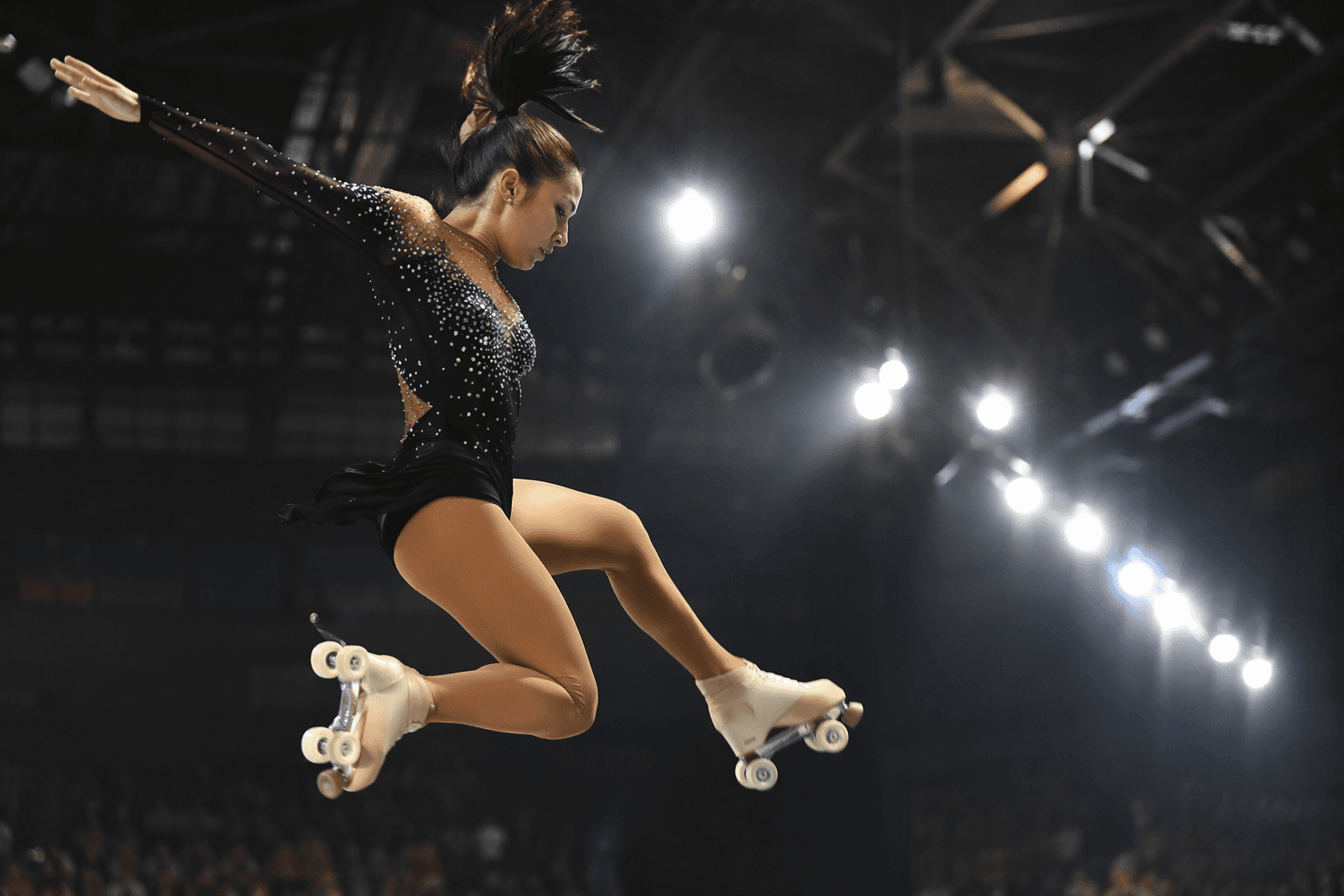
Freestyle grew out of those figure-skating roots, but it changed the goalposts. Instead of only tracing prescribed movement, skaters build individual routines that are judged for how well they fit the music as well as how cleanly they are performed. The National Museum of Roller Skating says the skater is expected to interpret the tempo and mood of the music, while performance is weighed by speed, jump height, sureness of spins and connective footwork.
That combination makes freestyle a different kind of pressure test. A skater needs the control base that figures demand, but the public-facing product is more open, more athletic and more expressive. It is the branch where a program can win on the strength of a clean jump set and still lose ground if the movement feels disconnected from the music.
Dance: from ballroom influence to a competitive lane
Dance skating has the oldest theatrical lineage of the three. The National Museum of Roller Skating traces it to the nineteenth century and credits Jackson Haines, the American ballet teacher and ice figure skater, with introducing skate dancing to the United States. Britannica calls Haines the father of figure skating and says he adapted ballet styles to a sport that had relied on a limited number of figures executed in a tight, awkward manner. That shift helps explain why both ice and roller skating later embraced more expressive dance-based forms.
Roller dance did not arrive fully formed as a judged discipline. The museum says skaters mostly used waltzes and marches until tango was introduced in 1932, and by 1939 skate dance had become a competitive sport. That timeline gives dance skating its own identity: it rewards musical timing, partnered movement and pattern discipline, not the same kind of aerial ambition that defines freestyle.
The present-day rules make that split explicit. World Skate’s couple dance competition uses one style dance and one free dance for Cadet, Youth, Junior and Senior skaters, while solo dance sits in its own framework. The result is a branch where rhythm and partnership are treated as core competitive skills, not decorative additions.
How the modern sport preserves all three traditions
World Skate, the IOC-recognized international governing body for roller sports, still organizes artistic skating as a family of separate disciplines. Its 2025 regulations set out solo dance, couple dance, free skating, pairs, quartets, precision and show groups as distinct event categories, which shows how the sport’s specialization has become official rather than accidental. The 2025 artistic world championships were scheduled for Beijing, People’s Republic of China, from October 17 to 30, 2025, with nearly 950 skaters expected at the Yanqing District Comprehensive Gymnasium.
That championship structure is the clearest proof that artistic skating still carries its history into the present. World Skate’s 2025 world championships included solo dance, couple dance, free skating, inline free skating, pairs, quartets, precision, and small and large show group categories, turning the old split between technical control, athletic expression and musical interpretation into separate lanes on the same event calendar. Solo dance offered one of the sharpest examples: World Skate named Quinty Van Lare of the Netherlands as the 2025 Junior Solo Ladies World Dance Champion with 149.54 points, and said it was the first time the Dutch national anthem was played there to honor a world champion.
That is the sport’s lasting shape. Figures teach control, freestyle rewards risk and musical attack, and dance turns timing and partnership into medals. Artistic roller skating still feels like three traditions sharing one identity because, at every serious level, that is exactly what it is.
This article was produced by Prism’s automated news system from verified source data, official records, and press releases, then run through automated quality and moderation checks before publishing. The system is built and supervised by the people who set the standards it runs under. Read our full AI policy.
Did this article answer your question?