Geelong Roller Derby rebuilds momentum after third-place Great Southern Slam finish
Geelong’s third-place Great Southern Slam run is real momentum, but the bigger test is turning a small core into a durable comeback.

Geelong Roller Derby has more than a feel-good result to sell right now. A third-place finish at the Great Southern Slam gave the club its first complete self-built team since 2018, and the timing could hardly be better with the Oceania Regional Championships landing in Norlane later this month.
A result that changes the ceiling
Third place at the Great Southern Slam is not the kind of finish you dismiss as a lucky bounce. The tournament drew 41 teams from 38 leagues and packed 52 bouts into three days at Adelaide Showground, so Geelong earned that placing against a broad and serious field. More important, it did it with a complete roster under its own banner rather than borrowing skaters from another team, which is the clearest sign yet that the club is rebuilding from the inside out.
That matters because derby comebacks are not built on one hot weekend. They are built on a core that stays together long enough to learn the system, absorb pressure and make the next result feel repeatable instead of accidental. Geelong’s challenge now is to turn this tournament finish into a pattern, not a headline.
The small core driving the push
The heart of the story is a compact group: Corey Scaffidi, Regan Pearce and Steph Darragh. They are the faces of a club trying to convert momentum into something sturdier, and the way they talk about the sport tells you why this run has resonated. Scaffidi says the mood around the club shifted sharply after the Great Southern Slam, to the point that a national-level goal that once felt laughable now feels like a genuine target.

Pearce adds another layer to the rebuild. She came into the sport through a skate fit program in 2023, which is a reminder that derby clubs do not survive on nostalgia alone. They need new entry points, welcoming pathways and enough structure to keep people from the first roll-through session to the point where they can survive in a bout.
Darragh brings the bluntest description of what the sport demands. Roller derby is not just aggression, it is controlled physical work: skating hard, making legal contact and staying on the track through two-minute jams. That combination of endurance and discipline is why the club’s small core matters so much. If those skaters stay healthy, stay engaged and keep the roster together, Geelong has a base to build on. If they drift away, the whole comeback story gets thinner fast.
Why the home championships matter now
Geelong’s next major stage is not somewhere unfamiliar. The 2026 WFTDA Oceania Regional Championships are set for June 27-28 at Leisuretime Sports Precinct in Norlane, and WFTDA says South Sea Roller Derby will host the event. The City of Greater Geelong is promoting it as a winter sporting draw, and for local derby fans, it is a rare chance to watch elite qualification-level skating in the same place where Geelong trains and plays.
That home-soil factor is bigger than a convenient venue. WFTDA says the Oceania event will bring the best teams from Australia and New Zealand together to fight for a place at the World Championships in Malmö, Sweden, in October 2026. For Geelong, being able to point to that tournament on its own turf gives the club a benchmark just beyond its immediate horizon: not just improving locally, but measuring itself against the standard that defines the region.
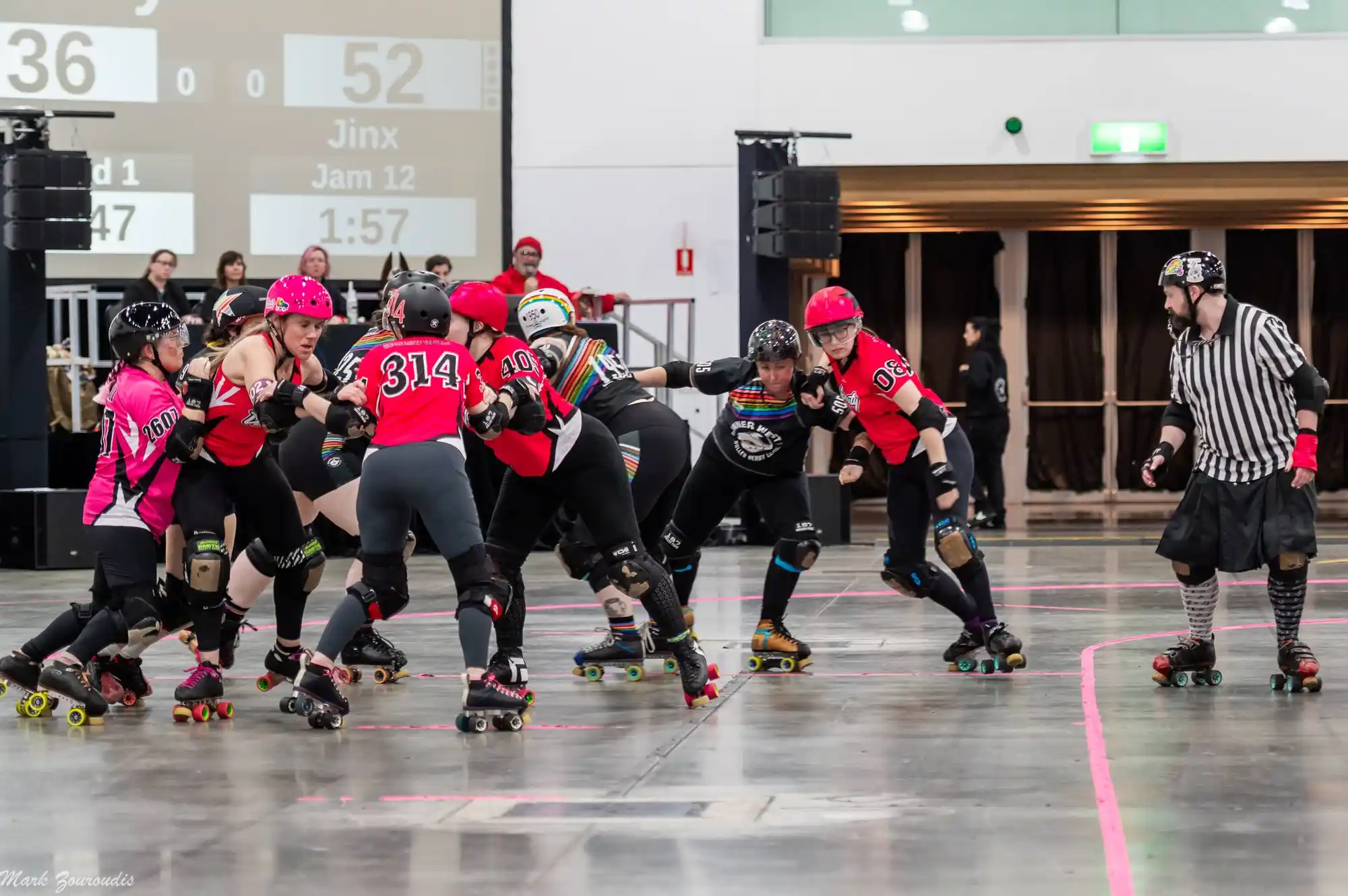
A real comeback in derby needs those benchmarks. It is one thing to look sharper in a local context; it is another to show you can stand in the same building as the region’s best and still keep your identity intact. That is the test Geelong is approaching now.
What a derby rebuild actually requires
The Great Southern Slam result is encouraging, but a sustainable rise asks for more than confidence. It needs roster depth so the club is not one injury or one work shift away from scrambling. It needs retention so the skaters who made the breakthrough are still there when the next cycle starts. It needs coaching stability, because systems matter in a sport where timing, blocking lanes and penalty management can decide a bout as much as raw speed.
Geelong has at least one thing many rebuilding clubs do not: a home, a history and a stated identity. Public listings describe Geelong Roller Derby as a volunteer-run club founded in 2008 that aims to provide a safe, inclusive and fun space for skaters. That is not just branding. In a sport built on volunteers, travel, training and a lot of unpaid labor, that kind of culture is what keeps a club alive long enough to compete for something bigger.
The third-place finish shows the floor is rising. The home regional championships will show whether the ceiling is too. If Geelong can keep this core together, deepen the roster and make its training habits hold up against regional opposition, the club will not just be back in the conversation. It will have a credible path to staying there.
This article was produced by Prism’s automated news system from verified source data, official records, and press releases, then run through automated quality and moderation checks before publishing. The system is built and supervised by the people who set the standards it runs under. Read our full AI policy.
Did this article answer your question?