How roller skating grew into a world championship sport
A workable four-wheel skate in 1863 set the stage, but world titles in Stuttgart, Monza and Washington turned roller skating into an international sport.
Roller skating did not become a world championship sport because it was popular. It became one because the equipment finally let skaters turn cleanly, race fairly, and be judged across borders. James Plimpton’s 1863 four-wheel skate was the breakthrough: it made controlled turns practical, and that changed skating from a crowd-pleasing pastime into something that could be timed, compared, and codified.
The skate that made competition possible
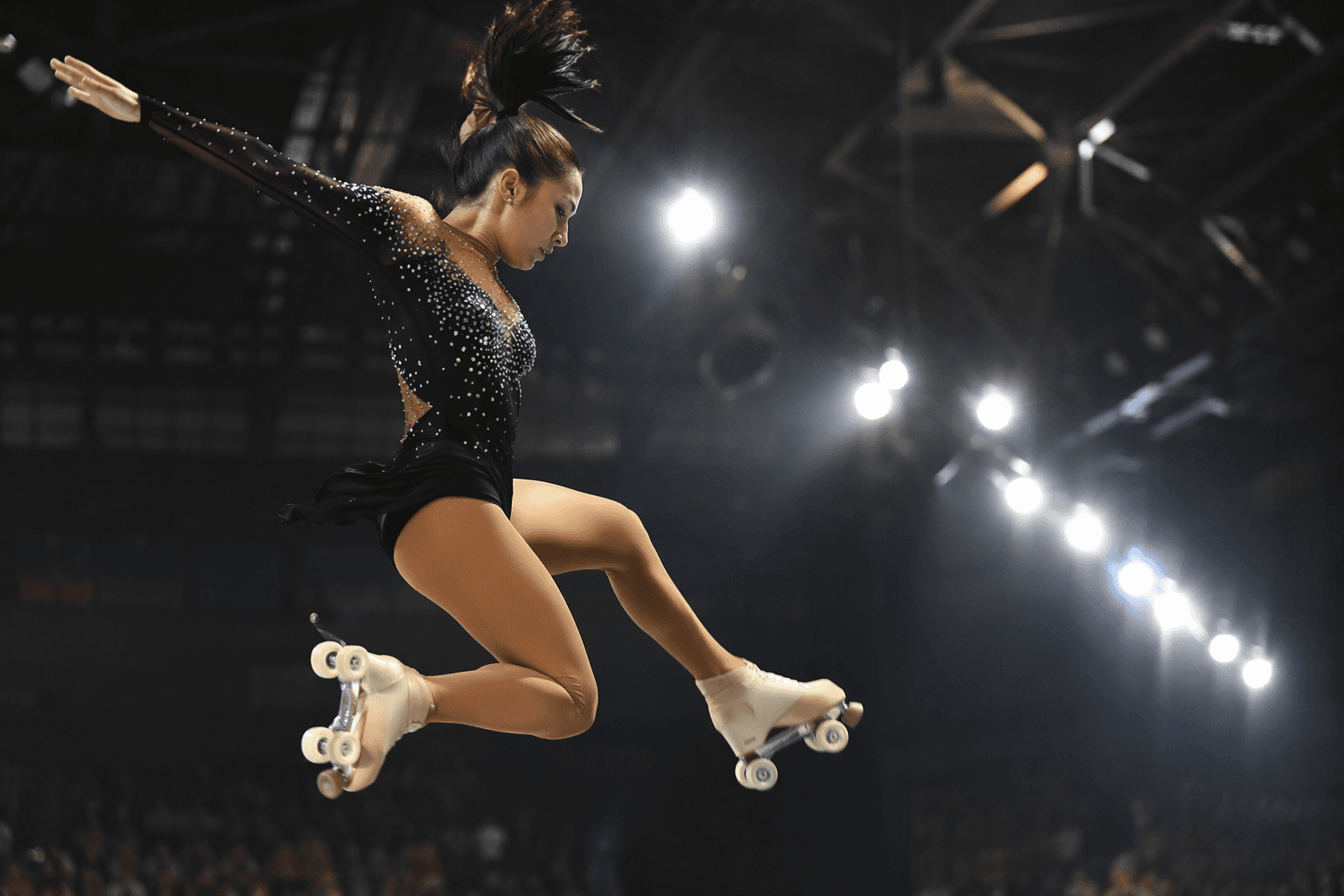
Before the championships, the sport had to earn its geometry. Plimpton’s design gave skaters the control that earlier, clumsier skates lacked, and that mattered because competition depends on repeatable movement. Once skaters could carve turns instead of fighting their equipment, roller skating could split into distinct competitive branches, including speed, hockey, figure or artistic skating, and dance. That split is still the sport’s fingerprint today: one set of wheels, but several very different games.
The first real governing structure came later, in Montreux, Switzerland, in April 1924. Fred Renkewitz and Otto Myer organized the founding meeting of the Federation Internationale de Roller Skating, with Switzerland, Great Britain, Germany, and France represented. That mattered as much as any podium finish, because a sport needs a federation before it can have a world title worth defending.
How the first world titles changed the sport
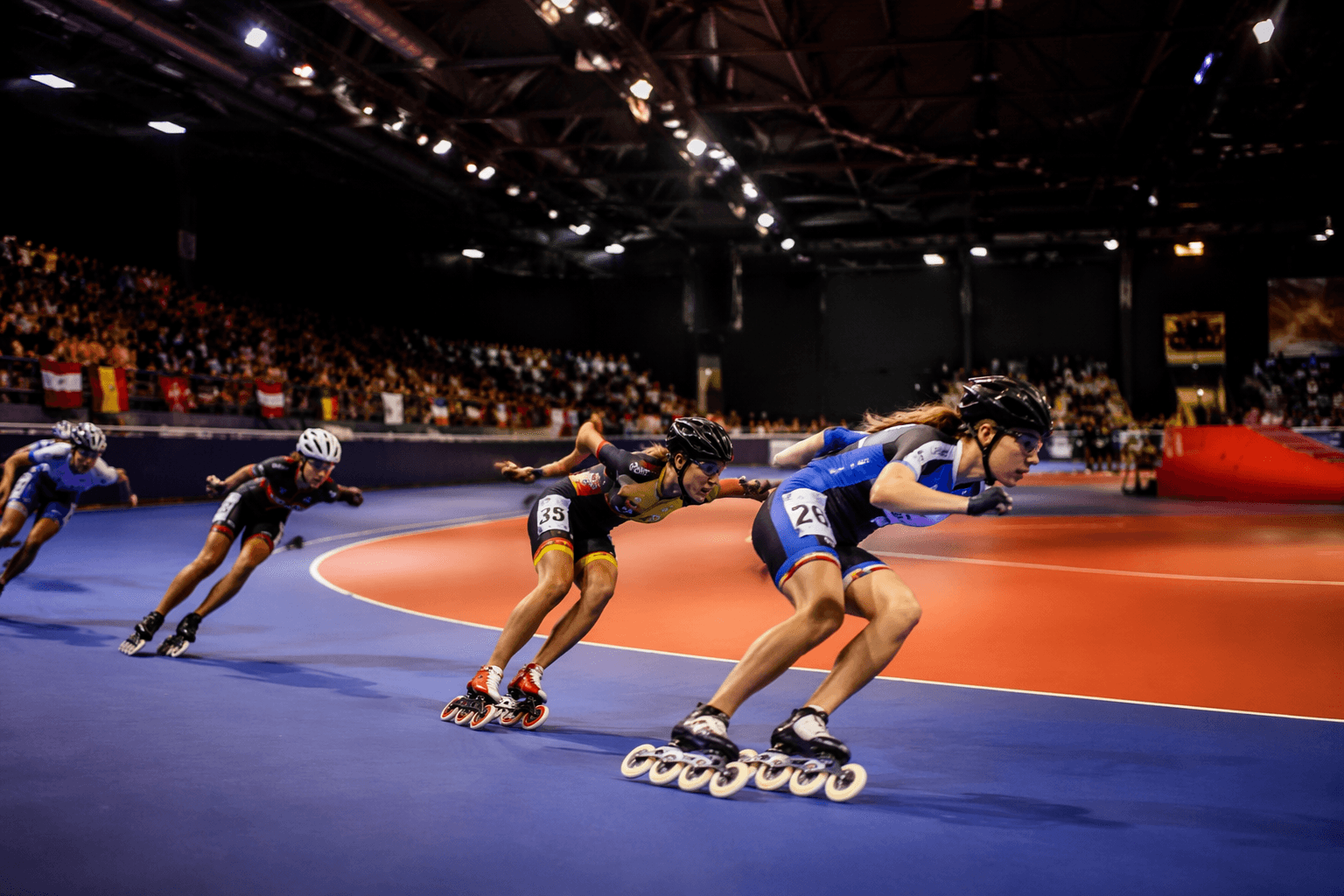
The first world championship staged by the federation was rink hockey in Stuttgart, Germany, in 1936. That choice says a lot about where roller skating was strongest at the time: hockey was the sport’s most organized international branch, so it became the first to be given a formal world crown. After Stuttgart, the calendar expanded quickly. Monza, Italy, hosted the first Roller Speed Skating World Championship in 1937, and London, United Kingdom, staged a track roller speed skating championship in 1938.
Those dates tell a bigger story than a list of winners. Stuttgart established the federation as a true championship body. Monza showed that speed skating had matured enough to be treated as its own discipline, separate from hockey. London pushed the sport one step further by proving that road and track racing could live inside the same international system. Roller skating was no longer one event. It was becoming a federation of disciplines.
World War II shut that growth down. Championships stopped, then resumed in 1947, and that restart did more than put medals back on the line. It reconnected the sport’s fractured international network and gave the federation a postwar reset just as roller skating was moving into a new global phase.
1947 made artistic skating part of the world stage
The first Artistic Roller Skating World Championship took place in Washington, DC, in 1947, and the result was a clean reminder that roller skating’s center of gravity was no longer fixed in one country. Swiss skater Ursula Wehrli won the title, beating Americans June Henrich and Charlotte Ludwig in front of a reported 2,500 spectators. The Swiss National Museum notes that the upset landed in a country where roller skating was exceptionally popular, with almost every town having at least one rink.
That is what made Washington important beyond the medal table. Artistic skating gave the sport a judged discipline with its own prestige, and Wehrli’s win showed that the world title system could travel. The title did not belong automatically to the host nation, even in a place where roller skating was already deeply embedded in local culture. That gave the championship real legitimacy.
From federation to global institution
The federation that started as FIPR eventually became FIRS, gained recognition from the International Olympic Committee in the 1960s, and then changed again after a 2017 merger with the International Skateboarding Federation, taking the name World Skate. World Skate says its world championships have since drawn more than 80 participating nations. That number matters because it shows the sport’s evolution from a European founding meeting to a genuinely global system.
The organizational shift also explains why roller skating’s modern identity is so broad. Hockey, speed, artistic, and dance are not loose recreational labels. They are competitive lanes with their own pathways, all built under the same umbrella. The championships forced that structure into being, and the federation kept it intact long enough for the sport to spread.
Barcelona and Buenos Aires put roller skating on the Olympic radar
The Olympic story is slower, but it follows the same logic. At Barcelona in 1992, rink hockey on quad skates appeared as one of three demonstration sports, marking the first time athletes on roller skates competed on the Olympic stage. Twelve nations entered the tournament, and the final was held at the Palau Blaugrana. That was not a medal breakthrough, but it was a legitimacy breakthrough: roller skating had crossed from specialist sport into Olympic sightlines.
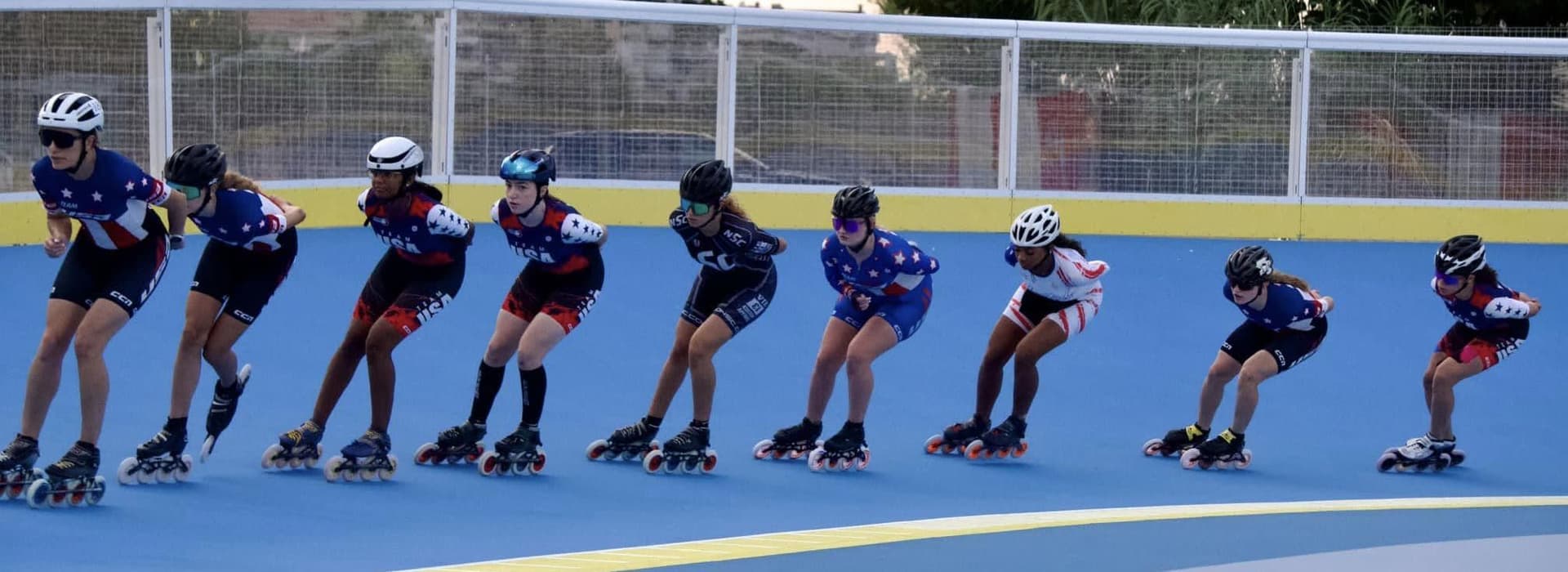
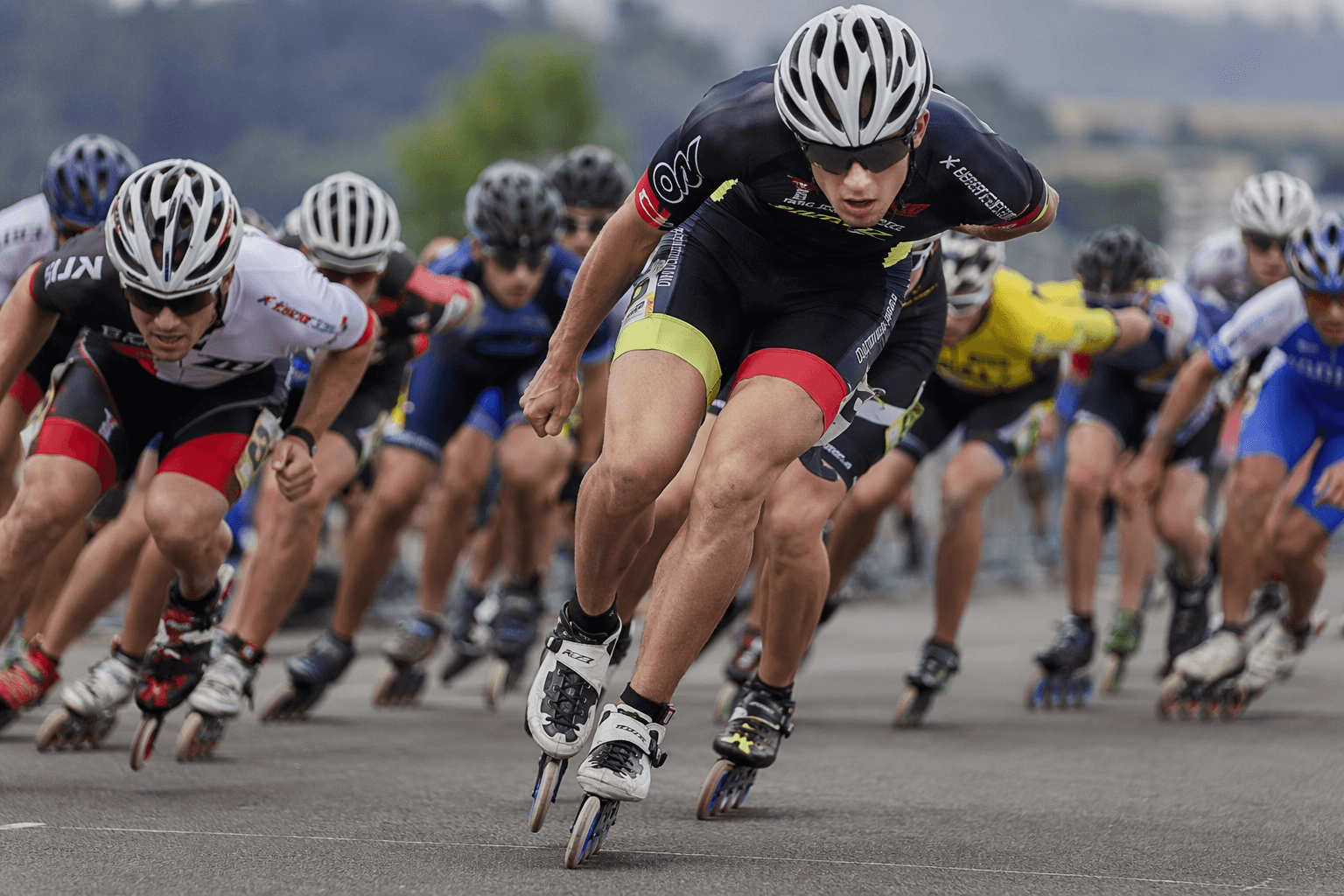
Speed skating took the next step at the 2018 Youth Olympic Games in Buenos Aires, where it became a medal event. The format was clear and unforgiving: men’s combined and women’s combined, with 14 skaters in each event. Every athlete raced 500m sprint, 1,000m sprint, and 5,000m elimination. That structure rewarded all-around speed, not just raw acceleration, and it showed how far the sport had come from its early days of improvised racing.
Why the modern format still works
The reason roller skating survives as a world championship sport is the same reason it grew in the first place: the competition system is built to measure more than one kind of talent. A skater has to explode in the 500m, manage the middle ground in the 1,000m, and survive the tactical grind of the 5,000m elimination. In hockey, speed, artistic, and dance, the same principle holds in different forms. The championships created the structure, the federation protected it, and the Olympic stage eventually recognized it.
That is roller skating’s origin story in competitive form: one practical skate, one federation, and a chain of championships that turned a popular pastime into a codified international sport.
This article was produced by Prism’s automated news system from verified source data, official records, and press releases, then run through automated quality and moderation checks before publishing. The system is built and supervised by the people who set the standards it runs under. Read our full AI policy.
Did this article answer your question?