Queen City Roller Derby honors Shock-Her as alumni spotlight grows
Queen City Roller Derby turned its June 25 alumni spotlight to Shock-Her, tracing how one skater’s path runs from a yard party to the league’s officiating core.
Queen City Roller Derby used its June 25 alumni feature on Shock-Her to show how a skater becomes part of the league’s institutional memory, not just its roster. As the 20th anniversary season has closed, the Alumni of the Month series kept going, with this installment centering on a name that already carries Buffalo derby lore.
The league’s own profile places Queen City among the larger roller derby operations in Western New York, with about 183 members, four home teams, a chartered travel team, a B travel team, a rookie program and junior derby teams. That scale helps explain why alumni stories matter: the league is not just producing bouts, but passing down the habits, standards and volunteer roles that keep the operation moving.
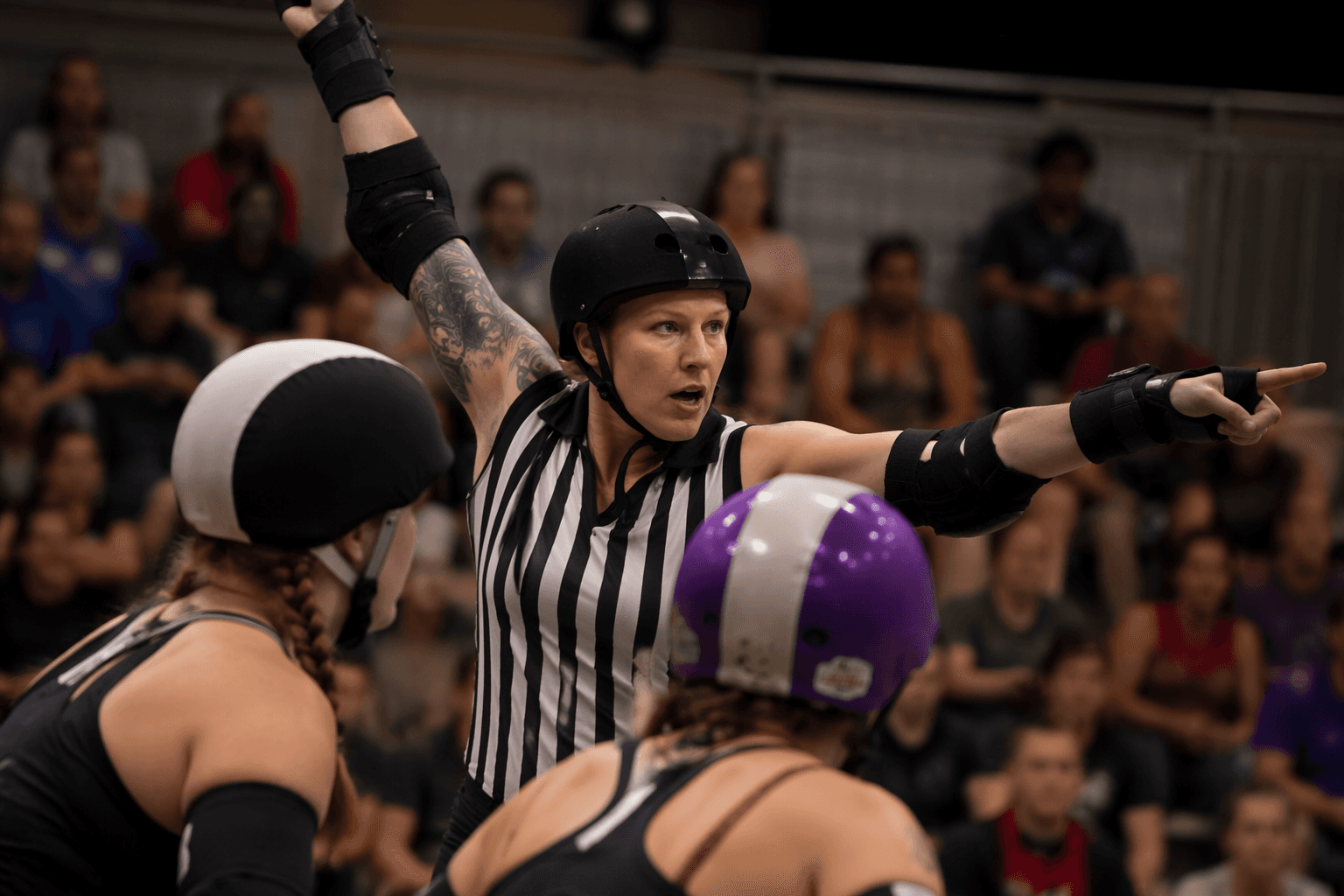
Shock-Her’s entry into derby came through a casual social gathering, not a formal tryout. A yard party led to conversation about the sport, then a nearby connection opened the door to come out, referee and eventually help with the league’s officiating group, The Buffalo Herd. That path captures one of roller derby’s defining traits in Buffalo and beyond: players, officials and volunteers often overlap, and a fan can become essential to game night without ever becoming a jammer.
Her background made the transition smoother. Shock-Her said she skated recreationally as a kid at Orchard Park’s rink and played hockey through high school, a combination that gave her comfort on skates and a feel for fast, contact-heavy play. The rink, Frank Young’s Sports Arena at 3651 N Buffalo St. in Orchard Park, remains part of the Southtowns skating landscape, with Orchard Park sitting southeast of Buffalo and home to Highmark Stadium.
That local route into derby also fits the sport’s larger structure. The Women’s Flat Track Derby Association says roller derby leagues rely on officials to keep games safe and fair, and it backs that work with standardized training, certification and clinics for referees and non-skating officials. Its Level 1 NSO path requires clinic attendance, a passed rules test, five bouts of experience and a signed code of conduct.
Queen City’s Buffalo Herd page frames the same role in practical terms, saying officials help ensure games are played safely and officiated clearly, while the league continues to look for people willing to help on skates or not. In a league this size, that is the inheritance Shock-Her represents: not just a skater’s career, but a template for how newer volunteers and fans keep the standards alive.
This article was produced by Prism’s automated news system from verified source data, official records, and press releases, then run through automated quality and moderation checks before publishing. The system is built and supervised by the people who set the standards it runs under. Read our full AI policy.
Did this article answer your question?