Roller derby’s original stars, how women shaped the sport’s rise
Roller derby was built to turn skaters into names people followed, and its first women, marquee stars, and TV-era showdowns still shape the sport’s identity.
Roller derby was built to turn skaters into names people followed. From the start, it mixed endurance, rivalry, and personality in a way that made women impossible to ignore and celebrity part of the product. The sport’s first stars did more than win races, they established the template modern derby still leans on: speed, showmanship, and teams that feel larger than the scoreboard.
From a restaurant tablecloth to a banked-track spectacle
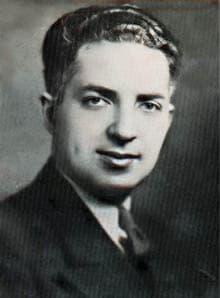
Leo Seltzer’s idea took shape in Chicago in the spring of 1935, and the origin story still sounds like a sports business pitch before its time. He sketched the concept on a tablecloth at Johnny Ricketts restaurant, then turned it into the Transcontinental Roller Derby, an endurance race inspired by dance marathons and bike races. The name “Roller Derby” was trademarked on July 14, 1935, and by early August, 50 skaters had been chosen for 25 male-female teams.
The first Transcontinental Roller Derby opened at noon on August 13, 1935, at Chicago Coliseum, with one man and one woman on each team skating on a banked track. That setup mattered because it gave the event a built-in competitive balance and a visual rhythm that fit live entertainment, not just athletics. As the format spread to Kansas City, Louisville, Cincinnati, Indianapolis, and New York City, roller derby was already operating like a touring brand, built around repeatable spectacle and recognizable faces.
Women were part of the core product from the beginning
The National Museum of Roller Skating says the original event gave Americans one of their first chances to see women compete under the same rules as men. Smithsonian Magazine has noted that in the original format men and women competed separately but by the same rules, which is a small distinction with a big cultural impact. It meant the sport could sell both athletic legitimacy and theatrical contrast without asking women to play a secondary role.
That tension helped define roller derby’s appeal. Women were not an add-on to the show; they were central to it, and that centrality helped the sport feel modern to audiences who were used to women being kept outside contact and endurance competition. The result was a template that still shows up in derby culture now, where skating skill, persona, and team identity move together instead of competing for attention.
The touring circuit made stars fast, and it made the sport fragile
Roller derby’s early years were not just glamorous road shows. On March 24, 1937, a bus crash near Salem, Illinois killed 21 members of a roller derby touring group that was traveling from St. Louis to Cincinnati, a reminder that the sport’s first circuit was both itinerant and dangerous. The accident sits in the history as a hard counterweight to the bright lights, showing how much of the early business depended on constant travel and packed arenas.
That fragility also explains why names mattered so much. In a sport built on touring stops and live crowds, the skaters had to become familiar fast, because audiences were buying personalities as well as results. The early roster created that habit, and later generations of derby inherited it as part of the sport’s DNA.
The first Hall of Fame classes turned skaters into a canon
The Hall of Fame, created in 1952 by the editors of Roller Derby News, preserved the names that had already become shorthand for the sport’s peak era. Johnny Rosasco and Josephine “Ma” Bogash were the first inductees, and the 1953 class added Billy Bogash, Wes Aronson, Ivy King, Peggy O’Neal, and Sammy Skobel. By 1956, Midge “Toughie” Brasuhn and Gerry Murray were in, giving the institution a mix of early circuit figures and television-era draw.
Those names matter because they represent different parts of derby’s identity. Ivy King, Peggy O’Neal, and Josephine “Ma” Bogash point to the sport’s early star system, where a skater’s identity could carry as much weight as a team result. Midge “Toughie” Brasuhn and Gerry Murray, meanwhile, fit the broadcast age, when a strong persona could travel through the screen and turn a local event into a national attraction.
The television era made roller derby feel bigger than the rink
New York television first broadcast a roller derby match in November 1948, and that same year Seltzer formed the National Roller Derby League with six teams. That combination changed the business model. Once the sport reached television, skaters had to perform for viewers who might never step into the arena, which pushed derby further toward recognizable rivalries, clean narrative arcs, and larger-than-life personalities.
The first Roller Derby World Series followed at Madison Square Garden in September 1949, and the first World Championship there ended with the New York Chiefs beating the Brooklyn Red Devils 26-21. Later accounts say the first five World Series were won by either the New York Chiefs or the Jersey Jolters, which tells you how quickly certain franchises became the sport’s anchor brands. This was not just competition, it was the creation of a league culture built around repeat matchups, city identities, and title games that could be marketed like major events.
Why the Hall of Fame still matters
The Hall of Fame reopened in Brooklyn on September 25, 2004 with Jerry Seltzer’s permission, and that reopening kept the archive connected to the family that helped build the sport. It also preserved a record of roller derby at the moment it became a mass spectacle, when the names, teams, and championships were still forming the vocabulary fans use today.
That is why the original stars still matter. Johnny Rosasco, Josephine “Ma” Bogash, Ivy King, Peggy O’Neal, Midge “Toughie” Brasuhn, and the rest were not just early winners, they were the proof that roller derby could sell speed, rivalry, and personality at the same time. Modern derby still lives inside that formula, and the sport’s history keeps returning to the same lesson: the race was only part of the show.
This article was produced by Prism’s automated news system from verified source data, official records, and press releases, then run through automated quality and moderation checks before publishing. The system is built and supervised by the people who set the standards it runs under. Read our full AI policy.
Did this article answer your question?