Why compulsory figures still define artistic roller skating
A single wrong turn costs 1.0 point, which is why compulsory figures still sort the elite from the merely flashy. The clearest edges in artistic roller skating still matter most when the program gets loud.
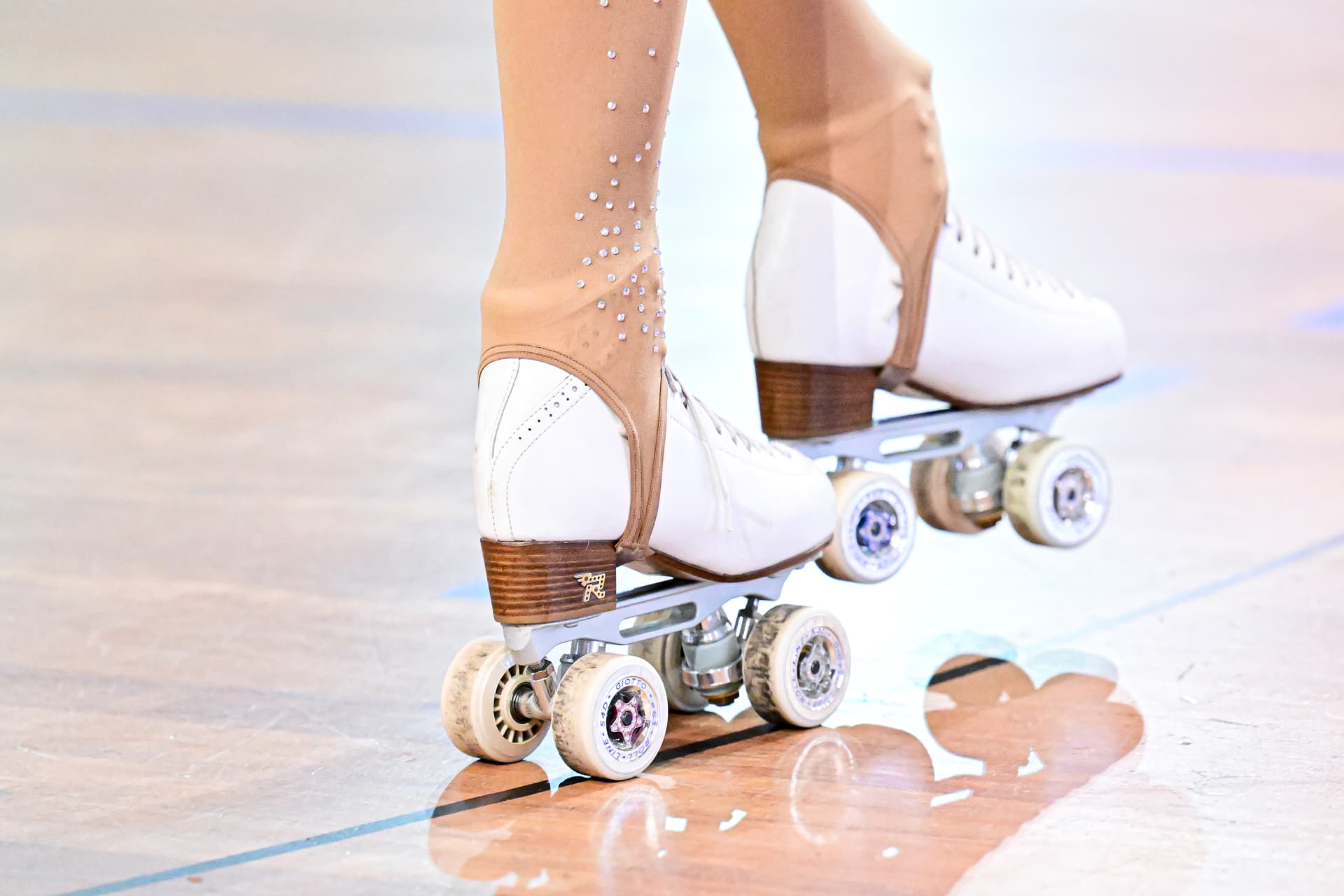
A single wrong turn in compulsory figures costs 1.0 point, and a fall or self-caused stop costs another 1.0 point. That is why the discipline still separates artistic roller skaters long before the music, speed, and spectacle of freestyle take over. In Buenos Aires, Federico Buracchi of Italy won the senior men’s World Cup figures with 113.200 points, while Felipe Werle of Brazil finished second on 110.900, a result line that shows how much can hinge on the cleanest tracing of a circle.
The technical base under the glitter
Artistic roller skating is built on three styles: figure skating, freestyle skating, and skate dancing. The National Museum of Roller Skating traces figure skating back to ice-skating ideas, then to a roller culture that developed more than 40 figures of jumps, turns, and spins as its own technical language. That evolution matters because compulsory figures are not an old side quest. They are the sport’s original measuring stick, the place where edge control, balance, and tracing accuracy are exposed with almost no room to hide.
The museum’s timeline makes the split feel decisive rather than nostalgic. Figures and freestyle were once performed together in competition, then separated into distinct events in 1949. From that moment on, the discipline stopped being a prelude to freestyle and became its own test, with its own standards, its own rhythm, and its own kind of pressure.
What the rules still demand
World Skate’s current figures regulations show how seriously the discipline is still treated. The rulebook divides skaters into Senior, Junior, Youth, Cadet, Espoir, Minis, and Tots, and it includes separate sections for drawing the figures, drawing the order of skating, and scoring figure skating. That structure matters because figures are not judged as a vague performance mood. They are judged as a technical exercise with fixed geometry and a prescribed method.
The judging system is the White system, which keeps the focus on line, edge, and control rather than on how exciting the skating looks to the crowd. World Skate also says that if there are 20 contestants or fewer, the figures can be skated as a continuous event, a format that gives the discipline an almost old-school concentration. With fewer interruptions and more direct comparison, each tracing becomes a clearer statement of control.
The penalties reinforce that standard. An incorrect turn costs 1.0 point. Falling or stopping on a figure through the skater’s own fault costs 1.0 point. Those deductions are small enough to sound simple and large enough to reshape a standings sheet, especially in a discipline where the difference between good and great often lies in repeated precision rather than in one explosive moment.
Why coaches still start here
Coaches value compulsory figures because they teach the same skills that decide whether a freestyle program lands or unravels. A clean figure demands stable upper body posture, centered weight transfer, balanced entry and exit edges, and exact timing through each turn. Those habits do not disappear when a skater moves into jumps, spins, or choreographic sequences. They become the hidden support system underneath everything louder.
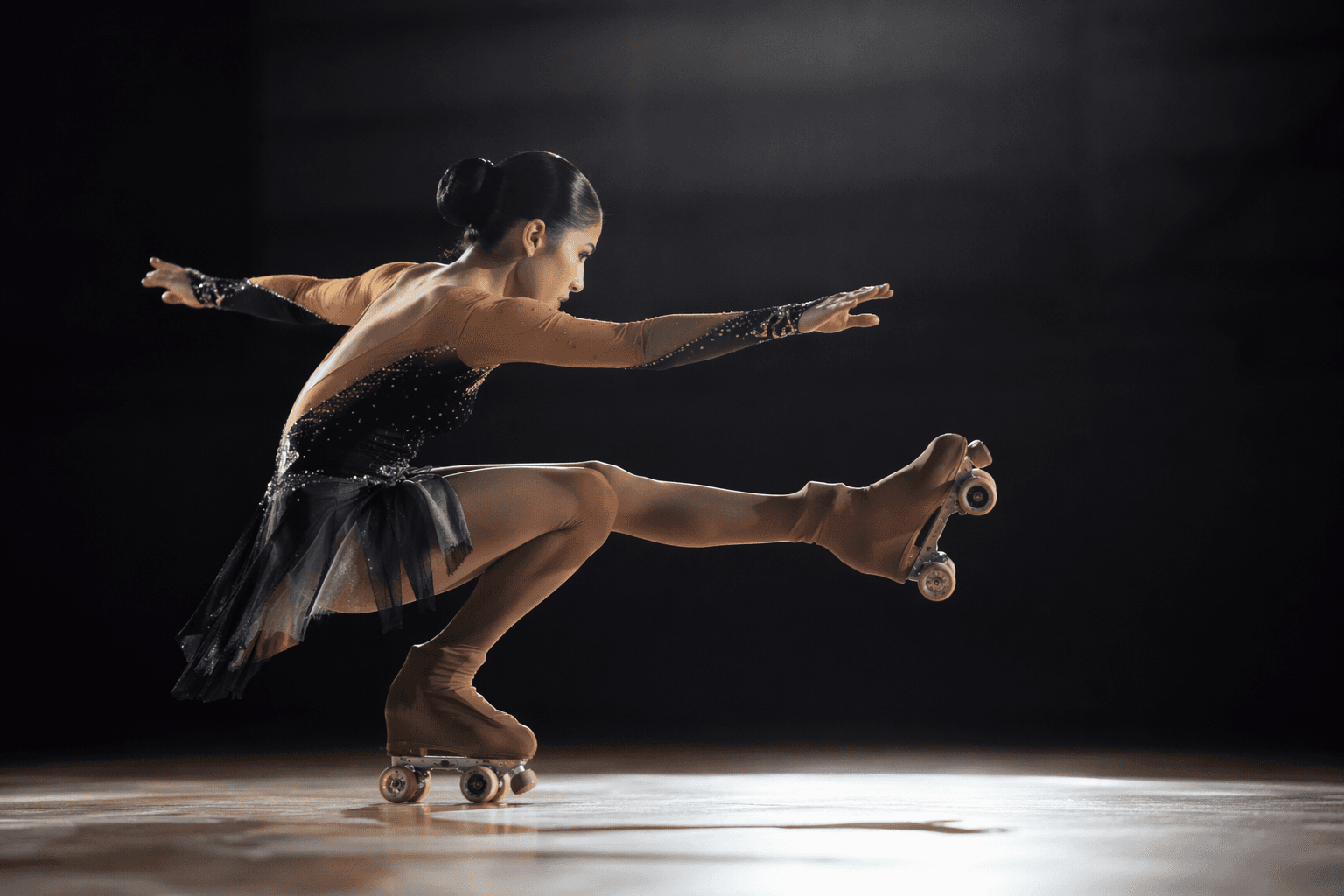
Veteran skaters tend to defend figures for the same reason judges keep them alive: the discipline reveals who can really control the blade. A freestyle routine can reward boldness and athletic risk, but figures reward the ability to repeat the same path with discipline and accuracy. That quiet test remains especially valuable in a sport that wants both artistry and technical truth, because a skater who can hold the line in figures usually carries cleaner edges into the rest of the program.
The contrast is part of the sport’s appeal. Freestyle brings the public-facing drama, the speed, the spins, and the theatrical finish. Compulsory figures are almost the opposite, a slow, exacting exercise in tracing circles and curves that can look invisible to casual viewers. Yet that contrast is precisely what gives figures their weight: they measure the discipline that makes the spectacle possible.
The current competitive stage
World Skate’s continuing results pages make it clear that compulsory figures are not museum glass. They remain an official category, with senior and junior men’s and ladies’ results tracked as part of the international calendar. The organization’s 2026 Artistic World Cup Figures is scheduled for Lynwood, Chicago, USA, from September 18 to 20, 2026, with categories running from Cadet to Senior. That kind of placement on a modern calendar says more than any nostalgic defense could. The event is still part of the international season, not a tribute act.
Buenos Aires in September 2025 gave the same message in competitive form. Buracchi’s 113.200 points put him on top of the senior men’s standings, with Werle at 110.900, Jeffrey Moats third, and Sean Folstein fourth. The judging panel came from across the international system, including officials tied to Italy, Paraguay, the United States, Argentina, and Brazil, which underlines that figures remain a globally officiated discipline, not a local specialty.
Why the history still matters
World Skate’s championships history page says the first World Championship was held in 1947. It also notes that until 1980 there were no medals for Free and Figure, only for Combined. That older structure explains why figures sit so deep in the sport’s identity. For decades, the best all-around skaters had to prove themselves through combined mastery, and even after the medal structure changed, the technical logic of that era never disappeared.
The National Museum of Roller Skating’s archive work keeps that lineage visible too. Its materials preserve competitive artistic roller skating forms from the 1960s through the 1990s, giving the sport a paper trail that shows how the discipline evolved while still preserving its formal vocabulary. The museum also frames artistic skating as part of a competitive sport with more than a century of history, which helps explain why figures continue to feel foundational instead of optional.
Compulsory figures still matter because they reveal the sport before it performs for the crowd. They show whether a skater can own the edge, hold the balance, and control the trace with enough authority to survive the cleanest possible test. In artistic roller skating, the loudest routine still rests on the quietest circles.
This article was produced by Prism’s automated news system from verified source data, official records, and press releases, then run through automated quality and moderation checks before publishing. The system is built and supervised by the people who set the standards it runs under. Read our full AI policy.
Did this article answer your question?