World Skate clarifies six inline freestyle disciplines for 2026
World Skate has locked inline freestyle into six disciplines, and each one rewards a different skill set. The rulebook now reads like a map of how the sport is judged, trained and ranked.

World Skate’s 2026 regulations split inline freestyle into six disciplines: Speed Slalom, Freestyle Slalom Classic, Pair Slalom, Freestyle Slalom Battle, Freestyle Slide and Free Jump. The same sport can look like a sprint, a dance routine, a duel, a braking demo or a vertical challenge and still fit one competitive system.
The six-event map
Inline freestyle runs on a structured international pathway from open-entry events to World Championship titles. The six disciplines listed in the 2025 World Championships bulletin are the same six in the 2026 world-ranking rules.
Speed Slalom
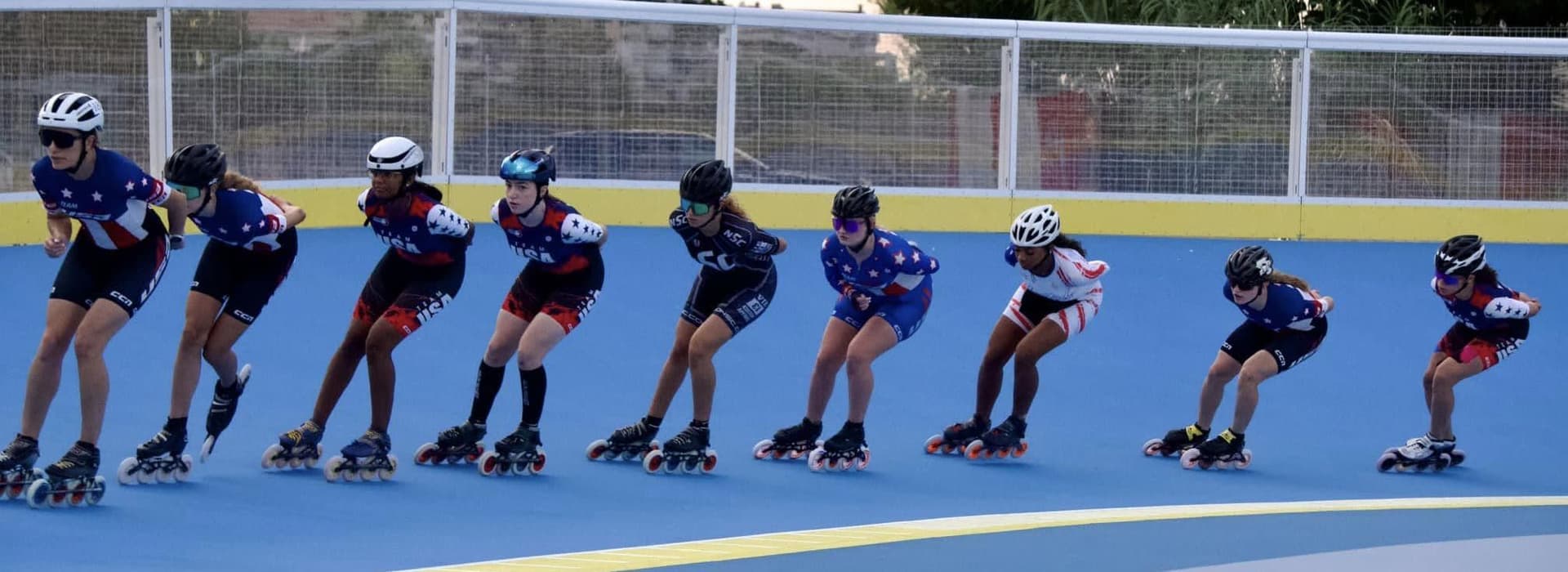
Speed Slalom is the cleanest read for new eyes, but it is harder than it looks. The skater is chasing acceleration, rhythm and precision through a cone line, so every fraction of a second and every clean pass counts. It is inline freestyle’s stopwatch event, with balance and footwork deciding whether a pass counts clean.
Freestyle Slalom Classic
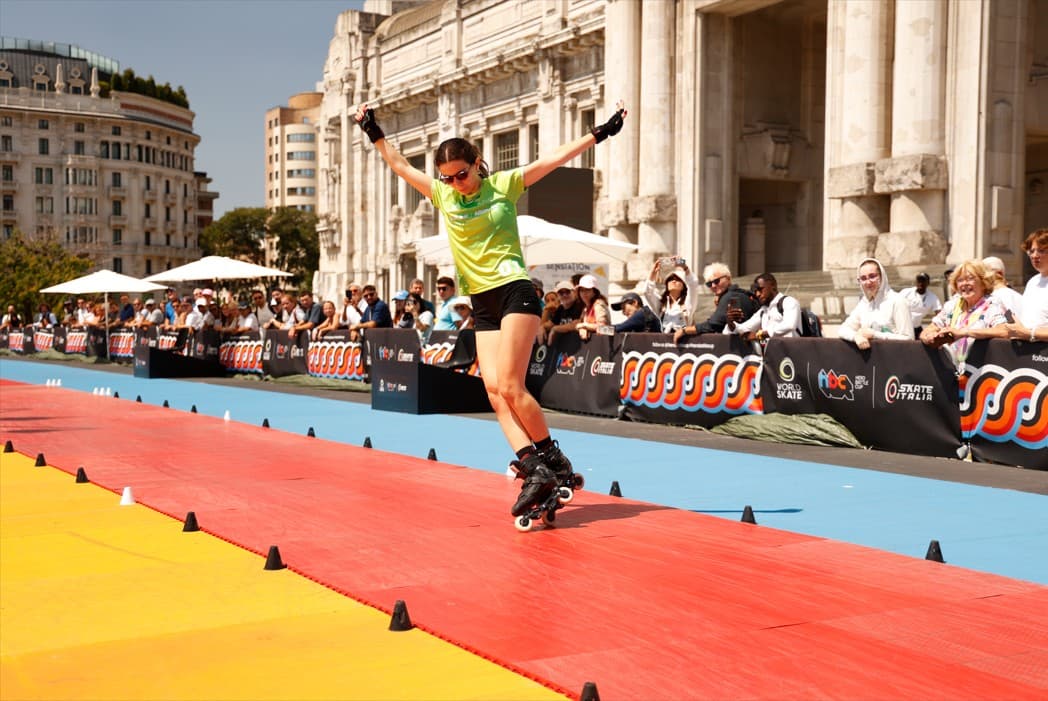
Classic is where the sport starts to show its artistic engine. This format emphasizes technical sequences and routine construction, which means the skater is not just executing tricks but building a performance that has shape, flow and difficulty. It rewards planning as much as execution, and the rulebook grades technique and artistic presentation separately.
Pair Slalom
Pair Slalom takes that routine logic and adds another moving body. Synchronization is the whole point, and that changes the training load immediately: partners have to match timing, spacing and transitions under pressure. The judging structure separates synchronization from technique and artistic presentation.
Freestyle Slalom Battle
Battle is the sharpest contrast with Classic. Instead of a single choreographed run judged in isolation, the format turns skating into a head-to-head comparison built around control, style and confidence. The 2026 rulebook includes battle-specific rules, including best trick and last trick.
Freestyle Slide
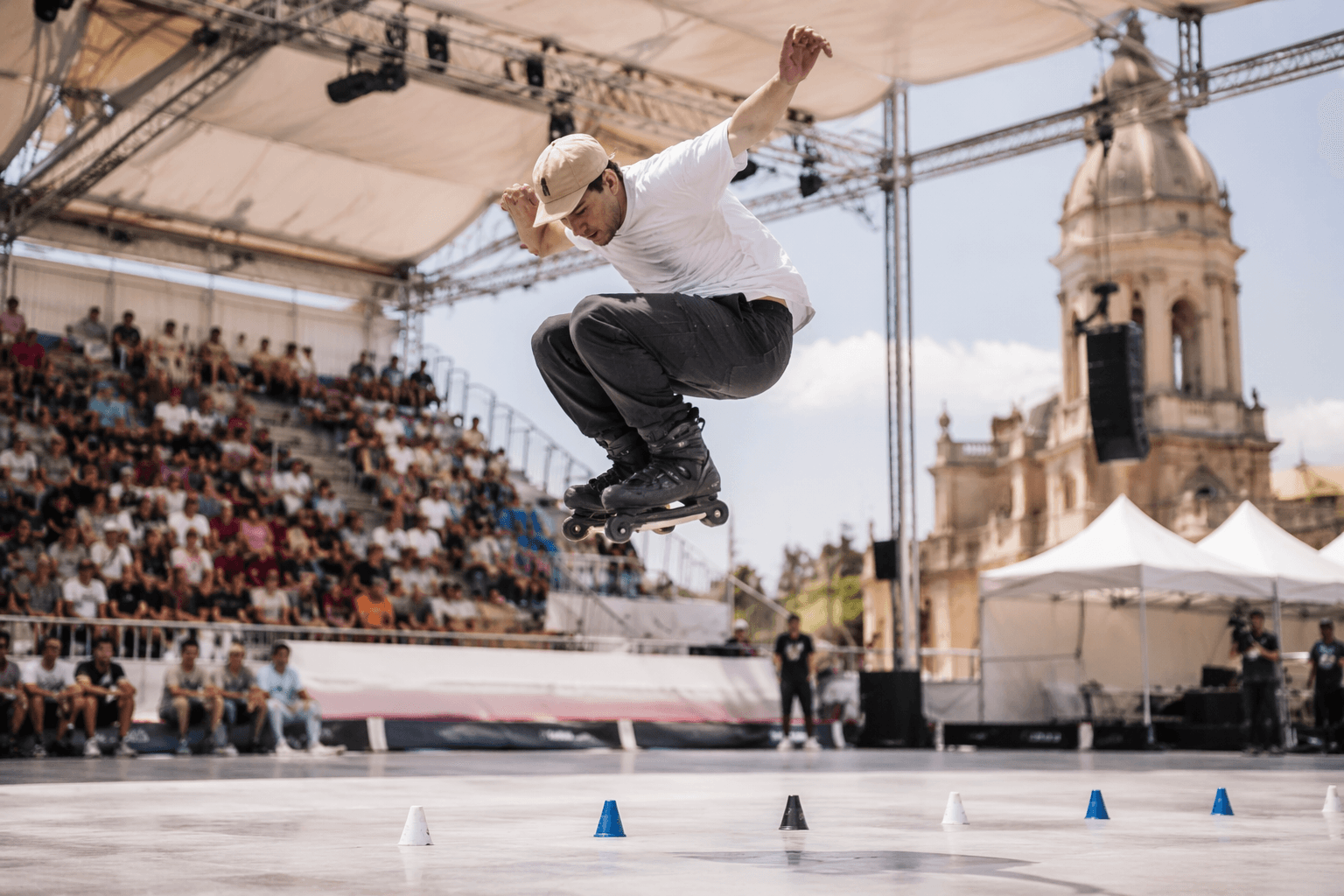
Freestyle Slide asks for a different kind of nerve. This is the braking and wheel-control event, the one that puts a premium on how cleanly and how dramatically a skater can stop, hold and manipulate grip. If Speed Slalom is about moving fast through space, Slide is about controlling the exact moment motion gives way to friction.
Free Jump
Free Jump is the vertical test, and the rulebook gives it its own validation process. The format rewards pop, timing and commitment, but only if the jump is valid under the event’s specific standards. In a sport built on precision, height only counts when the landing and the attempt hold up under the judge’s eye.
How the rulebook shapes judging
The 2026 rulebook does more than list events. It separates the sport into grading layers that make the judging intelligible: technique, artistic presentation and synchronization each have their own lane, and battle brings in its own best-trick and last-trick logic. That structure keeps inline freestyle from collapsing into a single vague “style” contest. A skater can be brilliant on difficulty and still lose ground on presentation, or nail a creative run and still be marked down on penalties.
That structure also explains how athletes train. A Speed Slalom specialist is chasing explosive efficiency through cones. A Classic skater is drilling sequence memory and line quality. Pair skaters are rehearsing shared timing. Battle skaters need adaptability on demand, Slide skaters need controlled aggression, and Free Jump skaters are living and dying by validated attempts.
Why the ranking rules matter
The 2026 ranking rules define the world ranking as a classification of skaters established for each discipline, and homologated events award ranking points. Those rankings are updated every month, which keeps the ladder active instead of frozen in one championship cycle.
The point decay is just as important as the point gain. Ranking points drop 12 months after they are awarded, or when the same event is held the following year. That pushes athletes toward consistency, not one-night spikes. If a skater wants to stay high in the table, the result has to survive across a season.
From Chengdu to Singapore
Inline freestyle debuted at The World Games 2025 in Chengdu, People’s Republic of China, from August 7 to 17, 2025. The Games bulletin placed inline freestyle alongside inline hockey and speed skating as one of World Skate’s three sports on the program, and World Skate framed the discipline as part of a fast-growing scene, especially in China.
The 2025 Inline Freestyle World Championships bulletin listed Singapore from December 2 to 7, 2025, then a later bulletin updated the dates to December 1 to 4, 2025. World Skate counted 32 countries and 370 athletes at the event. China’s medal haul underscored where the competitive center of gravity sits right now.
This article was produced by Prism’s automated news system from verified source data, official records, and press releases, then run through automated quality and moderation checks before publishing. The system is built and supervised by the people who set the standards it runs under. Read our full AI policy.
Did this article answer your question?