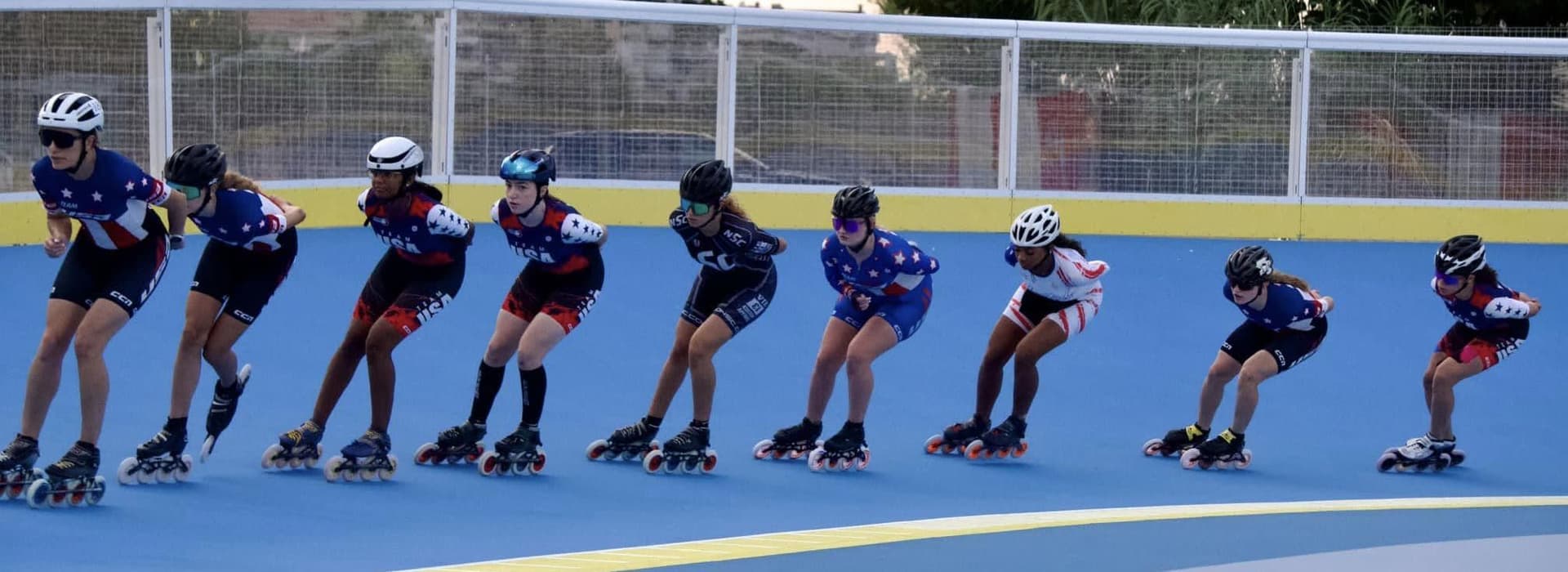
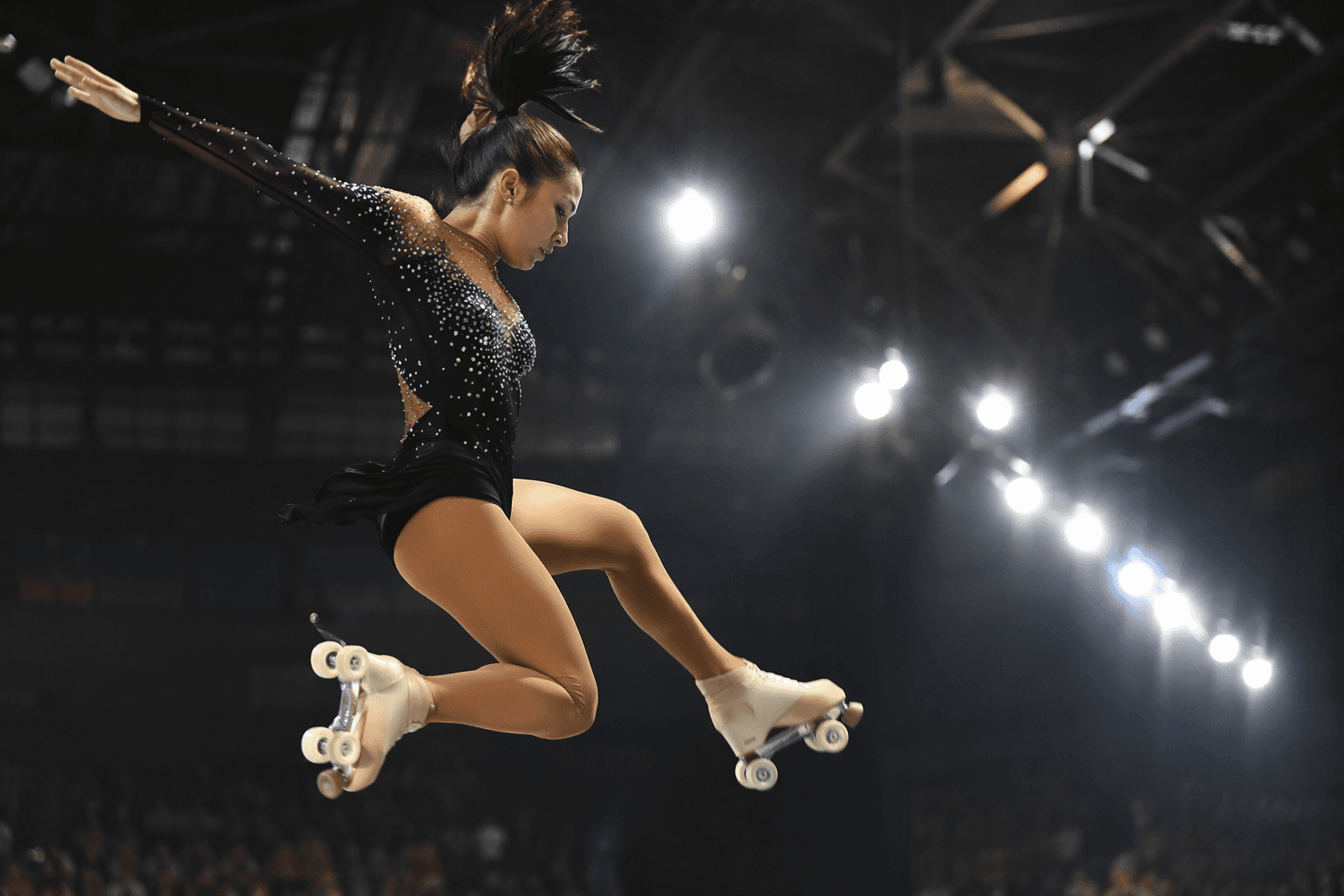
World Skate quartets reveal roller skating’s most technical discipline
Vortex’s world title and ROLAR4SK8’s 67.18-point runner-up finish show why quartet skating rewards razor-thin control, not just speed or flair.

World Skate quartets look like four skaters sharing one set of lungs, but the discipline is really a test of rulebook precision. Spain’s Vortex won senior quartets at the 2025 World Artistic Championships, while Portugal’s ROLAR4SK8 took second with 67.18 points, a result that underlines how little separates a clean run from a costly slip when synchronization, spacing, and timing all count.
How quartets are judged
The quickest way to misunderstand quartets is to watch for only the big tricks. World Skate’s RollArt system rewards the quality of the formation just as much as the difficulty of the skating, with value tables for synchronized traveling sequences and line element sequences. That means the panel is not just asking whether the quartet can skate hard, but whether all four athletes can hold the same rhythm, the same edge, and the same body line while the shape of the program keeps changing.
The judging sheet makes that pressure visible in the penalties. Late entry to the rink, late exit, too much kneeling or stopping, too many jumps or spins, misuse of props, costume violations, inappropriate lyrics or expletives, and falls can all trigger deductions. In other words, a quartet can skate fast and still lose ground if the program breaks the illusion of control for even a moment.
Senior, junior, and cadet are separate events
Quartets are not a fringe exhibition tucked into the margins of artistic skating. World Skate splits the discipline into senior, junior, and cadet categories, and each tier has its own official control sheets and regulation set. World Skate also keeps separate quartet regulations for 2026 and distinct RollArt quartet values, which shows the event is treated as a codified competitive lane, not a novelty act.
That structure matters because the age tier changes the way a program is built and judged. Senior quartets work from a broader template, but the requirements are still highly specific: a program must include one open block sequence or one line element sequence or one canon element, plus one traveling sequence or one cluster sequence. Cadet quartets are even more clearly defined on the control sheet, with the routine required to include one canon element, one traveling sequence, and one creative element.
Why synchronization is so hard on skates
Quartets are difficult because the skaters are never just doing the same move. They are doing the same move while maintaining exact spacing, matching tempo, and shifting formation at speed, all on a surface that punishes hesitation. When one skater is a fraction late into a turn or a half-step off on entry, the whole shape can warp, and the judges notice that immediately.
The technical vocabulary tells the story. Canon work asks skaters to repeat the same movement in a staggered sequence, so timing has to be exact or the ripple effect disappears. Traveling sequences demand that the team move together through space, while line, block, and cluster elements each create different geometric stresses on the group’s balance and spacing. A clean program is not just synchronized; it is synchronized while changing shape.
What casual fans usually miss
Fans often focus on jumps, spins, and dramatic music changes, but quartet skating lives in the transitions. The most valuable moments can be the ones that barely look flashy: a line that stays perfectly straight, a block that holds its edges, or a cluster that compresses and expands without breaking unison. Those are the places where the program either builds technical credit or leaks it.
Music and costume choices matter because they support the whole illusion. The rules are strict enough to penalize costume violations and inappropriate lyrics, which means presentation is not decorative. It is part of the competitive package, and it can affect whether the routine reads as polished stagecraft or as a sequence of disconnected elements.
World Skate has given quartets a real competitive stage
Quartets have also earned a strong public footprint. World Skate’s artistic coverage from World Skate Games Italia 2024 included separate competition videos for senior quartets and junior quartets, and the final day of artistic competition at Fiera di Rimini drew nearly 4,600 fans. That kind of turnout shows the discipline can fill a venue, not just stream into a niche corner of the internet.
The broader circuit is equally substantial. World Skate said the 2024 Artistic International Series brought together athletes from more than 15 countries and more than 600 skaters overall. Quartets sit inside that ecosystem as one of the sport’s most exacting events, where the margin for error is tiny and the reward for precision is visible to anyone who knows how to read the formations.
The current standard-setters
The current competitive picture gives the discipline a clear center of gravity. World Skate’s 2025 artistic world championships coverage in Beijing featured quartet events, and the upload metadata identified Spain’s Vortex as the new senior quartet world champions. Portugal’s ROLAR4SK8 finished second with 67.18 points, a reminder that the category is measured in very tight scoring bands where one break in spacing or one mistimed transition can decide the podium.
That is what makes quartets so revealing for roller skating as a whole. The event compresses everything the sport demands into one routine: technical difficulty, formation discipline, musicality, costume control, and the ability to make four athletes look like a single moving shape. The rules are what make that illusion possible, and the best quartets are the ones that never let the audience see the machinery underneath.
This article was produced by Prism’s automated news system from verified source data, official records, and press releases, then run through automated quality and moderation checks before publishing. The system is built and supervised by the people who set the standards it runs under. Read our full AI policy.
Did this article answer your question?