World Skate updates rink hockey rules, highlighting its team structure
Rink hockey looks simple at five skaters a side, but World Skate’s updated rules turn every substitution, foul, and injury into a tactical event.
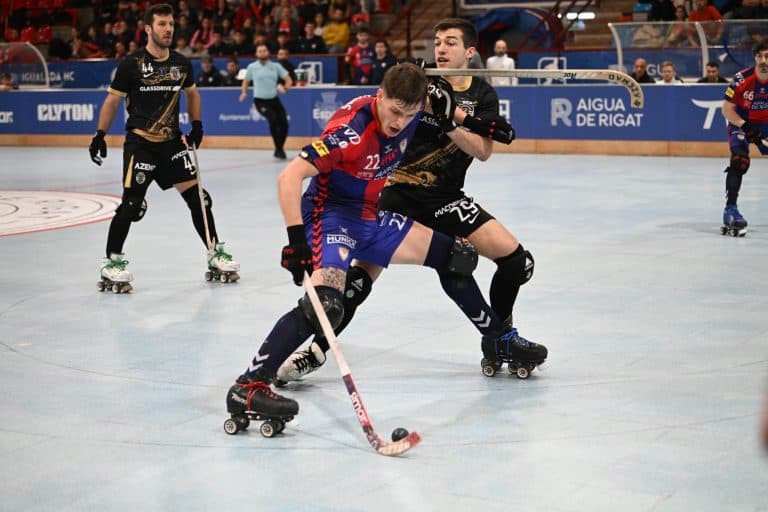
Rink hockey is roller skating stripped of solo vanity and rebuilt as a true team game. World Skate’s updated rulebook puts five skaters on the floor at a time, one goalkeeper and four rink players, and that small number makes every line change, penalty, and blown assignment matter immediately. The 2026 regulations, now active in Europe and the rest of the world on separate dates, give the sport the kind of structure that makes hockey fans lean in.
Five on the floor, but the bench is part of the game
The cleanest way to understand rink hockey is to think of it as a sport where the bench is always involved. World Skate’s 2026 rules say a squad is built around 10 players and 6 technical representatives, with eight rink players and two goalkeepers available in the match group. That is a bigger tactical unit than the five skaters who can actually be on the rink at once, and it is the gap between those two numbers that creates the sport’s rhythm.
The rulebook also draws a hard line when attrition gets too severe. If injuries or sanctions reduce a side to only three rink players, or two rink players plus one goalkeeper, referees must end the match and record the reason in the official report. That is not a cosmetic detail. It tells you how tightly the game protects its competitive balance, and how quickly a roster shortage can turn a contest into a formality.
World Skate’s regulations also organize the game around playing zones, substitutions, fouls, penalties, and tiebreakers. That matters because rink hockey is not just skating around with a stick and a ball. It is a controlled possession sport, where structure decides whether speed becomes pressure or just wasted motion.
Why the surface changes the sport
Rink hockey is played on a smooth, flat rectangular surface, and that geometry drives everything else. Players can use quad skates or inline skates, but the one constant is that goals only count when the stick directs the ball into the opponent’s net. In other words, the feet create the opening and the stick finishes the job.
That split between movement and finish is what makes the sport so watchable for anyone used to team hockey. The skating is not decoration. It is the engine that generates angles, pulls defenders out of shape, and creates the half-second that decides whether a pass is harmless or a scoring chance. Once you see the game that way, a good breakout or a clean switch of play starts to feel as valuable as a clean shot.
The updated rule timing also says something about the sport’s modern identity. World Skate says the current regulations were approved for Europe from August 1, 2025, and for the rest of the world from January 1, 2026. This is not a frozen pastime living off nostalgia. The rules are being actively managed, and the sport keeps tightening the language around how it is played.
A game with roots older than most people realize
Rink hockey’s modern shape reaches back to 1878, when roller hockey, then called roller polo, began at the Denmark Roller Rink in London, England, according to the National Museum of Roller Skating. By the 1880s, Midwestern United States cities were already forming leagues and adopting rules of play. That early organization matters because it shows the sport was not an afterthought to skating culture. It developed fast, with enough structure to support leagues before most modern roller disciplines had even settled their identities.

The museum’s history also captures how different the early game looked. Curved sticks, sometimes called canes, were used alongside quad skates, and the game could be played with either a ball or a puck depending on the variation. That makes the present-day version feel like a refined descendant of a much rougher, more experimental rink culture.
For readers who follow roller skating closely, that history is the missing context that explains why rink hockey feels both familiar and strangely specific. It shares the balance, edging, and speed control of other skating disciplines, but it funnels them into a team game with a clear attacking and defensive grammar. The sport has always lived in that space between freestyle movement and organized tactics.
Montreux gives the sport its international spine
If the rules show how rink hockey works, Montreux shows how seriously the sport takes its own history. World Skate describes the Nations Cup as the oldest international rink-hockey tournament, born in 1921, and says the 70th edition returned to Montreux in 2026. The event was staged at the Salle Omnisports du Pierrier in Clarens, and World Skate says it featured 20 matches over five days.
Montreux Hockey Club adds another layer to that story. World Skate says the club was founded in 1911 after English tourists helped introduce roller hockey to the Lake Geneva area. That gives the town more than just a hosting role. It sits inside the sport’s international memory, which is rare for any skating discipline and especially valuable for a tournament that has survived into its 70th edition.
The 2026 result was decisive: Argentina beat Italy in the final to claim its fifth Nations Cup title. That puts real competitive weight behind the tournament, because the title is not ceremonial, and the final is not just a showcase. It is a piece of the sport’s live hierarchy, with Argentina adding another mark to a legacy that now stretches across generations.
The national powers tell you how concentrated the game is
The title counts also reveal how concentrated rink hockey’s elite has become. World Skate says Portugal remains the most decorated nation in Nations Cup history with 19 titles. Spain’s men have won 17 World Championships, and Spain’s women have won 5. Those are not small footnotes. They are the numbers that define the sport’s benchmark nations and explain why every major event quickly turns into a conversation about who can sustain excellence across both decades and formats.
That concentration of power is part of what makes the sport strategically rich. In a game with only five players on the rink, a disciplined system can travel well from one tournament to the next. A nation that controls space, manages substitutions cleanly, and survives the swing moments between attack and defense usually stays relevant longer than the flashier side built on individual skill alone.
Rink hockey rewards the same instincts that make other team sports compelling: reading rotations, protecting the middle, and forcing the next pass before the opponent is ready. World Skate’s updated rules make that structure explicit, and the history from London in 1878 to Montreux in 2026 shows the sport has spent nearly 150 years turning skating into a tactical code.
This article was produced by Prism’s automated news system from verified source data, official records, and press releases, then run through automated quality and moderation checks before publishing. The system is built and supervised by the people who set the standards it runs under. Read our full AI policy.
Did this article answer your question?