Europe’s roundnet Pro status tied to results, requalification path set
Europe’s Pro tier now works like a credential, not a label. The path in is clearer, but keeping it may be even harder.
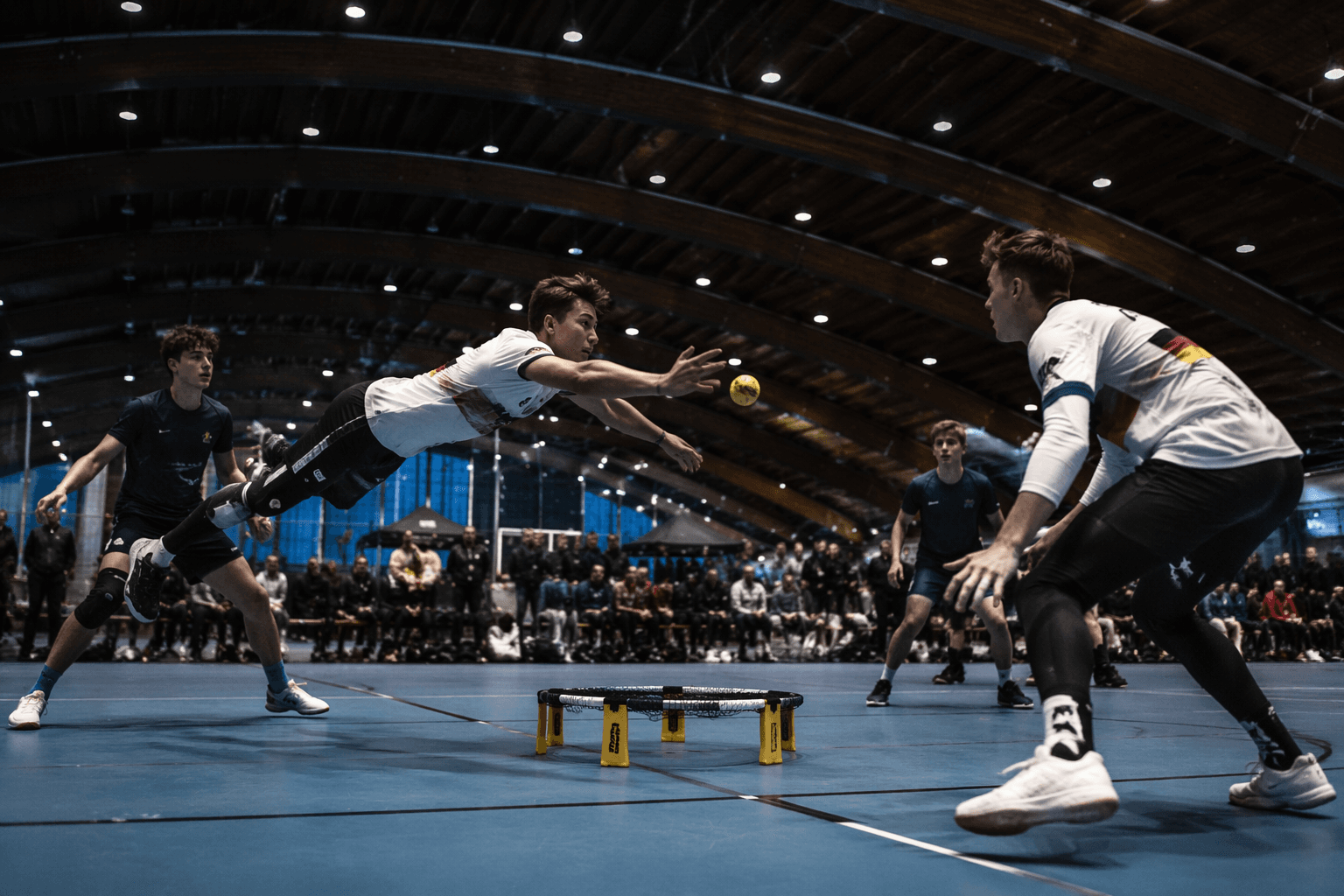
Europe’s roundnet Pro tier is no longer a loose status symbol. It is a results-based gate that decides who gets automatic access to the top of the European Tour Series, who can jump straight into the ETSC Basel Elite bracket, and who has to rebuild through sanctioned events or the Contender path. That matters because EURA is pairing prestige with logistics: if you are in Pro, your season planning changes; if you are out, your route back is defined by placings, field sizes, and deadlines.
What Pro status changes
Pro status is the difference between being part of the elite conversation and having to fight for every step into it. At ETSC Basel 2026, the Elite division is capped at the top 16 teams in each category, Women, Open, and Mix, and the top 3 Pro teams in each category at every ETS stop receive a direct invitation into that Elite field. Those invitations are not cosmetic. Invited teams had to confirm by July 12, 2026, and roster lock followed on July 13, which means the status shapes not just bragging rights but travel plans, partner choices, and the actual calendar of a season.
That structure gives Pro status immediate value. It shortens the road to the championship weekend in Basel, where the Elite field is the destination for the entire European circuit. It also makes the 2026 ETS season feel like a ladder with a hard top rung: Bucharest on April 12-13, Budapest on May 9-10, Göteborg on June 13-14, Toulouse on July 11-12, and Basel on August 8-9 across five countries. If you are chasing Elite, every stop matters because each stop can move you into Basel or leave you outside the gate.
How EURA defines the tiers
The system is built on a simple distinction that carries a lot of weight. A category is the sex-based grouping, such as Women, Men, Open, or Mix. A division is the skill tier, such as Pro or Contender. In EURA’s terms, a Contender team is made up of two players without active Pro status or an equivalent status, while a Pro team is made up of two players with active Pro status relevant to the category they are entering.
That is not semantics. It is the backbone of how Europe is trying to professionalize the sport. Pro status is awarded through results in designated tournaments, including ETS events and officially sanctioned competitions, and it is based on final ranking in those events. In other words, EURA is not treating Pro like a reputation label or a legacy badge. It is a performance label, and the numbers on the bracket decide who gets to wear it.
How players qualify, and how they keep it
The qualification pathway is most detailed in Women Pro, and that detail tells you how serious the system is about keeping the top tier current. Players can qualify by already holding Open Pro status, by finishing among the top teams at ETS events, by placing at sanctioned events under specific field-size conditions, or by holding Continental Region Equivalent Status, or CRES. EURA names active USAR Pro and Gold players as examples of CRES, and winning first place at an ARF Major in the current or previous year can also count.
That path does two things at once. It gives strong players multiple ways in, which is useful for a growing sport with different regional pipelines. It also makes the status measurable. You do not stay Pro because you used to be good. You stay Pro because you keep producing the results that the system recognizes, whether that comes on the ETS circuit or through sanctioned events that meet the required competitive depth.
Retention is just as strict. EURA says Pro status is temporary, and players must requalify through future ETS or sanctioned results to keep their place. For the 2027 season, the top 4 teams can requalify for Pro only if there are at least 8 Pro teams in that category, which adds another layer of pressure in smaller fields. The association also built a medical appeal process for players who lost Pro status because of extended injury, a crucial safety valve in a system that otherwise leans hard on recent performance.
Sanctioned events are the escape hatch, and the test
If ETS is the flagship, sanctioned tournaments are the access ramp. EURA says it wants to expand the opportunity to earn Pro status because travel and entry costs can make ETS unrealistic for some teams. That is not window dressing. The association frames sanctioned events as tools for local ecosystem growth, club credibility, community recruitment, and economic impact, which tells you these events are supposed to do more than fill weekends. They are part of the qualification machine.
The thresholds are concrete. For sanctioned Open Contender events, there must be at least 16 Contender teams, or merged Pro and Contender teams, for the top 2 non-Pro teams to qualify for Pro status. For sanctioned Women’s Contender events, the minimum is 12 Contender or merged Pro and Contender teams, again with the top 2 non-Pro teams qualifying for Pro status. That design rewards depth, not just one hot result. It also means emerging players need enough local competition around them to unlock the pathway, which can help a scene grow or leave it stuck if the field is too thin.
This is where the system gets both smart and unforgiving. EURA is trying to widen access, but it is still tying advancement to field size and competitive density. That protects the meaning of Pro status, yet it can also slow the rise of new talent in countries or clubs where the player pool is still small. The model rewards consistency and depth. It does not hand out shortcuts.
Why the timing matters now
EURA’s own timeline explains why the structure feels so deliberate. The association says it was re-founded in 2023, with stated objectives that included building bylaws, a ranking, and a player database. Pro Status fits that project exactly. A sport does not become professionalized because it calls itself professional; it becomes professionalized when it has rules for who belongs at the top, how they get there, how they stay there, and what happens when they fall out.
The 2026 ETS season also shows how formal the circuit has become. Five countries, five stops, one championship in Basel, and a membership requirement to compete at ETS events. EURA lists membership at 12€, and says hosts may refuse entry to players without active membership. That is not just bureaucracy. It is a system building an operating structure around elite play, from entry fees to eligibility to roster deadlines.
Europe’s system in the wider roundnet picture
EURA is not building this in a vacuum. The International Roundnet Federation says its mission is to build shared rules, rankings, and standards for international play, and it has set its 2026 World Championship for Paris from September 2 to 6. That broader push matters because Europe’s Pro model is part of a larger move toward roundnet being readable across borders, with the same language for rankings, status, and division structure.
The European version is still the sharper experiment. By tying Pro to results, keeping it temporary, and giving sanctioned events a real qualification role, EURA is testing whether a circuit can protect elite standards without sealing itself off. The answer so far is a system that clearly rewards consistent performance, but leaves just enough room for new teams to break in if they can find the right results, in the right field, at the right time.
This article was produced by Prism’s automated news system from verified source data, official records, and press releases, then run through automated quality and moderation checks before publishing. The system is built and supervised by the people who set the standards it runs under. Read our full AI policy.
Did this article answer your question?