Spikeball makes a strong case as a versatile PE class activity
Spikeball fits PE because it switches easily between gym and outdoors, keeps mixed-skill classes moving, and gives teachers ready-made materials for repeatable lessons.

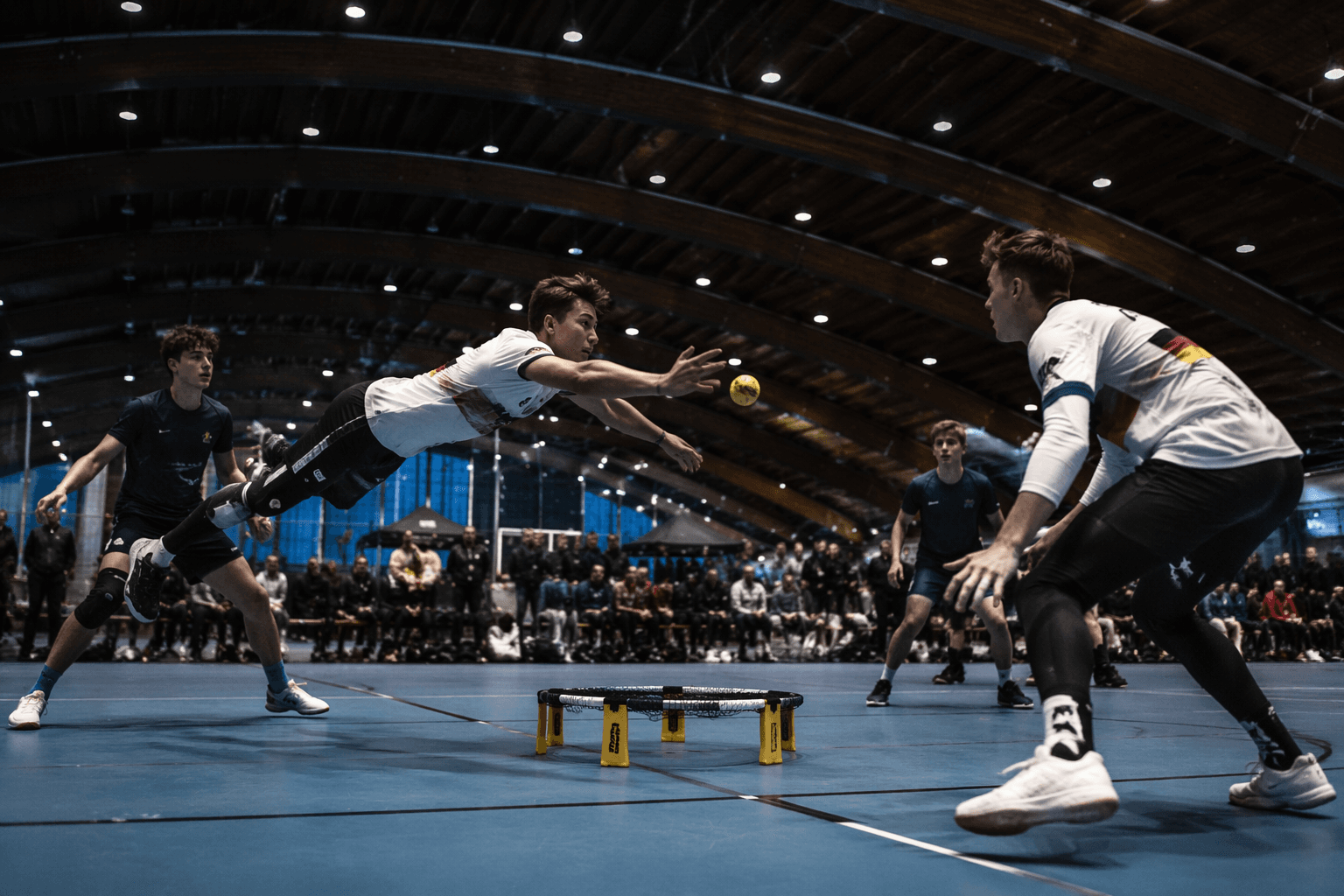
Spikeball makes its strongest case in the parts of PE that usually cause the most friction: limited space, unpredictable weather, and classes with wildly different skill levels. The game is built to work indoors or outdoors, and its official curriculum materials frame it as a way to build teamwork, communication, hand-eye coordination, and agility while keeping more students involved at once.
Why it works in a school setting
The appeal starts with logistics. Spikeball’s PE materials say the sport can be used on the beach, lawn, in a gym, or on a playground, which gives teachers flexibility when a class period has to move because of weather or space constraints. That matters in real school life, where one unit may need to run in a crowded gym on Monday and outside on Wednesday.
The equipment case is just as practical. The curriculum page describes durable sets designed for school use, easy storage, and budgets that are meant to be manageable for administrators. It also folds in lead-up activities, striking skills, strategy, and team play, so the sport can function as a full unit rather than a one-day novelty.
What teachers actually get
Spikeball’s school-use pages go beyond the game itself and give teachers tools that make adoption easier. The company offers free professional-development sessions for PE teachers, plus lesson plans and activity guides designed with educators in mind. Its PE portal also includes free resources, lesson plans, videos, and education discounts for bulk orders.

That package matters because it reduces the amount of invention a teacher has to do from scratch. Instead of building a roundnet unit one drill at a time, a teacher can use prebuilt materials to plan class progressions, repeat them across grade levels, and scale the same activity for different class sizes. In a subject where prep time is often limited, that is a serious advantage.
Built for mixed abilities
Roundnet is especially useful because it can absorb a wide range of skill levels without changing the basic game. Beginners can learn the core action quickly, while more advanced students can keep working on timing, positioning, and touch control using the same equipment and teaching structure. That makes it unusually easy to keep everyone in the same activity instead of splitting a class into separate versions of the sport.
For PE, that has a direct classroom-management benefit. A sport that is simple enough to start fast but deep enough to keep improving can run as a warm-up, a skill-builder, a cooperative challenge, or a small-sided competition. The structure helps teachers maximize participation, which is one of the hardest goals in a large class.
The game also supports inclusive teaching because success does not depend on size, speed, or prior club experience. The curriculum’s emphasis on adaptability for all ages and abilities gives teachers room to adjust expectations without changing the core task. In practice, that makes roundnet easier to use with mixed-grade classes, students who are new to striking games, and groups that need a lower-barrier entry point.

A clean fit with modern PE standards
The timing lines up with the direction of physical education itself. SHAPE America released its new National Physical Education Standards in March 2024 after a multi-year revision process, and the standards are designed to support motor skills, social skills, leadership, cultural awareness, communication, and conflict resolution. State and local districts use those standards to develop or revise curricula.
That framework suits roundnet well because the game naturally combines movement with cooperation. Students have to communicate, read space, and make quick decisions with a partner or small group, which connects directly to the broader goals of modern PE. A Virginia public-school Roundnet module from OPEN and HealthSmart Virginia shows how that alignment works in practice: the unit was modified to meet Virginia Public Schools physical education standards while still introducing the sport to new players and helping experienced players keep developing.
From backyard game to structured sport
Roundnet’s school value also makes more sense in light of how far the sport has come. It was created in 1989 by Jeff Knurek, and Spikeball Inc. says the brand has been around since 2008. By 2018, ESPN reported that Spikeball said it had more than 4 million players worldwide, and ESPN2 aired a Spikeball Invitational on May 10, 2018.

That growth matters culturally because it signals that the game is no longer just a casual backyard pastime. Once a sport reaches that scale, it starts to build a recognizable play culture around it, with common rules, familiar equipment, and a broader base of people who already understand the basics before they enter a PE class.
The competitive structure adds credibility
The International Roundnet Federation has pushed that structure even further by promoting shared rules, rankings, and standards for international play. The federation says the Roundnet World Championship has been held every two years since 2022, and it identifies the 2022 event in Belgium as the first official Worlds. That championship was scheduled for September 8 to 11, 2022 at Park Molenheide in Belgium.
That kind of formalization gives teachers confidence that the sport has a stable identity, not just a fleeting trend. When the same game can live in a gym class, a club setting, and an international championship framework, it becomes easier to justify as a repeatable unit with real instructional value. For schools trying to keep students active, included, and organized, roundnet solves more problems than many traditional units ever do.
This article was produced by Prism’s automated news system from verified source data, official records, and press releases, then run through automated quality and moderation checks before publishing. The system is built and supervised by the people who set the standards it runs under. Read our full AI policy.
Did this article answer your question?