Germany and Belgium map out 2026 World Championship paths
Germany’s ranking-backed title races and Belgium’s camp-based selection turn Paris 2026 into a summer of checkpoints, not guesswork, for roundnet athletes.
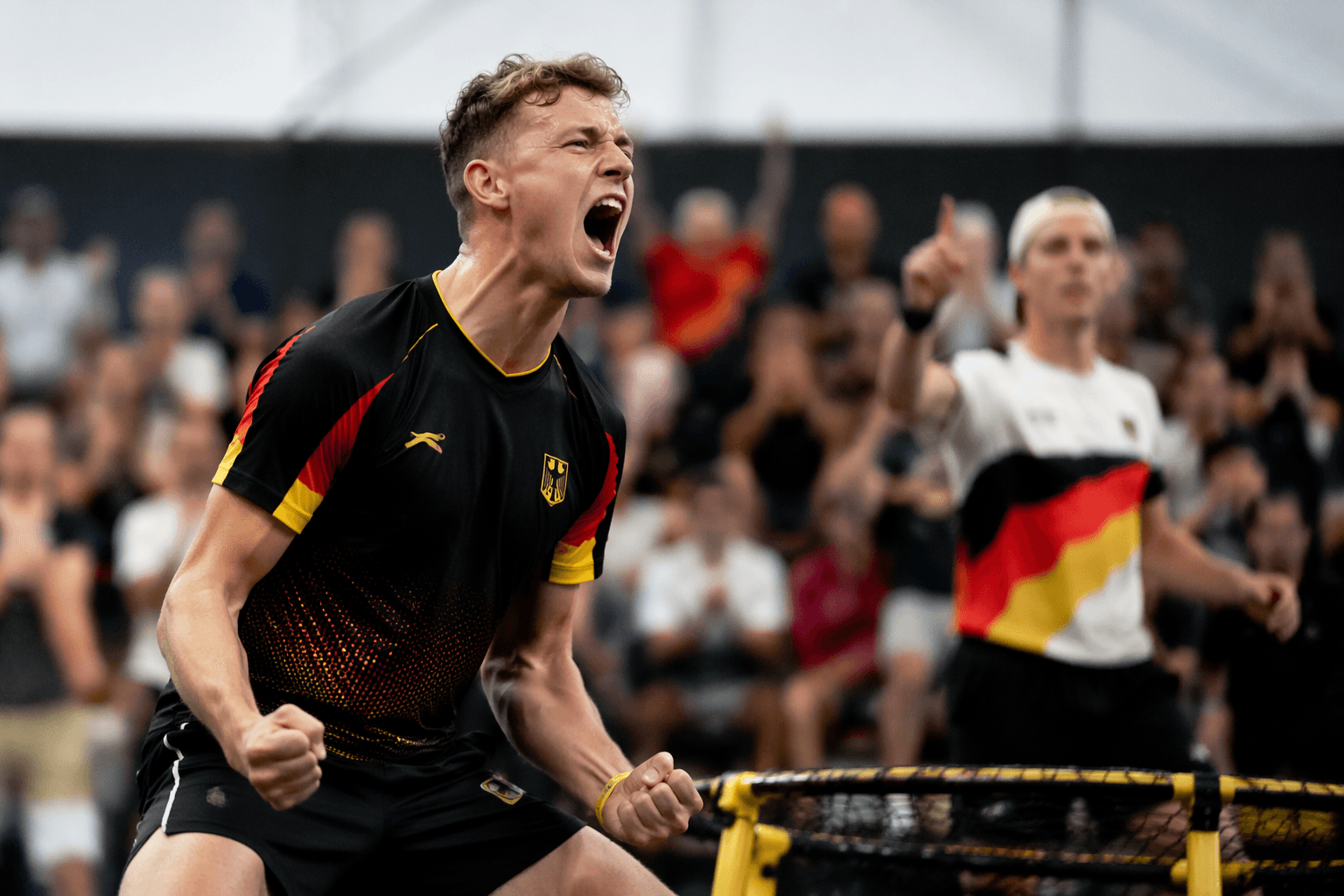
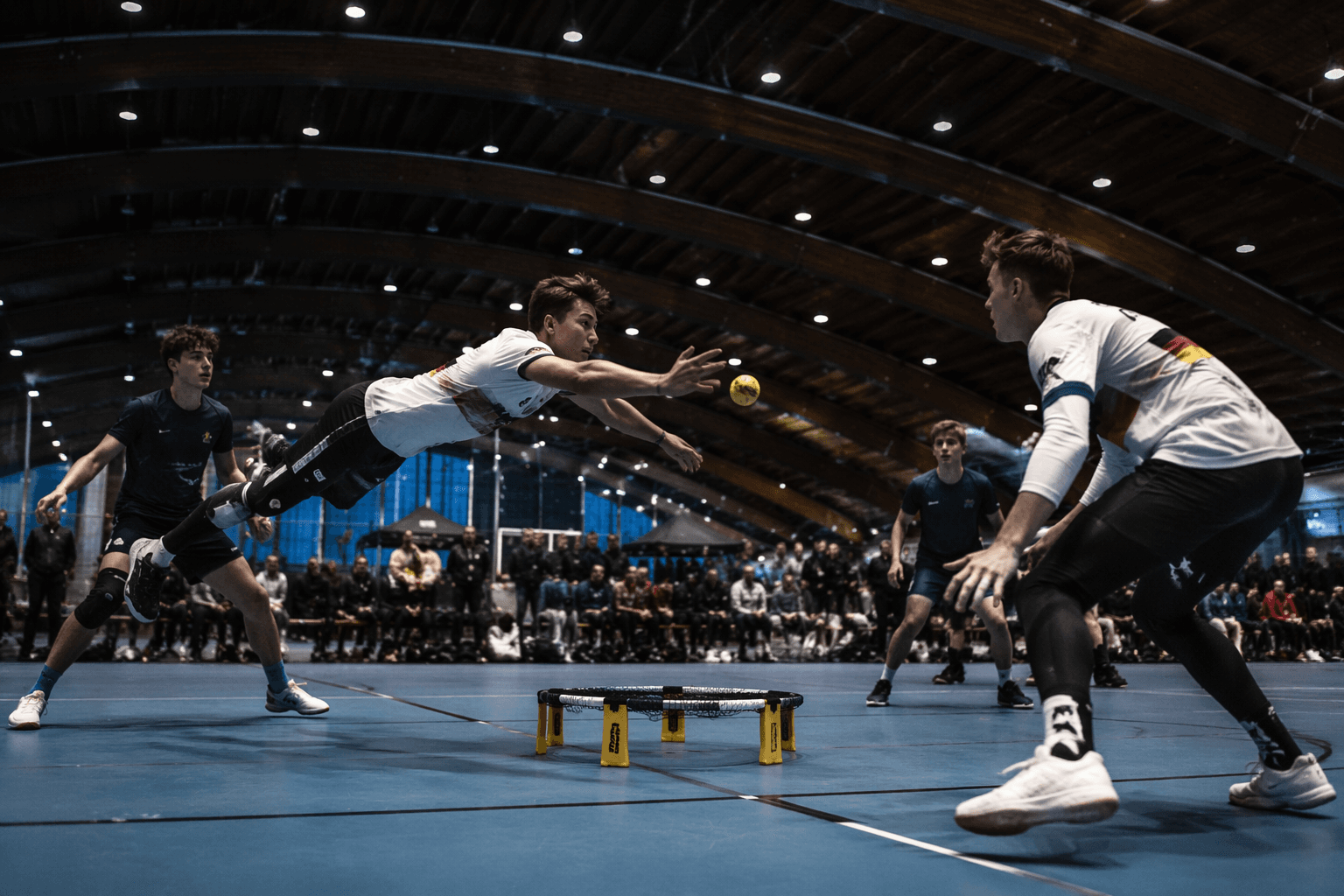
The clearest path to Paris is being drawn long before the first serve in September. Germany is sharpening its domestic race with fixed championship weekends in Würzburg and Mannheim, while Belgium is building its World Championship team through a coach-led camp in Ghent and season-long evaluation. For competitive roundnet athletes, that means the road to Worlds 2026 is now about timing, results, and positioning as much as raw talent.
Germany makes the title race concrete
Roundnet Germany has put hard edges around its 2026 championship calendar. The Mixed German Championship is set for Würzburg on June 27-28, with 64 places, while the Open and Women championships will follow in Mannheim on August 15-16. A Masters stop is also on the calendar in Kiel on July 25-26, giving top players another checkpoint in the middle of the summer.
That structure matters because it gives athletes a clear map of when the biggest domestic stakes will actually be decided. The mixed field has a defined cap, and the open and women divisions are still shaped by venue limits, which makes early registration and scheduling strategy part of the competitive equation. In a sport where travel, partner coordination, and ranking pressure can all influence who shows up at full strength, the calendar itself becomes a tactical weapon.
The RG Index is changing how German players are judged
Germany’s most important competitive signal is its RG Index, or RGX, which is Elo-based rather than placement-only. Roundnet Germany says the system now weighs wins and the strength of the opposition instead of simply rewarding final standing, which means how a team wins can matter almost as much as where it finishes. That approach pushes athletes to seek tougher matches, not just safe bracket paths.
For players chasing the championship pipeline, that is a big shift in incentive. It rewards consistency across the season and creates a clearer link between weekly performance and the right to contend for national spots. Roundnet Germany also ties the championship system to ranking structure and registration windows, making the summer schedule feel less like a standalone tournament slate and more like a qualification ecosystem.
The federation’s format has history behind it, too. Germany says the championship has run in women/open and mixed competition since 2024, and its historical-results archive reaches back to 2019. That continuity gives 2026 added weight: this is not a reset, but an extension of a domestic title race that is becoming more precise, more structured, and more revealing about who can handle pressure over time.
Belgium is building from evaluation, not just brackets
Belgium’s approach is different, and in some ways more revealing. Rather than simply sorting players through a crowded national championship ladder, Roundnet Belgium says Worlds 2026 applicants should compete in Belgian and international tournaments and stay committed to training throughout the season. That creates a pipeline where form, availability, and development all count before the final roster conversation even begins.
The centerpiece is the National Camp from July 3-5, 2026, at Blaarmeersen in Ghent. Invited players must attend, and Belgium says camp attendance is mandatory for final selection. That makes the camp the decisive live filter, the moment where performance, chemistry, and coach evaluation converge under one roof.
Belgium’s eligibility rules also show how federations are thinking more broadly about national representation. Citizenship, permanent residency, a valid immigrant visa, and other federation-specified criteria can all come into play, which keeps the team door open while still protecting the idea of a legitimate national side. For athletes with cross-border backgrounds or complex residency situations, that clarity can be just as important as the training itself.
Why Belgium’s model suits a smaller pool with upside
Belgium’s method looks built for discovery. The federation’s national community already includes 2025 champions in the Open, Women, and Mixed divisions, which means there is an established competitive core to build around. But by making season-long effort and tournament participation part of the selection story, the federation can identify players whose results may not yet fully reflect their upside.
That is a smart response to the realities of European roundnet. In a smaller federation, talent can be scattered across clubs, cities, and mixed competition formats, and a single championship bracket may not tell the whole story. A camp-based model gives coaches a better chance to see pairings, defensive reads, service pressure, and communication in real time, the details that often decide whether a national team can survive against deeper international fields.
Paris is the destination, but the summer is the real test
The International Roundnet Federation says the 2026 World Championship will run from September 2-6 at Parc du Tremblay in Paris, with spectator, ticket, travel, accommodation, and sponsorship information attached to the event. France’s roundnet site frames it as the country’s first time hosting the sport’s major international championship, and it describes the tournament as a five-day competition. That makes Paris more than a venue: it is a signal that roundnet is continuing to professionalize in front of a wider audience.
For athletes, the timing is the key story. Germany’s June and August championship windows, plus the July Masters stop in Kiel, create a summer ladder of opportunities to prove form. Belgium’s July 3-5 camp creates a separate but equally demanding checkpoint, one where team identity and live evaluation can outweigh reputation alone. Together, those systems show how national bodies are turning a distant World Championship into concrete opportunities now, not later.
The larger trend is hard to miss. Roundnet is moving toward seasonal planning, measurable development, and selection processes that leave less to chance. For players trying to stay in the Paris pipeline, the lesson is simple: every result, every camp, and every weekend on the calendar now matters as part of the road to Worlds.
This article was produced by Prism’s automated news system from verified source data, official records, and press releases, then run through automated quality and moderation checks before publishing. The system is built and supervised by the people who set the standards it runs under. Read our full AI policy.
Did this article answer your question?