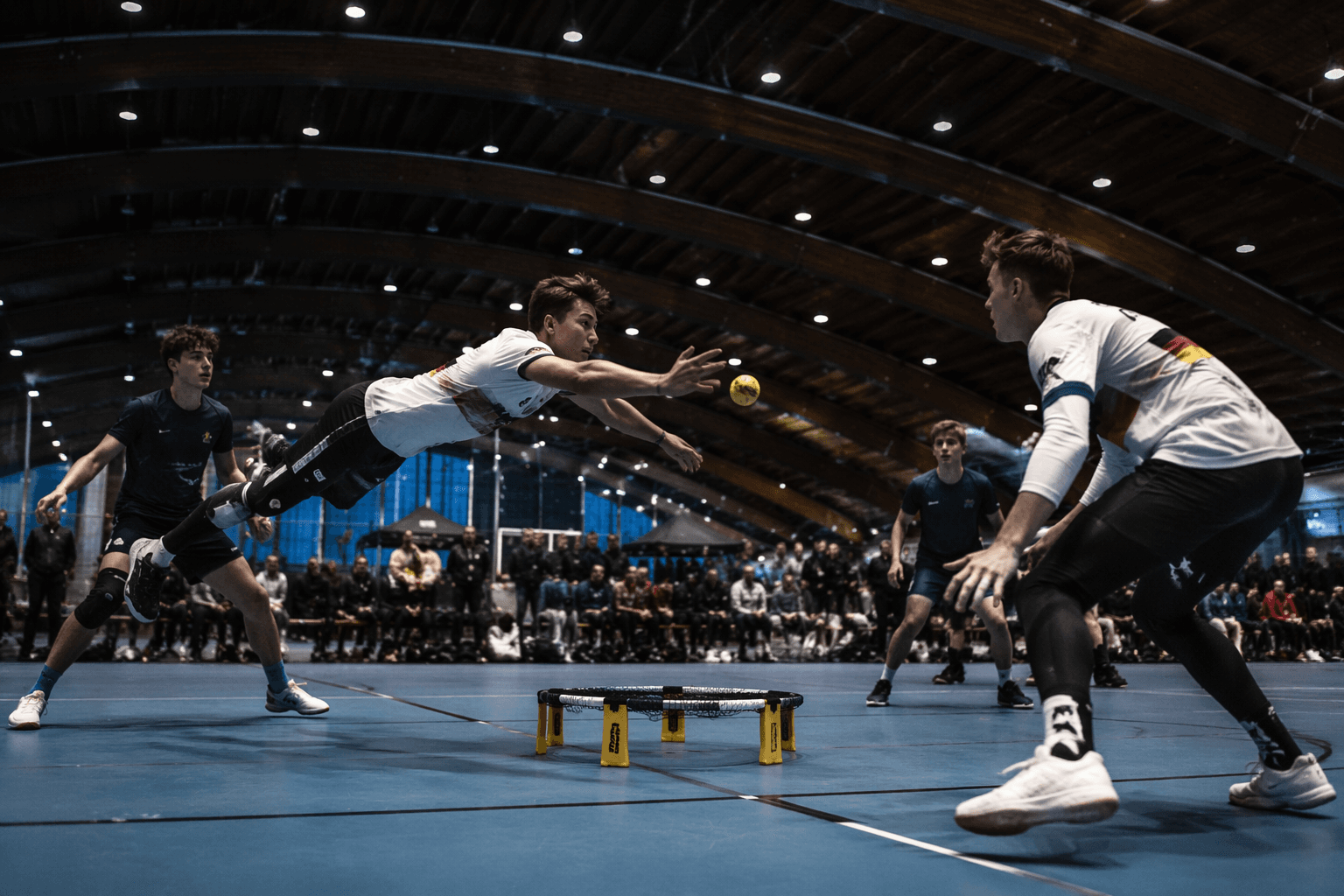
IRF moves to standardize Roundnet gear for sanctioned play
The IRF is building a testing lane for approved Roundnet gear, and only approved sets and balls can be used at sanctioned events. It says “IRF Approved” is a test status, not a single official set.

The International Roundnet Federation is building a formal testing process for sets and balls, and only approved equipment will be allowed at IRF-sanctioned events. That puts net tension, rim consistency, frame durability and ball behavior at the center of how roundnet is played, ranked and judged.
The federation says its job is to establish uniform rules and standards for international competition and to help the sport grow globally. In roundnet, that promise starts with the gear itself: if one set rebounds differently from another, or if one ball behaves more erratically than the rest, players are no longer competing on equal footing. Approval, in that sense, is not paperwork for its own sake. It is the mechanism that lets local events, national circuits and world-level tournaments compare performance on the same terms.

That is why the IRF’s equipment policy carries more weight than a simple product label. The federation is explicit that “IRF Approved” is a testing status, not a declaration that one product is the sport’s only official set. Manufacturers will need to apply and pass testing before they can market products as approved, which creates a clear gate between casual backyard gear and equipment used in sanctioned play.
The standards behind that gate reach into every part of the set that affects competition. Net construction has to produce a consistent rebound. The frame has to hold up under repeated impacts and travel. The ball has to behave predictably from one brand to the next. Those details are easy to overlook when roundnet is seen as a fast, social game, but they are exactly what allow the sport to function as a regulated competition with credible results.

For gear makers, the new framework offers a path into sanctioned play if their products can meet the test. For tournament directors, it offers a cleaner way to enforce uniform equipment standards. For players chasing rankings and titles, it narrows the variables that can distort a match. Roundnet’s growth story is not only about viral clips and crowded brackets. It is about turning a toy-like object into competition equipment that can support elite play anywhere the sport is taking hold.
This article was produced by Prism’s automated news system from verified source data, official records, and press releases, then run through automated quality and moderation checks before publishing. The system is built and supervised by the people who set the standards it runs under. Read our full AI policy.
Did this article answer your question?