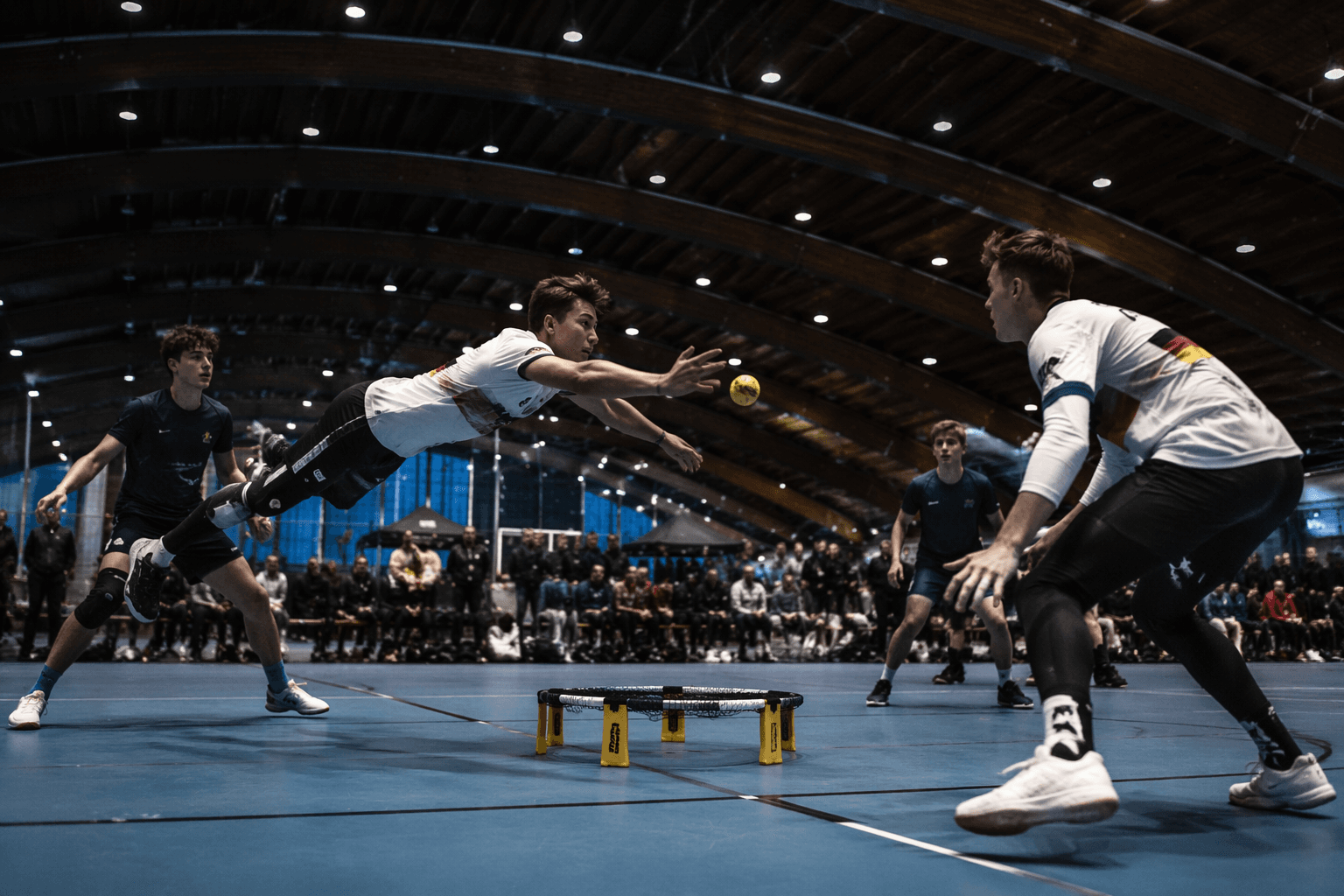
Pont-de-l'Isère Roundnet club pushes from local play to national circuit
Pont-de-l'Isère is becoming a launchpad for French roundnet, as Drôme Roundnet links local recruitment, club identity and national Tour Stops.
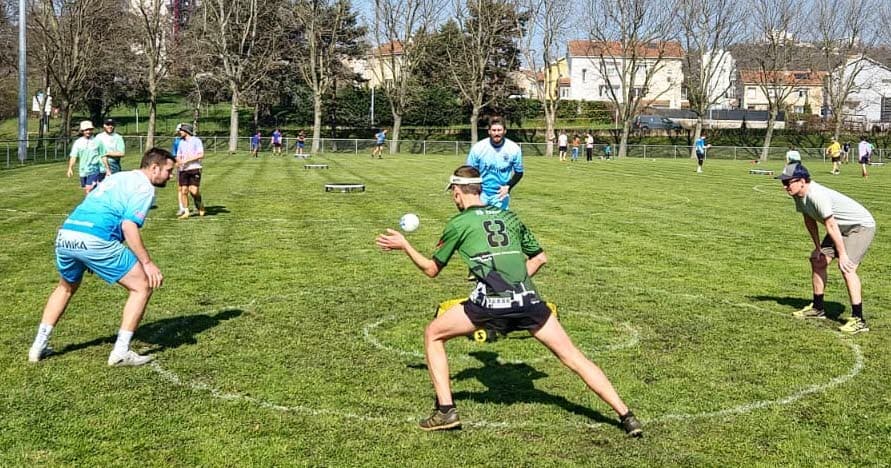
Pont-de-l'Isère is no longer just a place to try roundnet on a whim. At the Complexe sportif André-Despesse, Drôme Roundnet has turned a local weekend into a clear step on the French competitive ladder, with two days of play from 9:30 a.m. to 6:30 p.m. and a field that was expected to draw 100 to 150 players, including members of the French national team.
A local club with national ambition
The real story here is not simply that a tournament came to town. It is that Drôme Roundnet has become the first roundnet club in Drôme-Ardèche and is already operating like a development hub, chaining together national-level competitions and giving new players a structured route into the sport. Le Dauphiné Libéré also reported in January 2026 that Pont-de-l'Isère had already hosted a first regional roundnet competition, after the new club pushed for the event and the Ligue AuRA got involved.
That matters because roundnet in France is still in a growth phase, and clubs like this one are doing the heavy lifting. The club is not just filling a calendar slot. It is building familiarity, creating repeat attendance, and making the sport visible in a region that can now host both regional and national-grade play.
How the French roundnet system is built
Roundnet France has been designed to support exactly this kind of progression. The federation says its goals are to develop roundnet in France, organize competitions and meetings, spread the sport across the country, and help make it recognized by the French state. It says it now has more than a dozen affiliated clubs, which shows that the sport’s base is moving beyond isolated pockets.
Its competition structure is especially important for understanding why Pont-de-l'Isère matters. Roundnet France organizes two seasonal series: Tour Stops to crown French champions and championesses, and inter-club tournaments to determine the best club in France. The Coupe de France is made up of four Tour Stops plus a French championship, while the club championship is built around squads representing clubs, with 3 open pairings, 1 mixed pairing and 1 women’s pairing.
That format gives clubs a reason to train as teams, not just as individual pairs. It also rewards continuity, because the same local group can recruit, practice and then travel into a national circuit with a defined identity.
Why the André-Despesse weekend counted
The Pont-de-l'Isère Tour Stop was more than a one-off showcase. By running over two full days and stretching from 9:30 a.m. to 6:30 p.m., it gave the club a long runway in front of local supporters and visiting players alike. That kind of schedule creates real value for a developing club: it turns the event into a meeting point, a competition and a recruiting window all at once.
Drôme Roundnet’s own event listing underlined the scale of that ambition by projecting 100 to 150 participants, with some French national team players in the field. For a club still defining itself, that mix of grassroots and elite presence is a powerful signal. It shows local players what the pathway looks like, and it gives spectators a direct look at the level required to move up.
The social framing also helps. The event was presented as insolite et solidaire, a description that captures how roundnet in France often travels as both sport and community gathering. Families, volunteers and curious first-time spectators all have a place in that environment, which makes a tournament feel less exclusive and more like an open door into a fast-moving scene.
From recreational pickup to club identity
Roundnet’s appeal has always been immediate: the rallies are fast, the setup is portable, and the format is easy to recognize. What Drôme Roundnet is showing, though, is that a sport can start as a casual pastime and still grow into a durable club structure if it has regular training, visible events and a clear competition ladder.
That is where the French model stands out. Roundnet France’s calendar includes both official and unofficial tournaments, and it invites clubs to propose their own events. In practical terms, that means a small club does not have to wait for the sport to arrive from above. It can help create the calendar, build local buy-in and then connect itself to the larger network through sanctioned competition.
The club championship page reinforces that team identity. Instead of treating roundnet as a string of isolated pair results, the federation is building club loyalty and club rivalry into the sport’s architecture. For a place like Pont-de-l'Isère, that matters because a strong home club becomes a vehicle for recruitment, retention and regional visibility.
The broader French and international backdrop
France’s roundnet scene is also developing inside a sport that is standardizing itself globally. The International Roundnet Federation says its rules were initially adopted on October 21, 2021 and updated on June 24, 2024, which shows how recently the modern framework has been formalized. That kind of rule stability helps leagues, clubs and tournament directors run events with more consistency across borders.
The bigger international milestone is close to home. The 2026 Roundnet World Championship is scheduled for September 2 to 6 in Paris, at Parc du Tremblay, and the Dutch federation says more than 35 countries will send national teams. For France, that is a major visibility moment. For clubs like Drôme Roundnet, it is a chance to position themselves inside a sport that is no longer just organizing local games, but building toward a global stage.
Why Pont-de-l'Isère is becoming a template
Pont-de-l'Isère shows how a regional club can become part of a genuine pipeline. The ingredients are all there: a local identity as the first club in Drôme-Ardèche, repeated regional hosting, a federation with a clear structure, and a national calendar that connects club play to official titles. Add the social pull of a family-friendly, community-leaning event, and the result is a club that can recruit locally while aiming upward.
That is the deeper significance of the weekend at the Complexe sportif André-Despesse. It was not only a tournament stop, but a proof of concept for how French roundnet can grow: through club organization, regular training, local recruitment and travel into the national circuit. Pont-de-l'Isère is showing that the route from pickup play to serious competition is no longer abstract. It is already on the court.
This article was produced by Prism’s automated news system from verified source data, official records, and press releases, then run through automated quality and moderation checks before publishing. The system is built and supervised by the people who set the standards it runs under. Read our full AI policy.
Did this article answer your question?