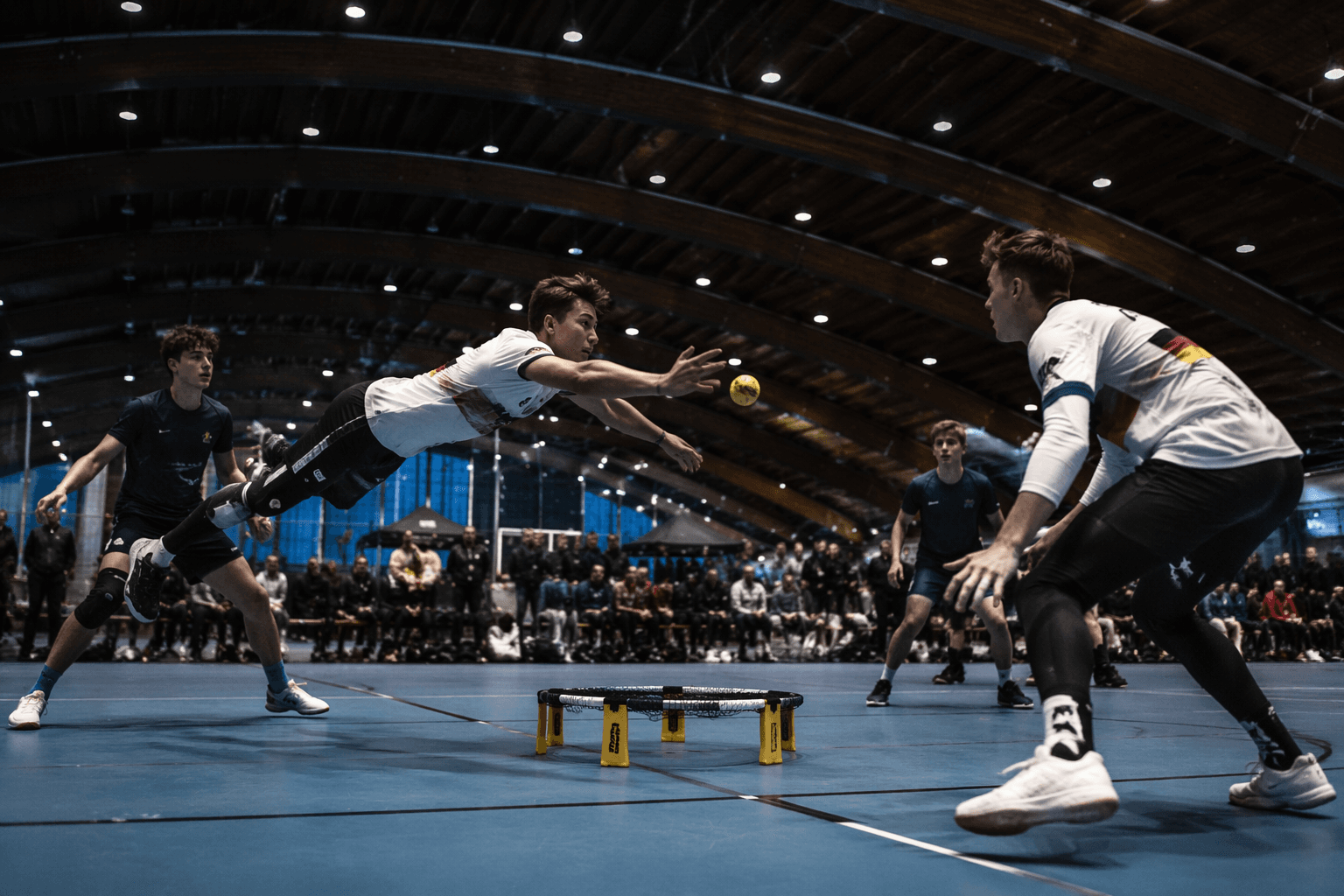
Roundnet leans on self-officiation as USA Roundnet expands observer program
Self-officiation is the rule, not the loophole, in roundnet. USA Roundnet’s observer push is built to steady the calls that decide fast, 360-degree rallies.
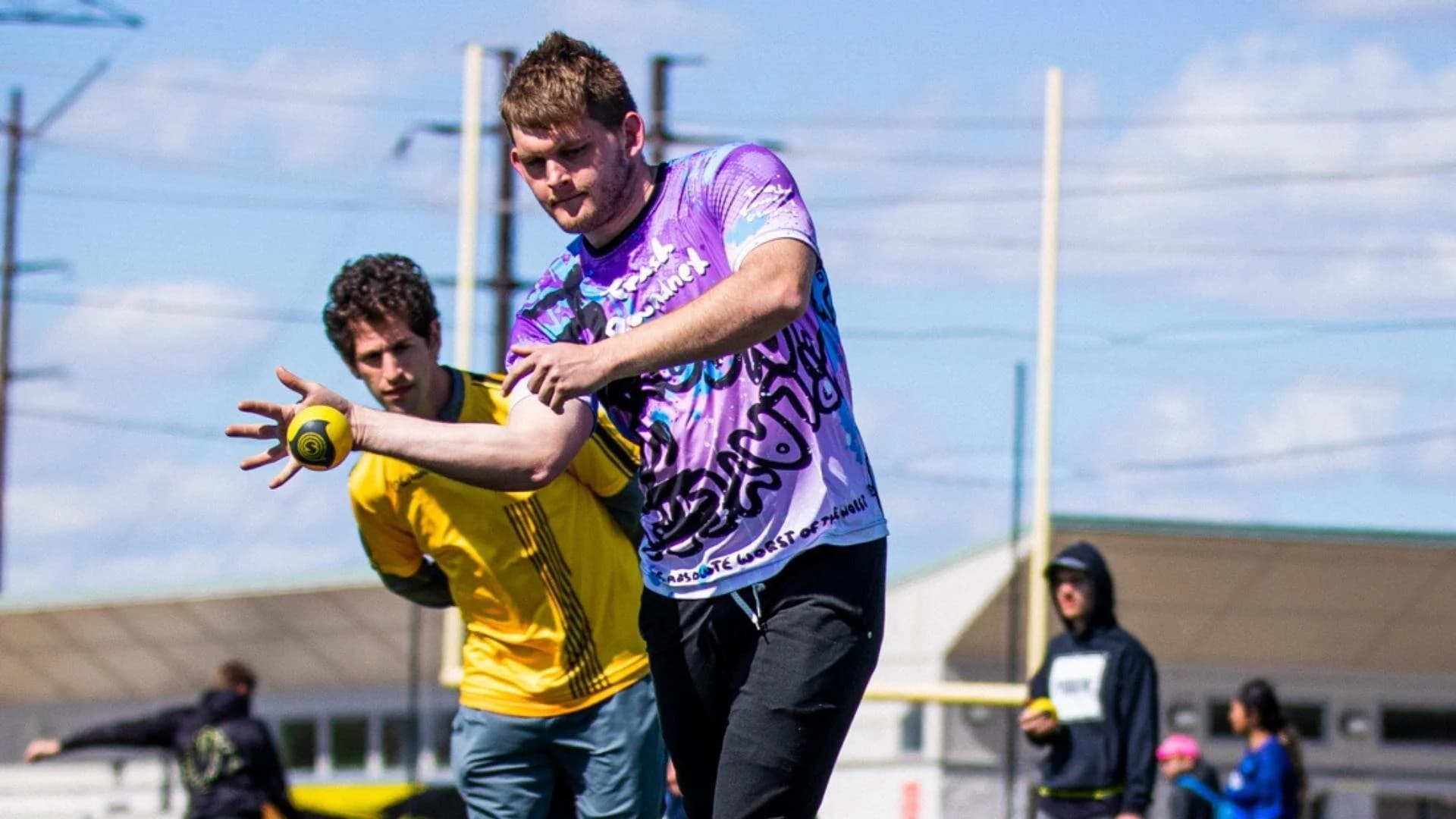
Roundnet works because players are trusted to police the match themselves. The International Roundnet Federation rulebook puts fair play in the players’ hands, and USA Roundnet describes the sport as predominantly self-officiated, which makes honesty part of the format rather than an afterthought.
Self-officiation is the sport’s default setting
That structure matters because roundnet does not reward slow, obvious judgment. Rallies happen at full speed in every direction, and the calls that decide points often land in the gray area: a hinder that changes a swing, illegal contact at the net, or a rim and pocket ball that dies in a spot nobody can perfectly see from one angle. In a sport built on quick reads and constant movement, the players closest to the play are the first line of enforcement.
That is why self-officiation in roundnet is more than a cultural habit. It is the operating system. Players are expected to know the rules, call their own faults, and settle disputes without turning every tight rally into a courtroom.
Where the game gets hardest to call
The trickiest moments in roundnet are usually not the obvious ones. A borderline pocket call can split a group because the ball may sit on the rim long enough to look playable from one side and dead from another. Hinders and illegal contact are just as messy, because the action happens in a crowded space where bodies, arms, and the net all collide in real time.
That is exactly why the sport leans so hard on player responsibility. If every subjective moment had to wait for outside judgment, the game would grind down. Instead, roundnet asks athletes to make the first call honestly, then move on.
Observers are there to steady the edges, not take over the game
USA Roundnet has responded to that reality by building officiating guidelines and a Certified Observer program. The organization says the guidelines were shaped by its officiating committee and tested through multiple officiating methods throughout 2021, with ideas drawn from officiating in other sports before the document became the basis for the observer program.
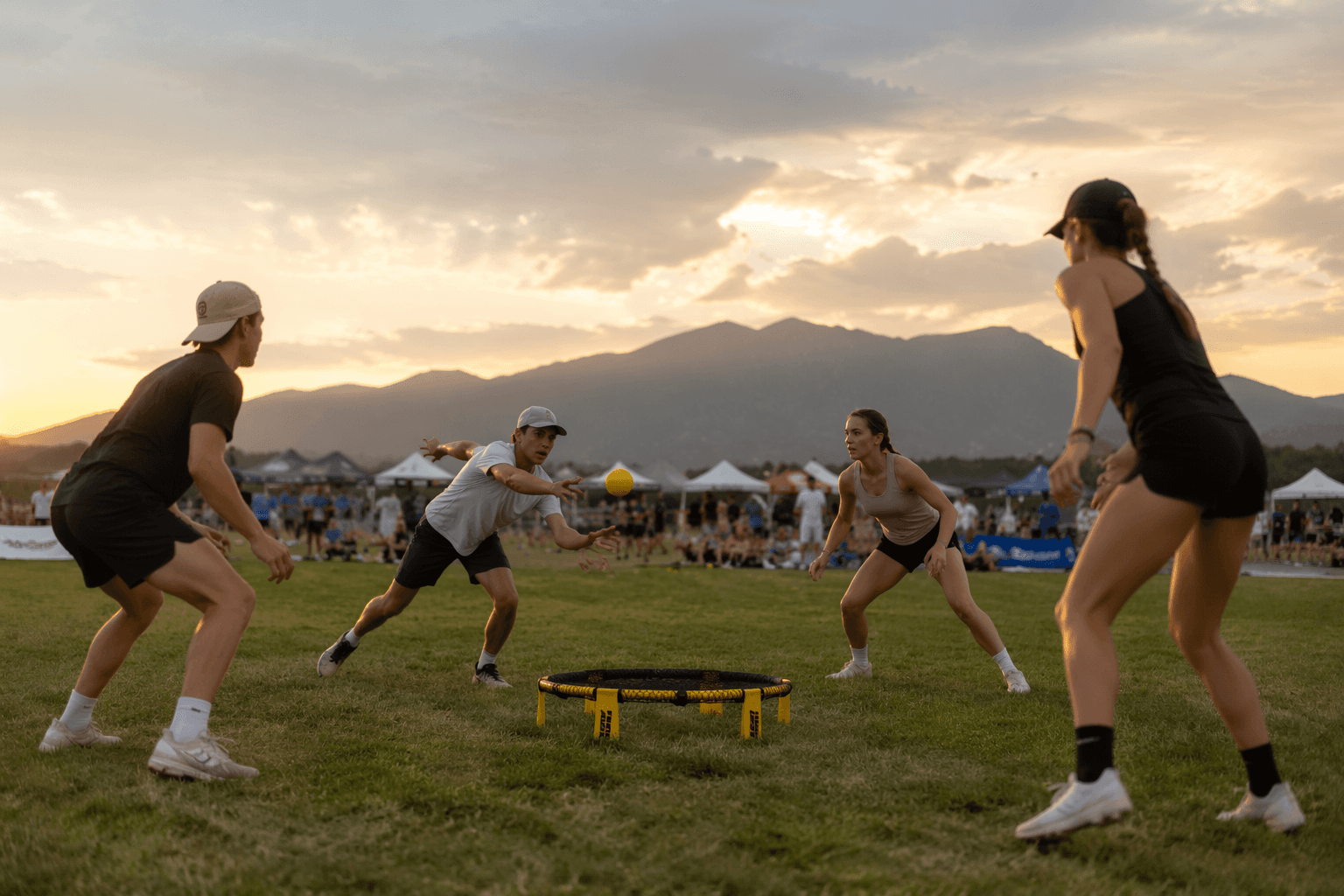
That detail matters because the program is not a ref-heavy replacement for the sport’s identity. It is a consistency layer. USA Roundnet says matches that need observers are often fast-paced and intense, and that observers need to know where to stand, what infractions to watch for, and how to make the best calls.
What observers actually do
In practice, the observer is the match’s stabilizer. USA Roundnet says observers help support and improve high-level sanctioned play, and the Spikeball Tour Series spells out a more specific job: keep score and rotation correct, watch toss and timing violations, and make immediate fault calls when an infraction ends the point.
That is a very different role from full-time refereeing in sports where officials control nearly every live-ball decision. Roundnet’s observer is there to clean up the objective stuff, reduce chaos at the margins, and keep the tournament moving without stripping players of responsibility for the calls they are closest to making themselves. The tournament director still has final say on observer assignments, which keeps the system anchored to event management rather than automation.
Players still have a real voice in the rules
The self-officiation model is also tied to how the sport governs itself. USA Roundnet says members have a voice in tournament guidelines, the evolution of the ruleset, and other key community decisions, which helps explain why officiating standards feel community-owned rather than imposed from above.
That same philosophy shows up in the annual ratings process. USA Roundnet says it tests rating systems against three pillars each year to encourage more sanctioned play and to tell players what to expect at tournaments. Ratings and officiating are connected here: if players know the environment they are walking into, the sport can stay competitive without turning every event into a negotiation.
The push for more consistency is getting louder
The pressure for more formal officiating is real, especially at the top end. In a recent survey of USA Roundnet members, 69.2% favored having referees at the highest level. That does not read like a vote to erase self-officiation; it reads like a demand for cleaner elite competition where the stakes are highest and the margins are thinnest.
The Spikeball Tour Series has answered with a referee initiative designed to increase consistency in the application of rules within each match. The series also says the initiative is meant to clarify rule questions, collect and share examples that show how rules work in practice, and make violations easier to identify. In other words, the goal is not to turn roundnet into a whistle-first sport, but to keep the same rulebook from producing different outcomes depending on who is standing on the sideline.
Roundnet’s structure is becoming more formal without losing its roots
The sport’s history helps explain why this balance matters. Roundnet was invented in 1989 by Jeff Knurek, then revived and commercialized by Chris Ruder through Spikeball Inc., which was founded in 2008. Since then, the ecosystem has matured fast, and the competitive side now looks far more like a real sport than a backyard novelty.
That formalization is showing up across borders too. USA Roundnet says the United States, Canada, and Mexico ratified the North American roundnet rules for 2025, a step toward rule consistency across the region. USA Roundnet also says its 2026 North American Tour Series is the official competitive circuit across North America, which gives the sport a clearer pipeline for sanctioned play, standardized events, and observer-trained competition.
What the new system means for elite play
USA Roundnet’s membership structure ties all of this together. Members have a voice in the ruleset, and membership also gives players eligibility to become certified observers. That matters because the people learning the officiating system are coming from inside the sport, not from outside it.
The next step is already set: USA Roundnet says its 2026 national team is preparing to defend world championships in Paris in both Men’s and Women’s Squad disciplines. At that level, every pocket call, hinder question, and score dispute carries more weight, which is exactly why roundnet is building a model where players own the match and observers keep the edges clean.
This article was produced by Prism’s automated news system from verified source data, official records, and press releases, then run through automated quality and moderation checks before publishing. The system is built and supervised by the people who set the standards it runs under. Read our full AI policy.
Did this article answer your question?