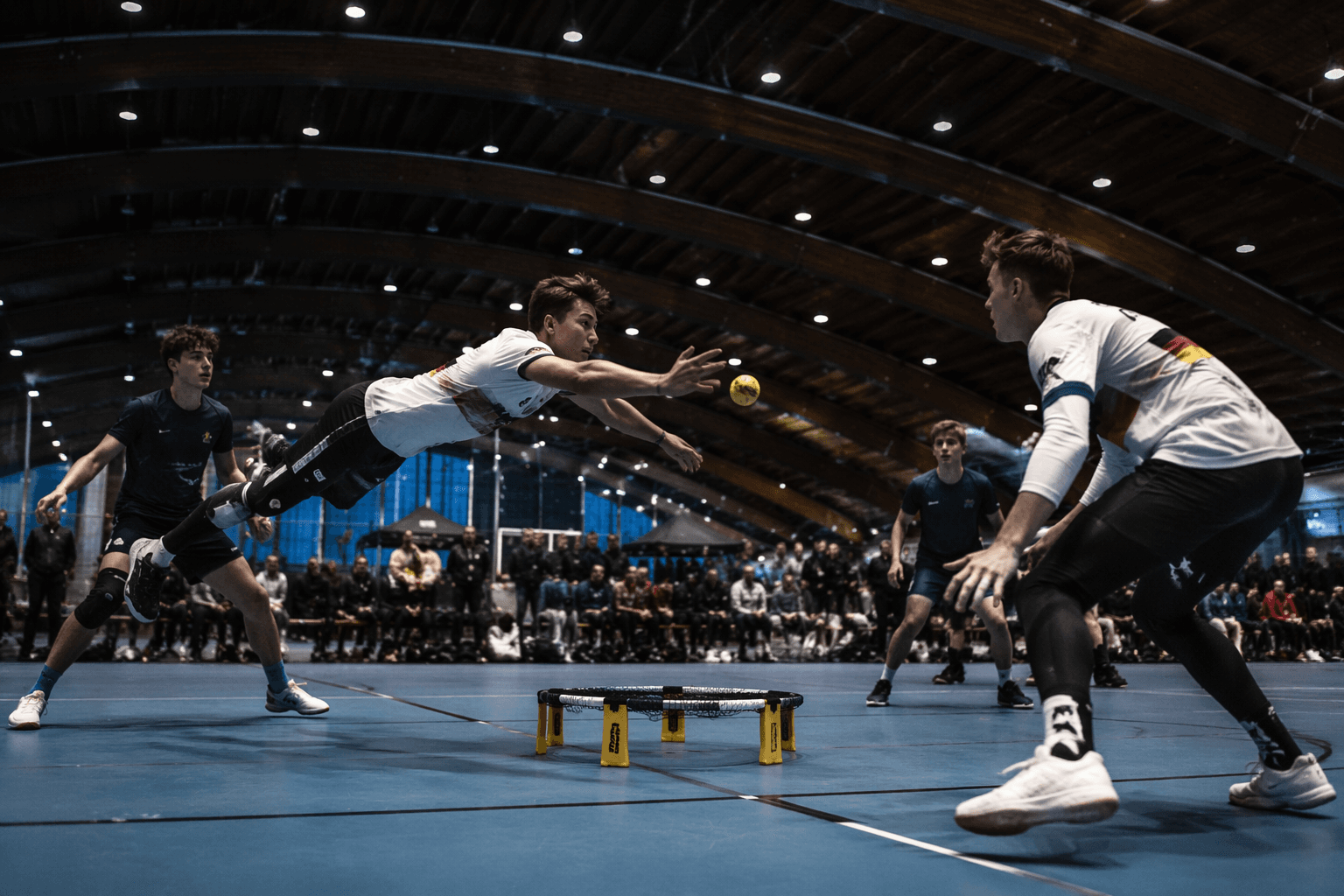
Spikeball + Friendship meetup makes roundnet easy for beginners
A beginner-first Spikeball meetup shows how roundnet grows: rotation-based games, built-in social breaks and room for 12 to 16 players make first-timers feel at home.
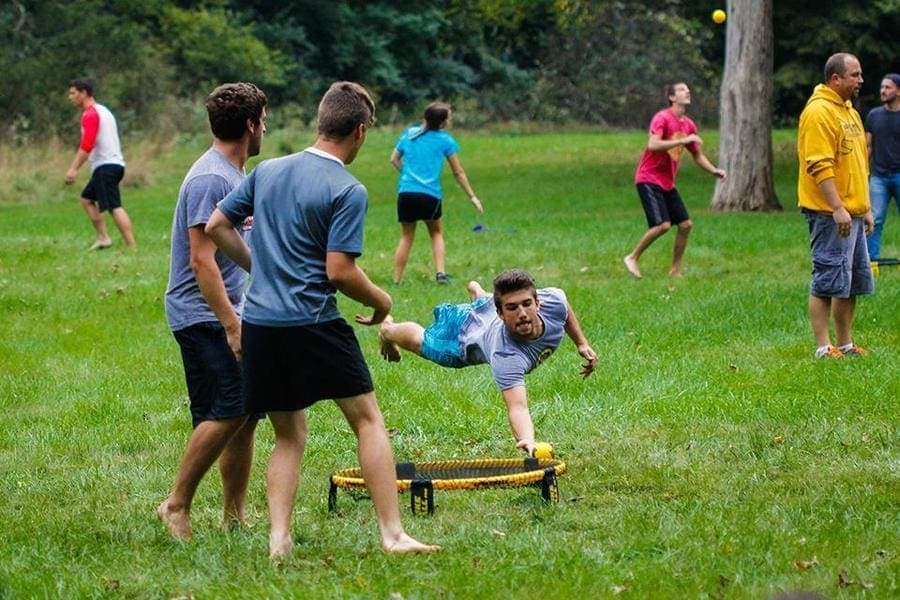
Spikeball’s real growth engine is not always the tournament bracket. Sometimes it is a casual night built to make strangers comfortable, let new players rotate in and out, and turn a first try into a second one. The June 6 Spikeball + Friendship meetup did exactly that, with a format designed to strip away the two biggest barriers in roundnet: skill intimidation and showing up alone.
A format built for first-timers
The key idea behind the meetup is simple: make roundnet easy to join and easy to enjoy. The listing describes the event as casual and beginner-friendly, with rotation-style play so participants can meet different people instead of being locked into the same pairing all night. That matters in a sport where the first hurdle is often social, not athletic. If the room feels welcoming and the games keep moving, a newcomer can learn the basics without feeling like they have walked into a tryout.
The event also builds in breaks for chatting and spectating, which gives the night the feel of a social mixer as much as a sports session. That design choice is more important than it might look on paper. In roundnet, especially for someone trying it for the first time, a break between games is not dead time, it is the moment when names get remembered, advice gets shared, and the next invite happens.
Why the setup lowers the entry bar
The meetup’s practical structure does as much work as its friendly branding. Organizers have enough nets for about 12 to 16 players at a time, which means not everyone is on court at once and wait times are part of the rhythm. Instead of a packed bracket, the night is built around a steady rotation of short games, which keeps the pace relaxed and removes the pressure of needing to be “ready” from the first serve.
That matters because the event does not require a competitive résumé or any prior knowledge of a complicated format. A newcomer can show up, learn by watching, and jump in when it is their turn. In other words, the meetup reduces the cost of entry twice: you do not need to be good, and you do not need to arrive with a partner or a deep understanding of how the night will unfold.
What roundnet actually asks of players
Part of the appeal of a beginner-friendly session is that the game itself is easy to explain once people are already in the room. Roundnet is played by two teams of two players, and a team has up to three touches to return the ball to the net. After the serve, the official rules remove sides and boundaries, which helps explain why casual play can feel fast, fluid, and accessible.
A standard game uses four players, but roundnet can still work with only two or three if numbers are tight. That flexibility makes it a natural fit for social meetups, where attendance may fluctuate and the point is participation rather than perfection. Spikeball is the brand name, but roundnet is the sport name, and that distinction matters because the game has grown well beyond a single product into a community with its own entry points and norms.
Why social formats keep the player pipeline alive
This meetup matters because grassroots sessions are where many sports actually grow. The listing is not about rankings, elite titles, or a championship chase. It is about the kind of evening where a new player learns the rules, meets regulars, and gets a first taste of the sport’s pace without feeling overwhelmed.
That is the growth playbook hidden inside the social format. A player who has a good first experience is more likely to come back, and repeat participation is what turns a novelty into a habit. In a sport that depends heavily on word of mouth, a room that feels welcoming, social, and flexible can be just as valuable as a big event with medals on the line.
A sport with deep roots and a wider runway
Roundnet’s informal feel is part of its origin story. The game was first created in 1989 by toy maker Jeff Knurek and later marketed by the Japanese entertainment company Tomy. Years later, Chris Ruder and Spikeball Inc. revived it, helping turn a backyard game into a broader recreational and competitive sport.
That history explains why local meetups still matter so much. The sport has repeatedly grown through accessible, low-stakes play rather than only through top-down league structures. The June 6 meetup fits that pattern: it treats the first session as the doorway, not the finish line.
From neighborhood nights to a global stage
The scale of roundnet today makes those small-entry events even more meaningful. Spikeball said the 2024 Roundnet World Championship would draw athletes from 35 countries and be the largest event in the sport’s history. British Roundnet later said 32 countries gathered at the 2024 Worlds in Guildford, England, which underlines how far the sport has traveled from its casual roots.
That global reach does not make the beginner meetup less important. If anything, it makes it more revealing. A sport does not become international by accident; it grows because local formats keep feeding the next layer of players into the ecosystem. The meetup is the first touchpoint in that chain.
What other communities are already doing
The social-first model is hardly unique to this event. San Diego Roundnet describes itself as an official Spikeball community and says all skill levels are welcome, signaling that inclusivity is part of the sport’s organizing logic. Meetup listings in Barcelona, Spain, also emphasize connection and a relaxed social atmosphere, showing that roundnet events often double as ways to meet people as much as ways to play.
That overlap between sport and social life is one reason roundnet travels so well from city to city. The format invites conversation between games, encourages movement between pairs, and gives new players a low-pressure way to join in. When the setup is right, the court becomes a place to belong before it becomes a place to compete.
Why this meetup model works
The June 6 Spikeball + Friendship meetup shows how the sport can grow without making newcomers earn their way in. The rotation format, built-in breaks, and 12 to 16-player capacity all point to the same philosophy: lower the barriers, keep the pace friendly, and let the social energy do the rest. In roundnet, that may be the clearest route from first serve to repeat player, and from casual night out to a durable community.
This article was produced by Prism’s automated news system from verified source data, official records, and press releases, then run through automated quality and moderation checks before publishing. The system is built and supervised by the people who set the standards it runs under. Read our full AI policy.
Did this article answer your question?