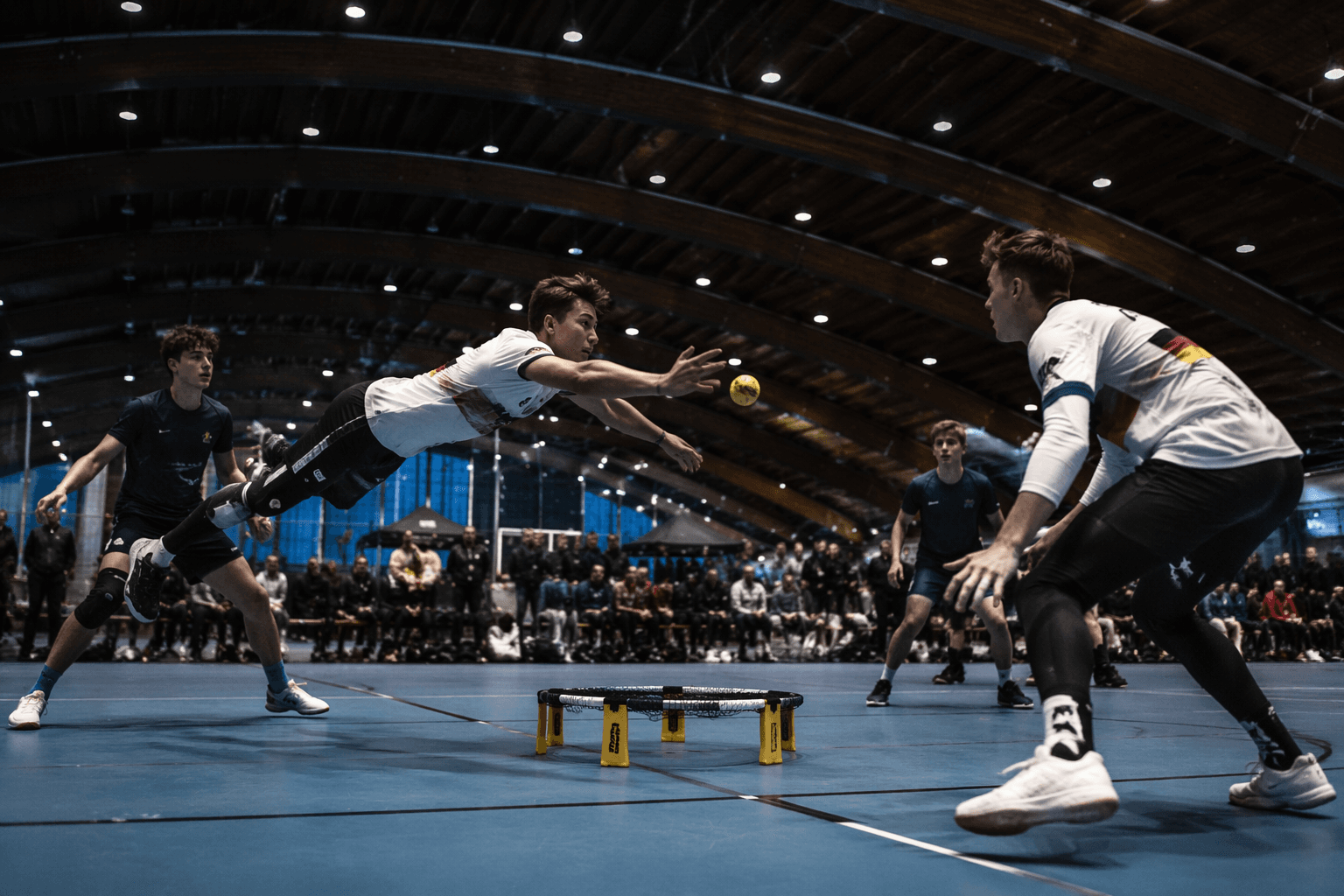
Spikeball rides backyard games comeback at Princeton High School
Spikeball has become a campus staple at Princeton High School, where its portable, social format matches how students want to play now. The game’s rise also points to a bigger roundnet system built for clubs, tournaments and competition.

At Princeton High School, Spikeball is proving why the backyard-games revival feels built for this moment. Students are reaching for games that are cheap to start, easy to set up, and social enough to fit between classes, and roundnet checks every one of those boxes. What looks like a casual net game on the surface is also part of a larger shift in youth behavior: more in-person hangouts, low-cost competition, and sports that feel athletic without feeling exclusive.
Why Spikeball fits the backyard-games comeback
The broader comeback includes frisbee, wiffle ball, cornhole, Spikeball, and especially hacky sack, but Spikeball stands out because it fits the pace of student life. The game does not require much equipment, and it can start spontaneously, which matters on a campus where a short break has to do a lot of work. That makes it useful not just as recreation, but as a social reset that gets students off screens, into motion, and back around one another.
That social piece is the real story behind the revival. At Princeton High, the games are not just filling time; they are bringing students together and helping keep them active throughout the day. Spikeball lands neatly in that lane because it is simple enough for a quick pickup game and competitive enough to hold attention once the rallies start getting serious.
From pickup game to campus culture
Hacky sack teams have already started to emerge, and Princeton High students are even helping promote statewide tournament voting. That matters because it shows how informal games can move from spontaneous play into organized communities without losing their appeal. Spikeball works the same way: it is familiar enough for first-timers to try immediately, but structured enough that regular players can build a culture around it.
That flexibility is a big reason the game fits a generation that wants athletic activity without a heavy barrier to entry. The appeal is not just that the game is outdoors or inexpensive. It is that it gives students a way to compete, socialize, and keep moving without needing a field reservation, a full roster, or a long practice block.
What the roundnet pipeline looks like now
Spikeball itself frames roundnet as more than a game. The company describes it as a community built around fun, competition, and bringing people together, and its college roundnet program is designed to create more local competition, expand tournament access, and support college clubs. That gives campus play a ladder to climb, whether the goal is a club, a weekend event, or a larger competitive circuit.
- 10 U.S. sections
- 1,100+ players
- 125+ clubs
- 21 U.S. events
The college program’s scale shows how far the sport has come:
Those numbers help explain why Spikeball is not just surviving as a backyard fad. The game has a built-in pathway from casual play to organized competition, and that pathway is already active on campuses where students want low-friction ways to compete. For a high school like Princeton, that matters because it makes roundnet feel less like a novelty and more like a culture with room to grow.

A sport with deeper roots than the trend cycle
Roundnet did not begin with the latest backyard-games wave. USA Roundnet says the sport has been around since 1989, and Spikeball says it began hosting events in 2013, when it was the only group or organization putting on roundnet competitions. That history gives the current boom some ballast: what looks fresh to students is also part of a sport that has been building for decades.
The international side is growing too. The International Roundnet Federation was founded in 2020 with a mission to build infrastructure for international competition, and Spikeball said the 2024 Roundnet World Championship in London would include athletes from 35 countries and be the largest event in the sport’s history. British Roundnet later said 32 countries gathered at Surrey Sports Park in Guildford for the second-ever Roundnet World Championships, a sign that the global structure is still taking shape even as the talent pool expands.
College nationals show how serious the game has become
The competitive history on Spikeball’s college results page makes the point even more clearly. College nationals were held in 2017, 2018, and 2019, and the club title rotated through schools that are now part of the sport’s early competitive memory. University of Massachusetts Amherst won in 2017, University of Tennessee Chattanooga in 2018, and University of Georgia in 2019.
Those results sit alongside appearances from programs such as Ohio State University, Cal Poly SLO, Texas A&M, and Asbury University, all of which help show how broad the college footprint has become. The sport’s structure now stretches from casual campus games to formal championships, which is exactly why it resonates at a place like Princeton High School. Students are not just playing a game; they are stepping into a sport that has already proven it can scale from the quad to the college circuit and, eventually, to the world stage.
Spikeball fits the current moment because it gives students what older lawn staples often cannot: speed, portability, and a real competitive outlet without much setup. That combination has turned roundnet into more than a backyard distraction. It has become a low-friction way for a generation to gather, compete, and build something bigger than the game itself.
This article was produced by Prism’s automated news system from verified source data, official records, and press releases, then run through automated quality and moderation checks before publishing. The system is built and supervised by the people who set the standards it runs under. Read our full AI policy.
Did this article answer your question?