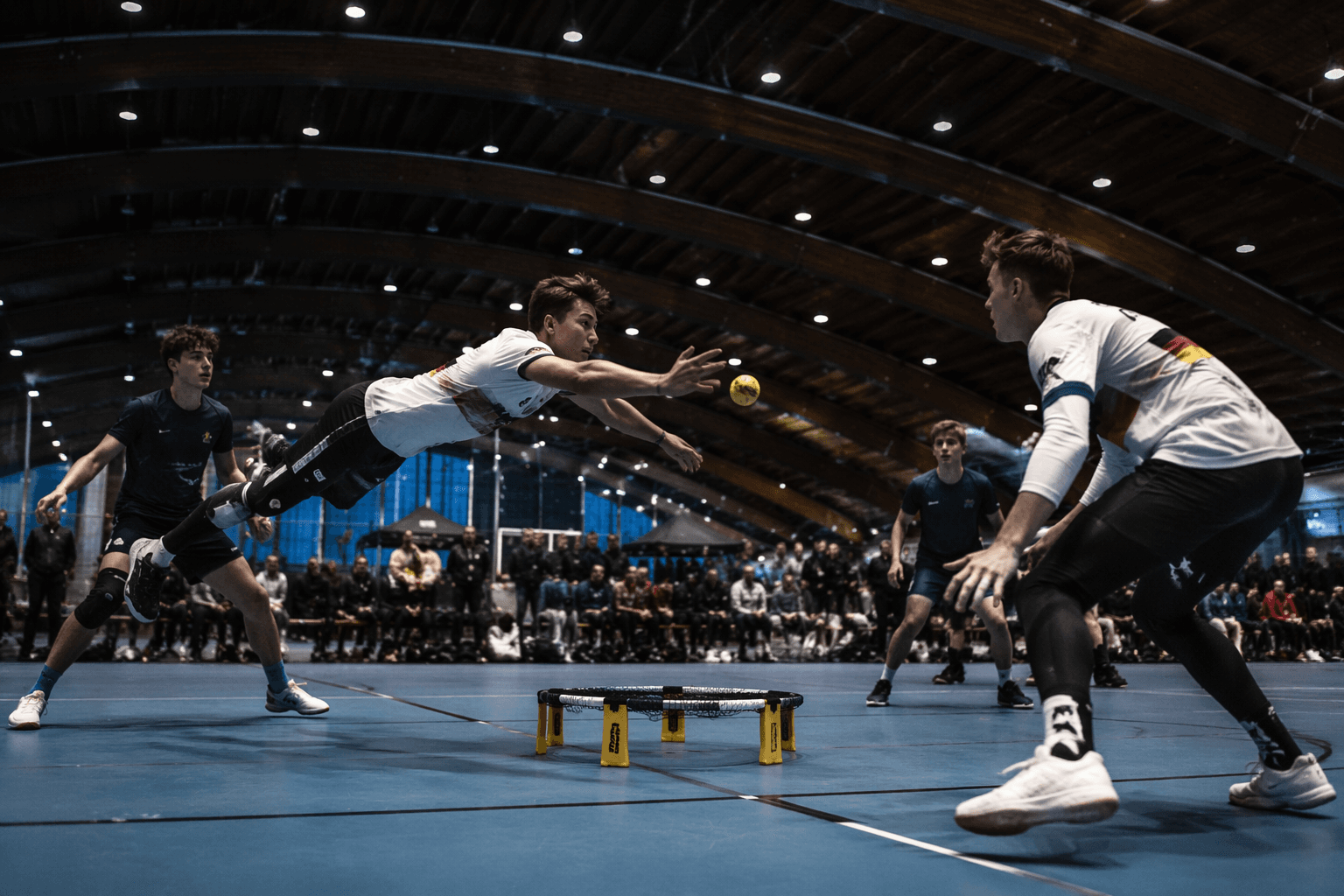
Spikeball simplifies back-pocket serve rule to reduce disputes
Spikeball's 2021 rewrite turned back-pocket calls into a shoulder-height test, a move meant to cut disputes and keep more rallies alive.
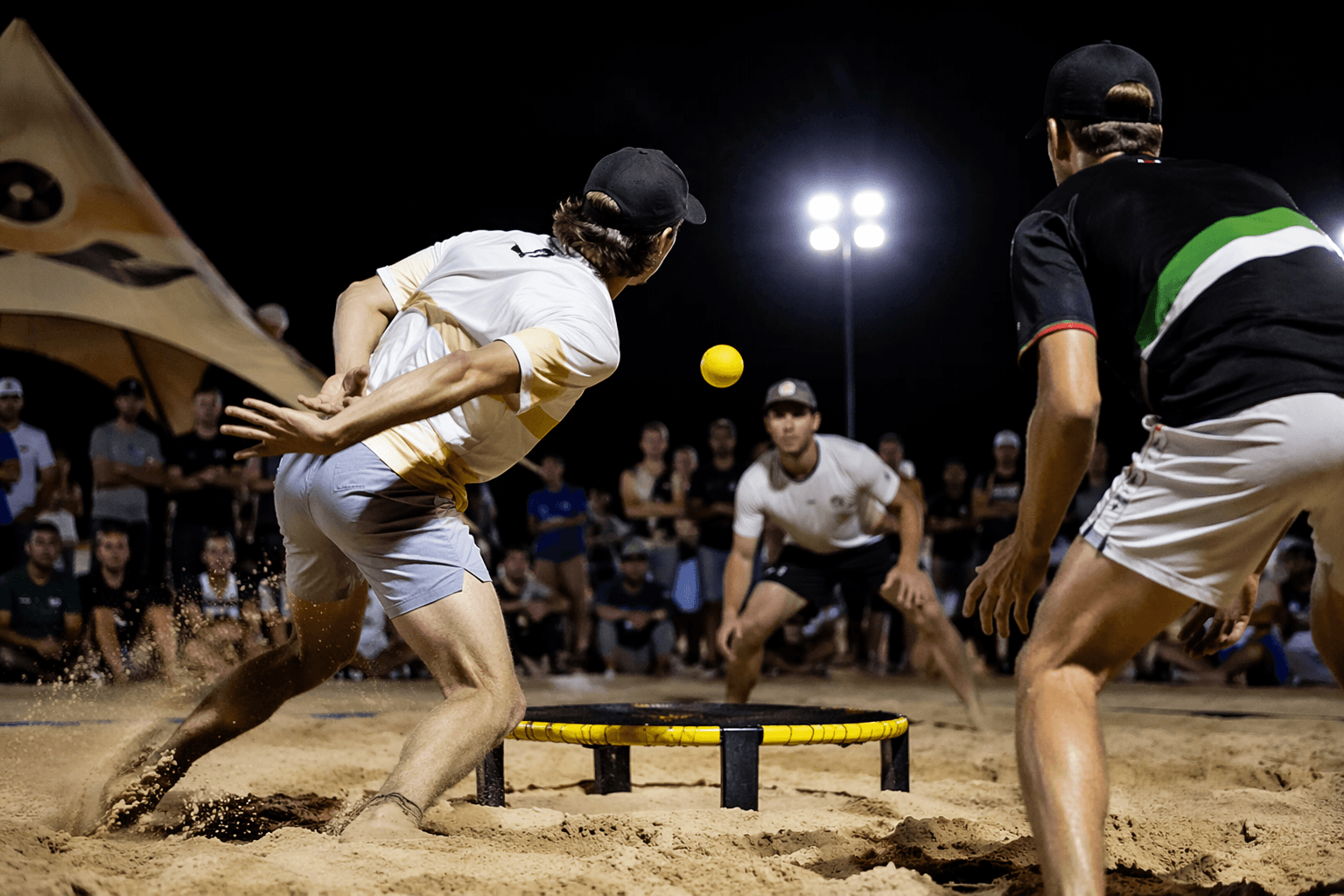
Spikeball rewrote one of roundnet’s most argued calls into a simpler test: on a serve, the ball is a fault only if it is above the receiver’s shoulder in athletic stance, while back pockets and lips below that line stay legal and side pockets remain illegal. The back-pocket call only turns into a fault if the ball does not move forward, a change designed to take the guesswork out of a play that could look legal to one trained eye and illegal to another, even in slow motion.
The 2021 Spikeball Tour Series rule note said the revision was meant to reduce arguments and increase played points. It also defined athletic stance more tightly, with slightly bent knees, feet a bit wider than shoulder width, and chest positioned over feet. That mattered because the rule closed a common loophole: if a receiver lowered the shoulders while taking the serve, the judge was to use the prior athletic stance; if the receiver raised the shoulders, the new position controlled. That gave observers a fixed frame instead of a moving target.
The back-pocket change was part of a larger 2021 package meant to clean up the sport’s gray areas. Spikeball said the SRA board began discussing the update in September 2020 and had a draft by early December, after years of testing rule and equipment changes to address too few defensive opportunities and too many subjective calls. The same package added a 7-foot service line with lean, required the pivot foot to stay planted until net contact, expanded the pocket definition, allowed consecutive contacts off first touches, removed the subjective strong play hinder distinction and added a no-hit zone for top divisions.
The point was bigger than one serving rule. Spikeball framed the rewrite as a response to the offense-defense imbalance and the serveball problem, with the goal of making the sport more fun to play and watch. USA Roundnet said it tested officiating methods throughout 2021 and built a certified observer pathway because self-officiation remains a core part of roundnet but needs a standard process. That is where the simplified pocket rule matters most: fewer arguments at the net, fewer stoppages, and more confidence that the same serve would be judged the same way by different observers.

Governance shifted at the same time. Spikeball said the creation of the International Roundnet Federation and USA Roundnet changed the SRA’s role, so its rules applied to Spikeball series events rather than every competition. The International Roundnet Federation adopted its initial rules on October 21, 2021, and later updated them in 2022, 2024 and 2025, while Roundnet Canada said the 2021 SRA updates were recommended for Canadian events, not mandatory. In a young sport that has existed since 1989, the pocket rewrite became a marker of something larger: roundnet was replacing instinct and argument with a clearer standard, one serve at a time.
This article was produced by Prism’s automated news system from verified source data, official records, and press releases, then run through automated quality and moderation checks before publishing. The system is built and supervised by the people who set the standards it runs under. Read our full AI policy.
Did this article answer your question?