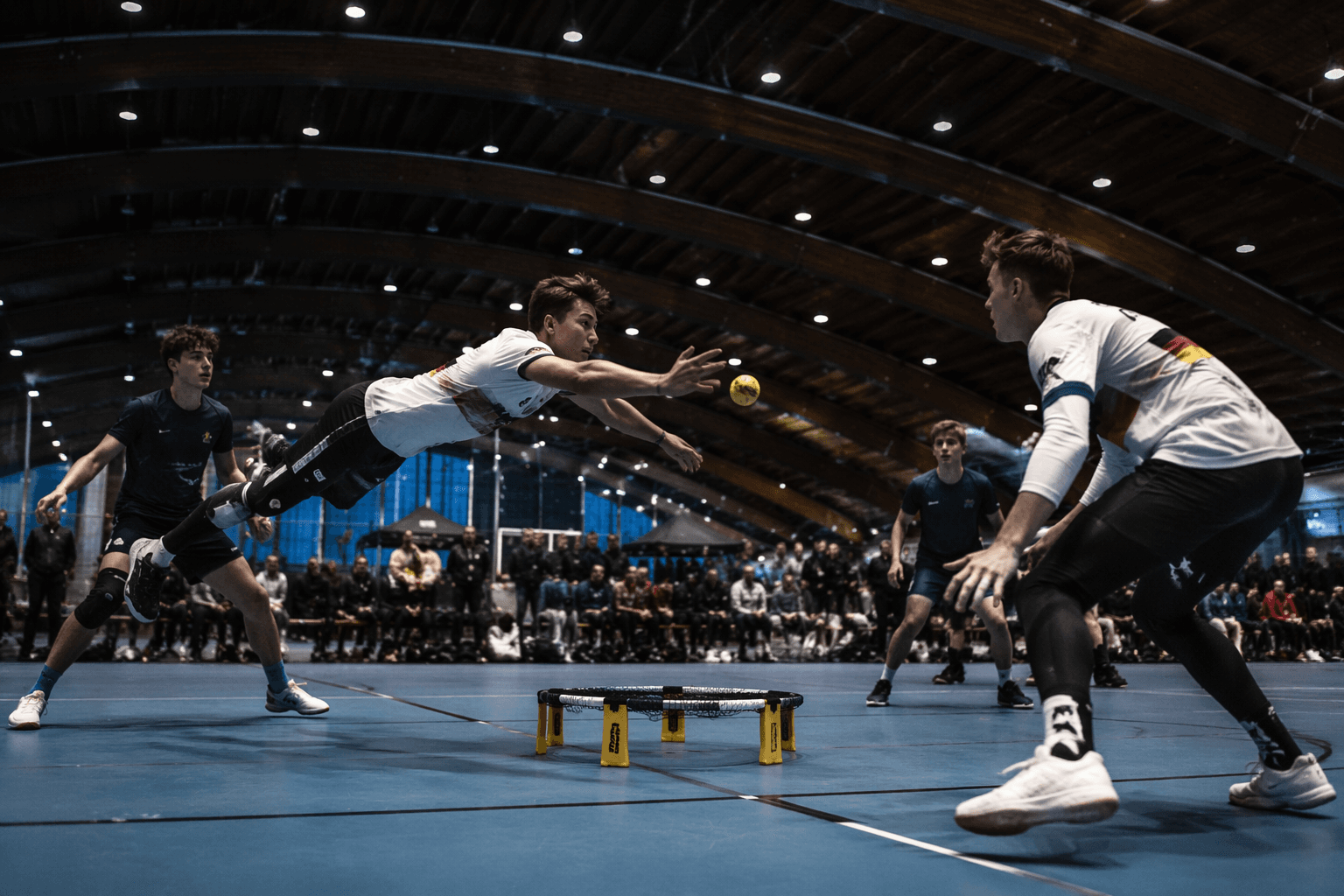
Spikeball stars say local training groups drive faster improvement
Local training groups are turning into the fastest path to roundnet progress, because they create more reps, better feedback, and tougher daily competition.
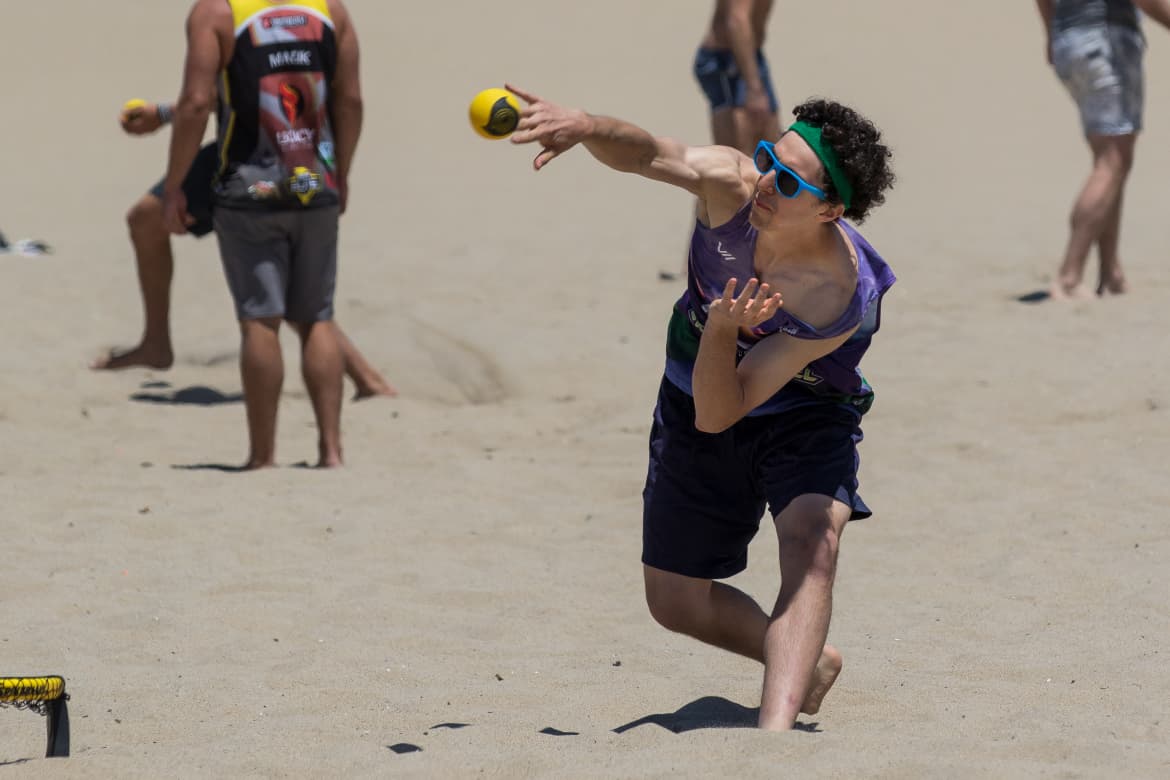
Spikeball’s college roundnet program had 1,100+ players, 125+ clubs, and 21 U.S. events. Better Spikeball players are not just playing more matches. They are building training habits that create more touches, more honest feedback, and more time against opponents who can actually expose flaws. Ezra Dantowitz and Matt Bohnen push that idea hard: find a reliable local group, use the Spikeball app or a Facebook group to build it, and treat the circle itself as part of the training plan. In a partner sport where every rally depends on timing and trust, the size and consistency of your local community can become a real competitive edge.
Build the circle first
Spikeball’s own ecosystem leans into that logic. The company organizes community around “Find Your Circle,” college clubs, and local roundnet organizations, while its roundnet community pages add local, college, and faith-based groups into the mix. The college program is built around a clear purpose: generate more local competition, create access to tournaments, and support clubs that recruit, practice, and compete against other colleges.
The fastest gains come from tougher opponents
Ezra Dantowitz’s bluntest point is also the most useful one: train against better players, even if you do not win every time. Better opponents reveal habits and weaknesses you can hide in easier games, and they force you to make decisions under pressure rather than just repeat comfortable shots. That is why Origin Chaos stands out as a useful example. The team improved by training consistently with other top-ranked Origin teams, turning practice into a place where every touch had consequences.
If you are new, the main goal is contact, rhythm, and knowing where to stand. If you already play tournaments, the goal shifts to reading speed, controlling the first touch, and surviving against teams that can punish a weak serve or a sloppy set.
A simple habit design for this stage looks like this:

- Find one or two players who are clearly better than you and make them part of your regular reps.
- Use mixed-level sessions so beginners can learn movement and touch while competitive players get real pressure.
- Keep score in training games, because the habit of playing with consequence changes how seriously each rep gets treated.
Treat the serve like a weapon, not a formality
Ben Dantowitz’s advice is the kind of detail that separates casual practice from targeted work: repeat the same serve 100 times. That is not about variety for its own sake. It is about building one repeatable action until it becomes reliable under pressure. Serving is central in roundnet because the serve starts each point, and once the ball is live, players can move anywhere around the net. The first touch is one of the most strategic moments in the sport.
The skill path is obvious once you line it up with the game itself. A stronger serve can win a point outright, force a weak return, or set up the next two touches for your partner. Ben Dantowitz also points to serving, wall ball, and other drills as useful between matches because roundnet improvement is touch-heavy. You do not need a full bracket to get better if you can keep the ball moving.
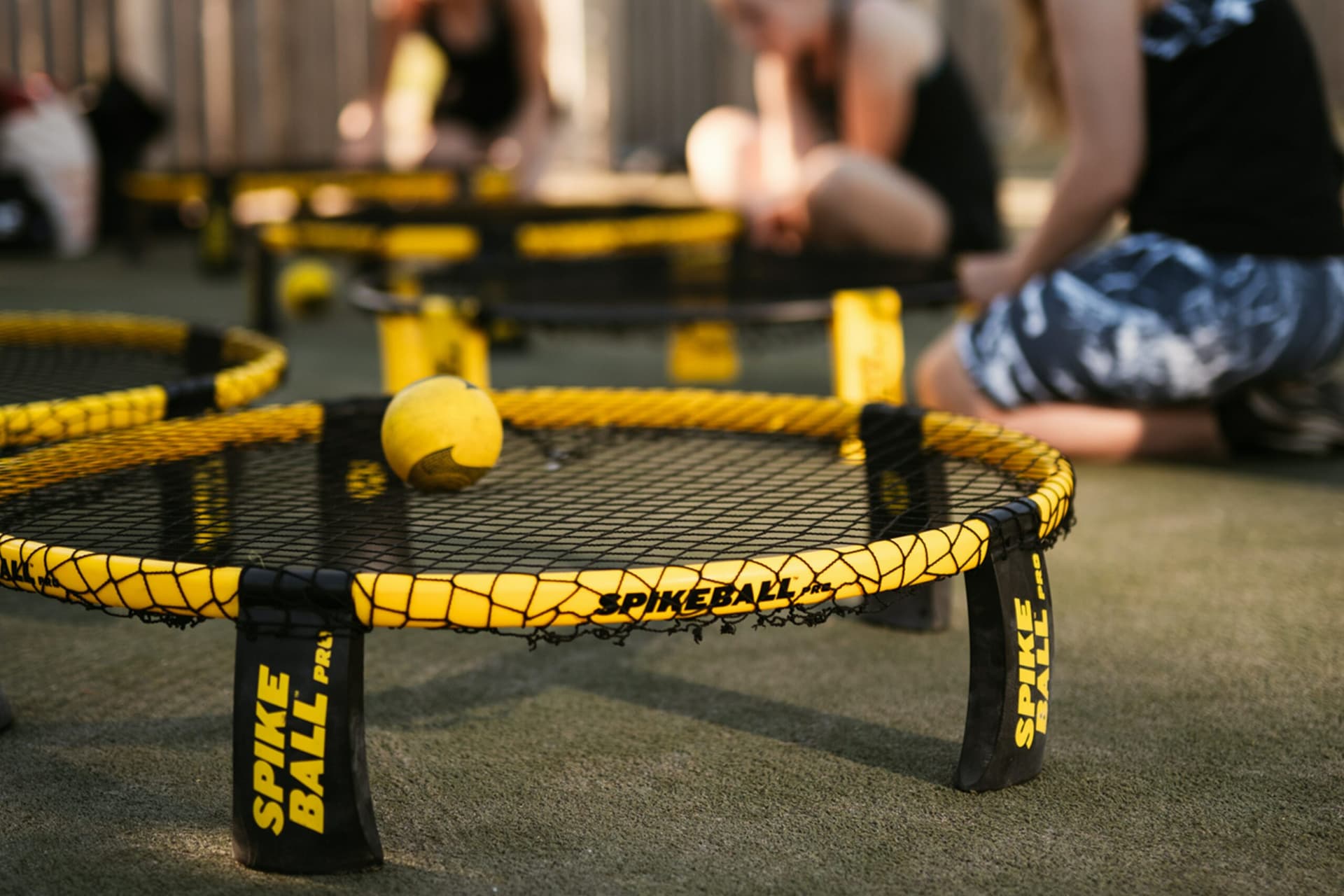
The best drill work mirrors that reality:
- Serve the same target repeatedly until the toss, contact, and landing spot all feel automatic.
- Use wall ball or solo touch work to keep your hands active when no partner is available.
- Build short, focused blocks instead of wandering into unfocused open play.
Travel is part of the training plan
Gustavo Gonzales of Bolivia frames tournament travel as a learning tool, not just a weekend result. Seeing different styles and tactics in other scenes gives players ideas they can carry home. That matters in a sport where local habits can become invisible if you only ever face the same people.

Chris Hornacek and Patrick Drucker of Origin Impact show what that looks like when it is done aggressively. They attended nine tournaments in one season and turned that work into two wins. The message is not that every player should chase the same volume, but that tournaments become more valuable when they are treated as data collection, not just wins and losses.
Spikeball’s results archive gives that travel-first culture historical depth. It lists Nationals in Washington, D.C. in 2016, Chicago in 2017, Santa Monica and Fort Lauderdale in 2018, and Richmond in 2019. The 2021-2022 season stretched across Winter Haven, Garland, Erie, Rock Hill, Seattle, Weymouth, Salt Lake City, Chicago, Richmond, Mission Viejo, Orlando, Dallas, and San Francisco. In Lancaster, Pennsylvania, in May 2018, 125 teams entered and the event was filmed for ESPN2.
Use the sport’s structure to guide practice
Spikeball’s official competition ladder gives players another way to understand what “good training” means. The Premier division is an exclusive division for the top 1% of roundnet players, and Spikeball Tour Series points are used for pool-play seeding, Pro Division qualification, and earning Spikeball Elite. That structure does two things at once: it rewards high-level performance and it gives players a clear reason to sharpen every part of their game.
SpikeSchool organizes those skills into four buckets: passing, hitting, defense, and serving. That framing is useful because it keeps training from becoming random. A player who only practices serves may have a dangerous first shot but no defensive response. A player who only scrimmages may get plenty of game reps but never isolate the weak link that is costing points.
Spikeball and USA Roundnet have partnered on a referee initiative designed to improve officiating consistency and clarify rules. At the same time, Spikeball is building college-roundnet pathways across 10 U.S. sections and supporting international participation.
This article was produced by Prism’s automated news system from verified source data, official records, and press releases, then run through automated quality and moderation checks before publishing. The system is built and supervised by the people who set the standards it runs under. Read our full AI policy.
Did this article answer your question?