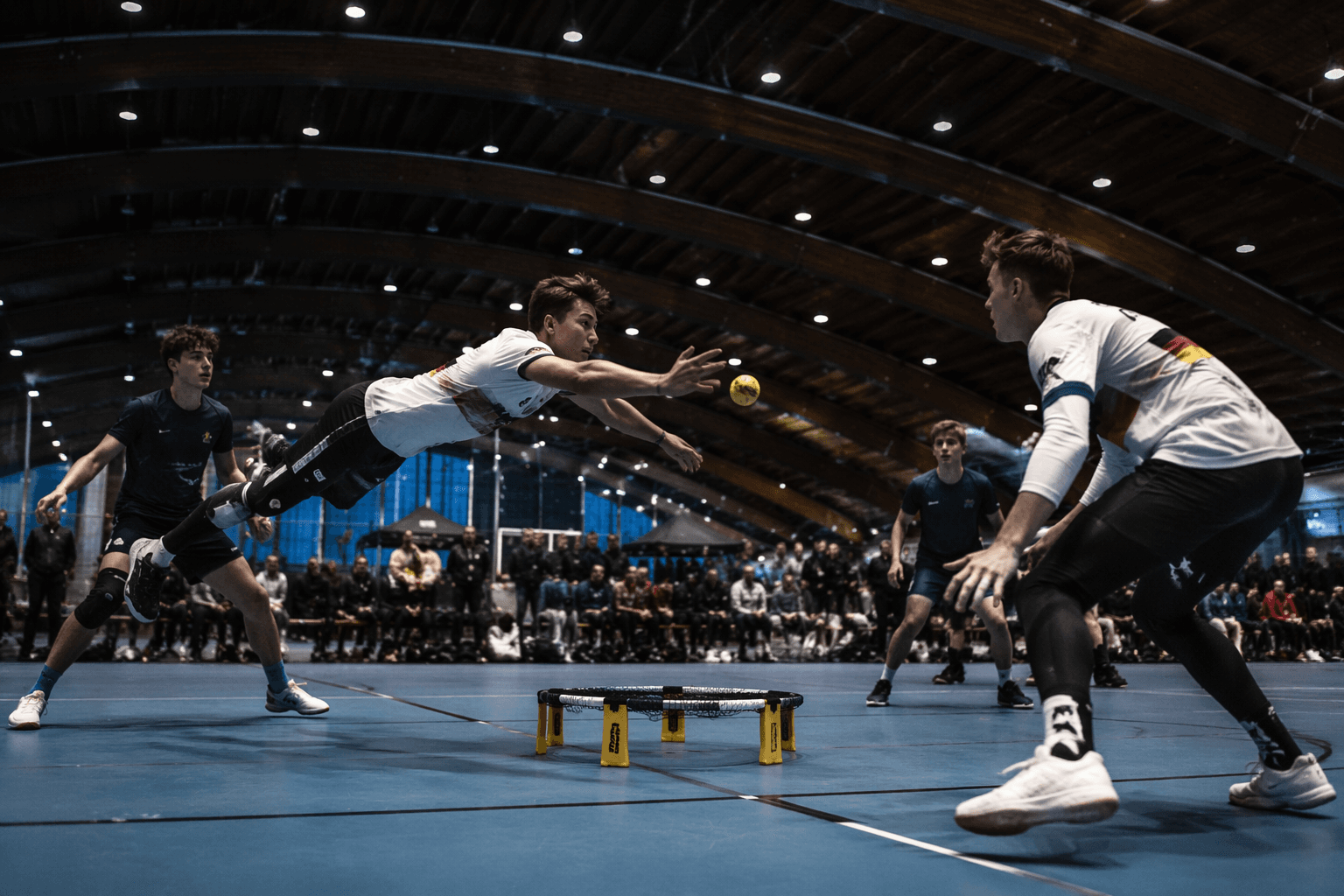
USA Roundnet aligns college play with global rules, adds individual division
USA Roundnet's college overhaul adds an Individual division, forces D2 squads to carry women and puts the sport's IRF rules into campus play.
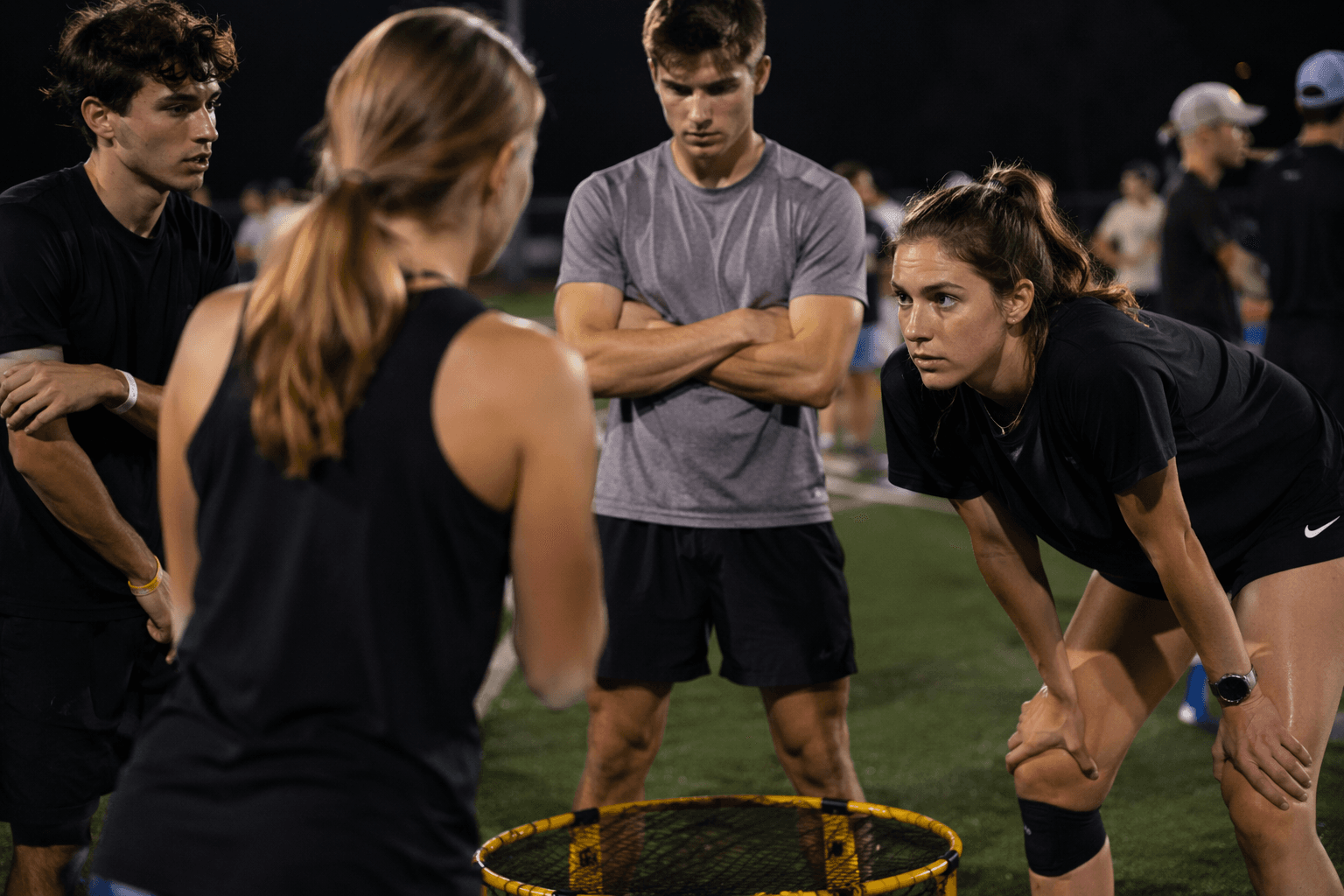
USA Roundnet’s 2026 college series now runs on the standard International Roundnet Federation ruleset, with equal serving, a 100-centimeter non-hitting zone and an 8.5-meter boundary, and that shift reaches beyond scorekeeping. The organization says the goal is to make college roundnet as compliant with current sport standards as possible, and the same ruleset also governed its 2026 national team camp in Atlanta.
The sharpest change is the new Individual division. USA Roundnet built it so a player can represent a school in a normal two-player format against other clubs, which opens another lane into sanctioned play without forcing every athlete onto a conventional Division I or Division II roster. That makes the selection process more cutthroat inside programs, because clubs now have another place to send players who might otherwise sit on the edge of the travel group. It also gives fringe contributors a real runway: not just practice reps, but a path to compete and be seen.
Division II got the heaviest roster rewrite. Every D2 squad must now include at least one woman player, with no separate mixed line inside the division, and USA Roundnet says the aim is to improve women’s representation in college roundnet and across the sport. The new Women’s Recruitment Handbook is part of that push. Just as important, clubs are no longer free to stockpile D2 entries without widening participation elsewhere. A club may send one D2 squad without extra requirements, but every additional D2 squad has to be paired with Individual division teams, turning depth into a broader commitment instead of a narrow advantage.
Division I stays the sport’s hardest gate to clear. Clubs can send unlimited D1 squads to sectionals, but only one D1 squad to college nationals. USA Roundnet also said the three largest sectionals, measured by unique D1 club participation, will each receive two automatic Power Bids to nationals, with two Strength Bids and any converted or unaccepted Power Bids handled by the USAR College Leadership Transition Team. That system gives the biggest clubs more ways to qualify locally, but it still compresses the field when the bracket gets to Charlotte.

The scale of the college game shows why the rules are tightening now. USA Roundnet says organized college roundnet has existed since 2017, and more than 150 college clubs took part in the most recent season. The 2026 College Roundnet Nationals were scheduled for May 23-24 at Mecklenburg County Regional Sportsplex in Charlotte, North Carolina, with 18 Division I teams, 17 Division II teams and 10 Open Individual teams for 302 collegiate athletes. USA Roundnet described Indianapolis, site of the 2025 College National Championship, as the final self-operated collegiate event run by Spikeball, after an 80-person Zoom call helped lead to the USAR College Roundnet Board. The message from the new rulebook is plain: college roundnet is no longer just growing, it is being engineered.
This article was produced by Prism’s automated news system from verified source data, official records, and press releases, then run through automated quality and moderation checks before publishing. The system is built and supervised by the people who set the standards it runs under. Read our full AI policy.
Did this article answer your question?