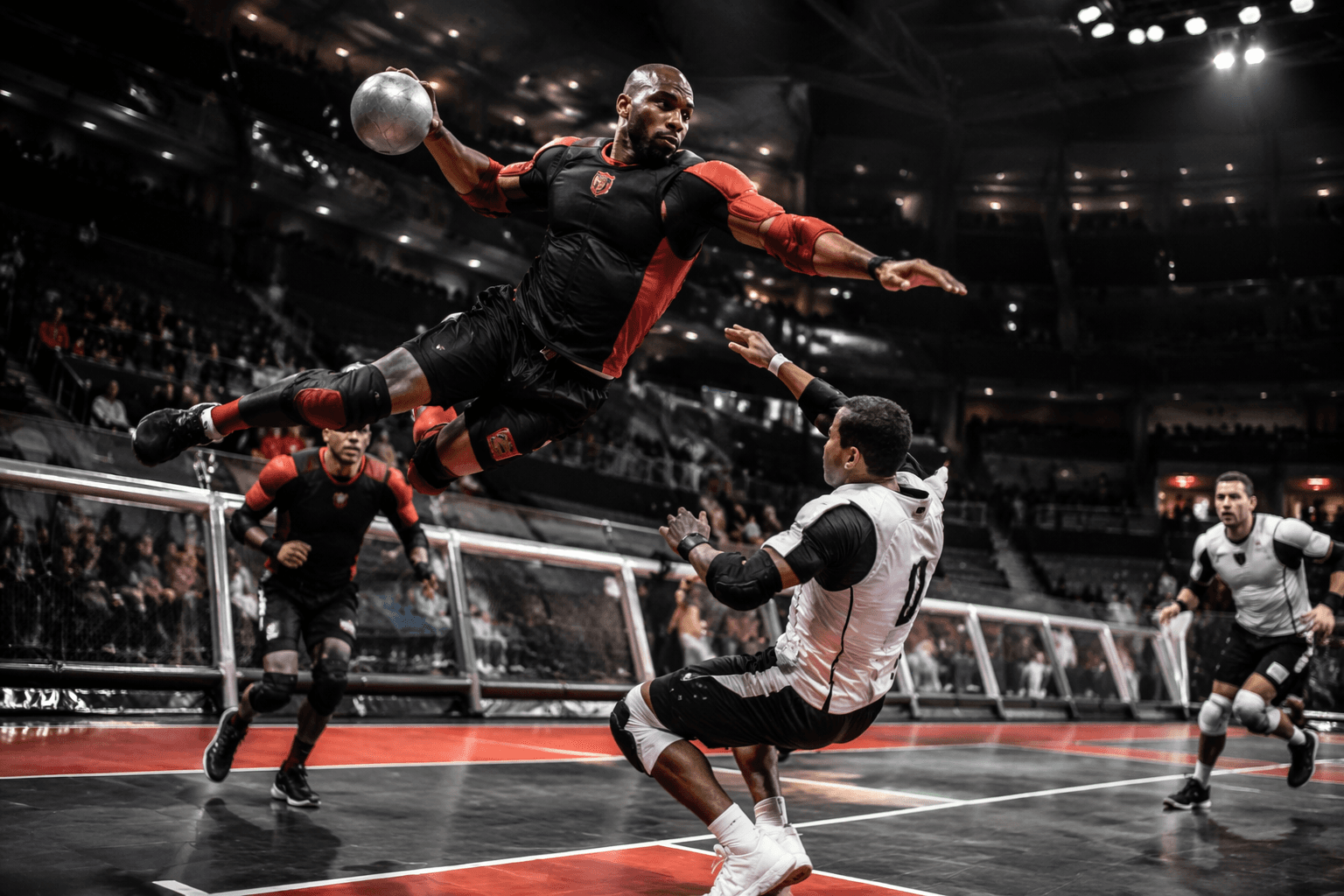
Champ Willis links SlamBall's origins to its modern identity
James Willis is not just a veteran on the Rumble roster. He is one of the first five players in SlamBall history, and that makes him the sport’s clearest living link to its original identity.

James Willis sits inside SlamBall’s origin story
James “Champ” Willis is more than a familiar name on the Rumble. He is one of the first five players recruited after Mason Gordon invented the sport, which places him at the center of SlamBall’s first chapter rather than somewhere on the edge of it. That matters because the league’s identity has always been built on a mix of invention, improvisation, and players willing to try a game that did not yet have a blueprint.
SlamBall’s own history says the sport was invented in 1999 and first played in Los Angeles after Gordon and Mike Tollin helped build the concept from a warehouse setting into a live competition. Willis was there when that idea stopped being a prototype and started becoming a league. In a sport defined by motion, collisions, and constant adjustment, that kind of continuity is not decorative. It is part of the product.
Why Willis carries more weight than a veteran label
Willis did not simply survive the early years; he helped define them. He led the Rumble to the championship in the inaugural 2002 season, making him part of the league’s first true standard of success. That title still matters because SlamBall’s all-time title history continues to recognize the 2002 Rumble as the benchmark against which every later champion is measured.
His résumé also traces the league’s early evolution. After that title run, Willis played gunner for the Riders in 2003, then returned to the Rumble for the 2007 and 2008 campaigns. That path tells the story of a league where rosters shifted, roles changed, and players had to adapt quickly to a contact-heavy, trampoline-driven game. Willis is valuable because he has already lived through the different versions of SlamBall and still connects them.
The original Rumble still defines what the team is supposed to be
The Rumble are not just another franchise in the league’s history. SlamBall’s legendary-teams material describes them as one of the two original teams that began play on a warehouse court, and it credits them with winning SlamBall’s inaugural world championship. That origin gives the club a different kind of authority than a later expansion team or a short-lived roster ever could.
The team’s early swagger was also tied to Ken Carter, the real-life coach whose leadership helped shape the Rumble’s image and fed into the broader cultural mythology around the team. In league retrospectives, the Rumble are still used as a foundation piece because they represent the earliest version of what SlamBall wanted to be: physical, theatrical, and competitive enough to feel like a real sport, not a stunt. Willis connects directly to that identity because he was on the court when it was being established.
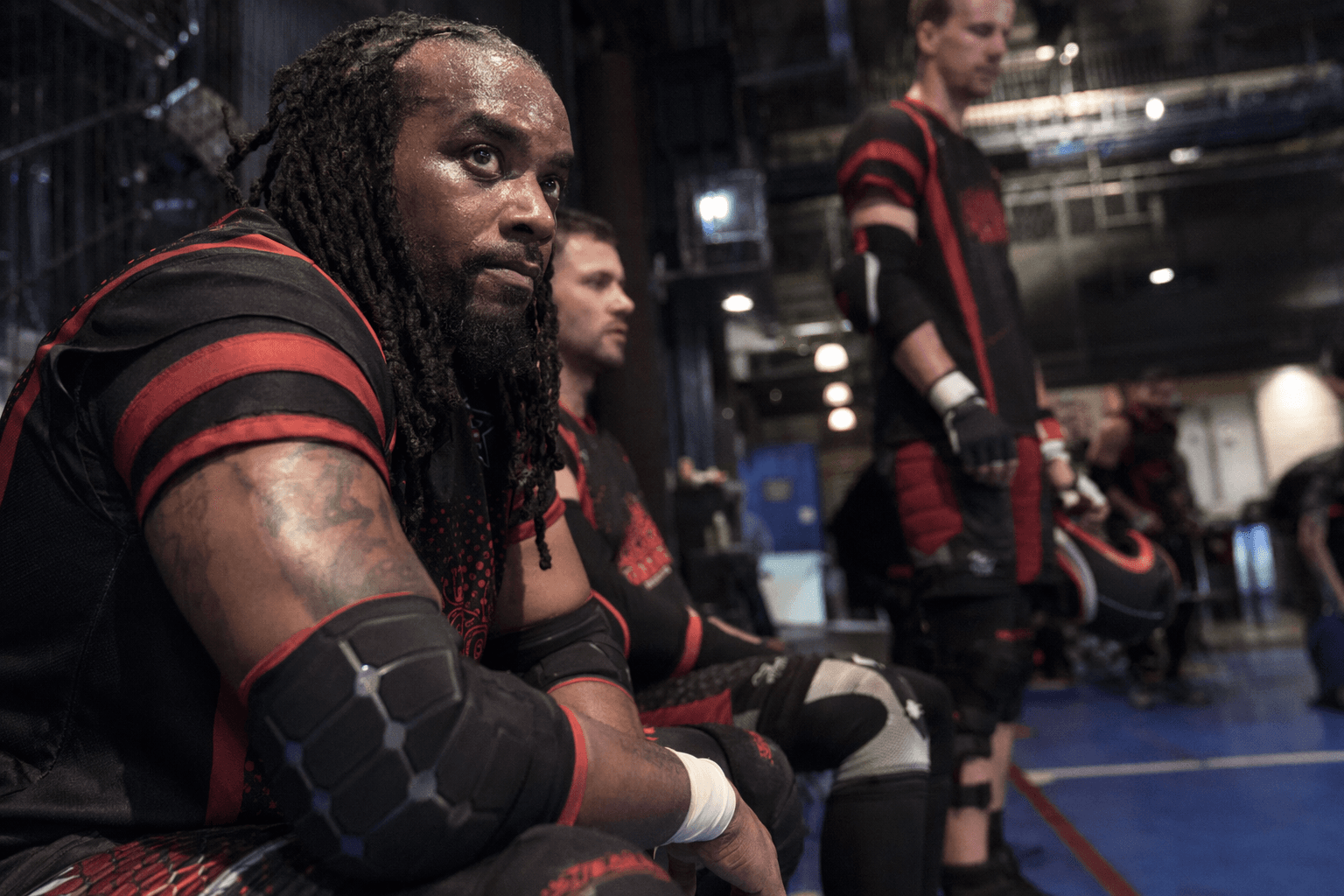
What Willis brings to the modern era
SlamBall’s modern challenge is not convincing people that the sport is wild. It is proving that the spectacle can hold up over time. That is where Willis becomes especially useful for the Rumble. He brings institutional memory to a league that depends on players learning fast and fans understanding that the game is built on both basketball skill and extreme-sport chaos.
A pioneer like Willis gives the Rumble something more durable than nostalgia. He can point to how the sport originally looked, how the game has changed, and which parts still work because they were strong from the beginning. In a league where the line between old-school basketball and spectacle is the whole point, that perspective helps explain why SlamBall has always felt different from a novelty act.
The practical value of that history is easy to miss if the sport is only viewed as entertainment. Willis represents continuity in a league that has had to rebuild its own credibility more than once. When the Rumble lean on him, they are not just invoking the past. They are reminding people that the franchise’s identity was formed by people who understood how to make a new game look legitimate from the start.
Why the Rumble’s legacy still travels well
The strongest SlamBall stories are never only about highlights. They are about which players can carry the league’s origin into its current era without making it feel frozen in time. Willis does that because his career spans the first five-player recruitment pool, the inaugural 2002 championship, the Riders stop in 2003, and the later Rumble returns in 2007 and 2008.
That arc gives the Rumble a face fans can recognize when the league talks about where it came from. It also explains why the franchise still matters inside SlamBall’s wider mythology. The team is one of the original warehouse-era clubs, the inaugural world champion, and a reference point in the league’s season review and title history. Willis is the human thread tying those facts together.
In a sport built on constant motion, the most valuable thing a team can have is someone who remembers the first version of the game from the inside. Willis is that player for the Rumble. He is not a callback to the beginning of SlamBall. He is proof that the beginning still lives on the roster.
This article was produced by Prism’s automated news system from verified source data, official records, and press releases, then run through automated quality and moderation checks before publishing. The system is built and supervised by the people who set the standards it runs under. Read our full AI policy.
Did this article answer your question?