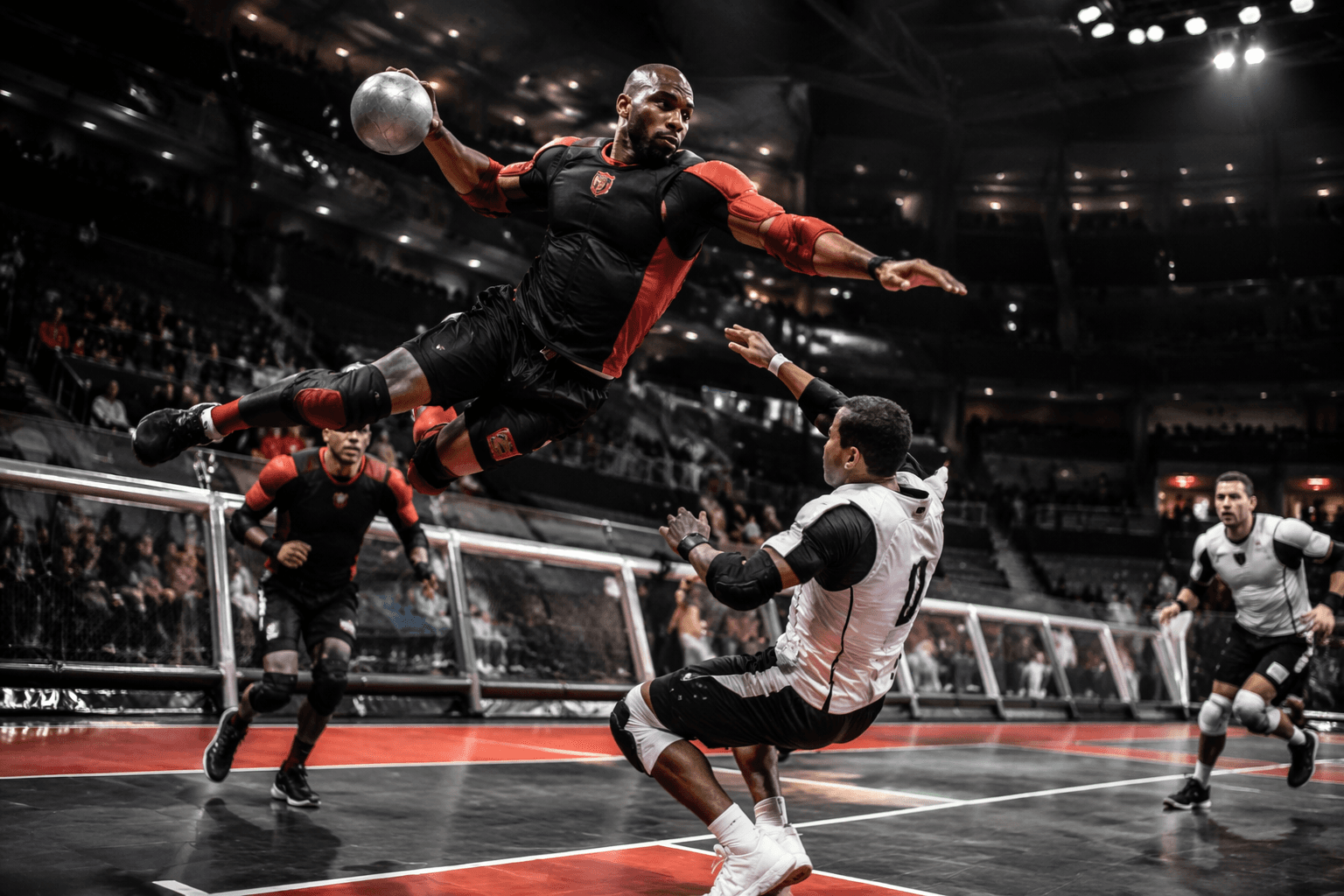
Noah Ballou's playmaking made him the Mob's ultimate SlamBall engine
Noah Ballou was the Mob’s anti-highlight-reel star. His passing, tempo, and timing made SlamBall’s loudest team look inevitable.
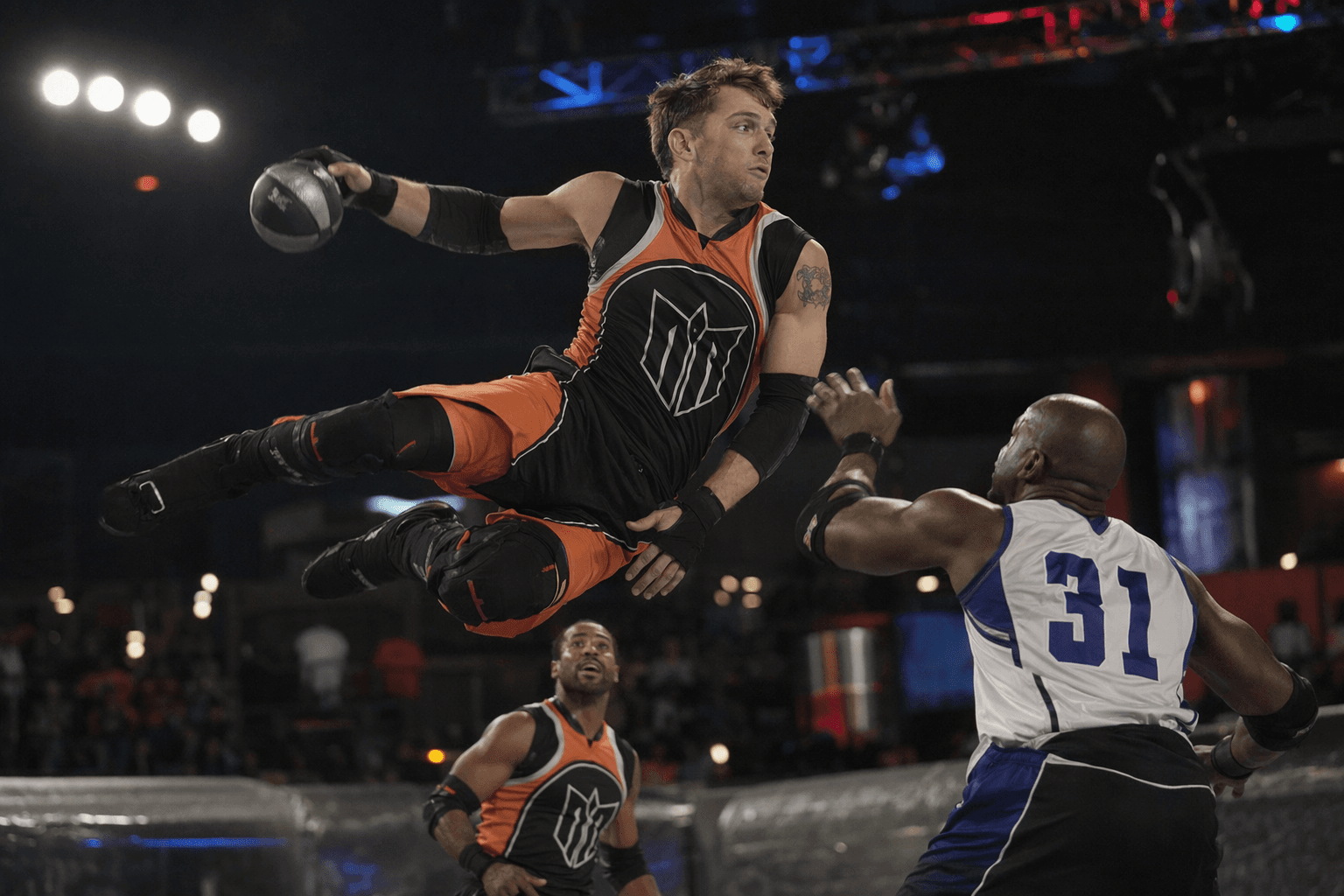
Noah Ballou was the Mob’s answer to the highlight-reel trap: in SlamBall, the loudest play often starts with the smartest one. The official legend bio calls him a standout handler, and the record around him points to a 6-foot-3 guard-forward from Garland, Texas, who turned court vision into championships and turned attention on his scoring into easy points for everyone else.
Why Ballou mattered
Ballou’s value was never just that he could finish above the rim. SlamBall’s official bio says he finished with the league’s all-time assist mark, which is the clearest sign that his real edge was reading a defense before it fully committed. When opponents loaded up to stop him, he punished the overplay with alley-oops from all over the floor, the kind of pass that makes a high-flying league feel surgical instead of chaotic.
That is what makes him such a useful player to watch now. SlamBall rewards spectacle, but Ballou showed that the sport’s best possessions are usually built one decision earlier than the final finish. He could score, create, and control tempo, and that combination made him the Mob’s engine rather than just one of its finishers.
How to watch his game
When Ballou is on the floor, watch the play before the play. If defenders shade toward his scoring lane, that is usually the signal that the possession is about to turn into a lob, a kickout, or a quick read that creates a clean look before the defense can reset.
- First, watch the pressure he creates on the defense. The official legend bio says he repeatedly bent coverages with flashy playmaking and aerial finishing, so the key is not only what Ballou does with the ball, but how his gravity changes everyone else’s spacing.
- Second, watch the way he controls pace. A standout handler in SlamBall has to decide when to push and when to pause, and Ballou’s game was built on that control, with the floor tilting toward the Mob as soon as he recognized the first seam.
- Third, watch the pass that casual fans miss. The alley-oop is the finish everyone remembers, but Ballou’s real skill was the read that made it possible, turning defensive overcommitment into a layup-line possession that looked easy only because he made it so.
That is why Ballou fits the label of anti-highlight-reel star. He could make the highlight, but he also understood the rotation, the spacing, and the timing that made the highlight possible in the first place. In a sport that can look like a live-action video game, that is the difference between noise and control.
The Mob’s identity runs through him
Ballou’s legacy is tied directly to the Mob’s dynasty. SlamBall’s team-history page says the franchise’s championship run began with back-to-back titles in Series 4 and Series 5, and that the Mob remains the only SlamBall team to win multiple titles. The same history places Ballou in the center of that rise, alongside Series 4 MVP Trevor “Eagle” Anderson and Lu Feng, the league’s first international SlamBall star.
The official legend bio goes a step further, crediting Ballou with leading the Mob to two consecutive championships in Series 4 and Series 5 and then adding a third as an assistant coach in Series 6. A 2023 season review says the Mob’s championship in the revived Series 6 completed a three-peat, with earlier titles in China in 2012 and 2016 before the Las Vegas return. However the league frames the chronology, the conclusion is the same: Ballou is not just part of Mob history, he is part of the franchise’s competitive identity.
That matters because the Mob’s appeal has always been about more than trophies. The team’s brand is tied to confidence, improvisation, and the feeling that one smart sequence can change a game’s entire tone. Ballou helped define that identity by making the Mob look composed even when the game tilted toward chaos.
From Garland to the wider spotlight
Ballou’s path to SlamBall also helps explain why his game translated so well. IMDb says he graduated from North Garland High School in 2000 and went on to Sam Houston State University, where he played college basketball after appearing in only four games as a guard. Sports-Reference and RealGM list him as a 6-foot-3 guard-forward from Garland, Texas, a profile that fits the kind of player who can handle the ball, read space, and survive the sport’s speed without needing every touch to be a dunk.
After college, Ballou kept moving. IMDb says he continued modeling in New York before moving to California to join SlamBall, and that his career expanded into acting, modeling, stunt work, and coordination. It also says he served as Ben Affleck’s private basketball coach for *The Way Back*, which is a fitting detail for someone whose own career has always lived at the intersection of basketball skill and performance.
That crossover background is part of SlamBall’s broader appeal, but Ballou shows why the league is more than a stunt. The spectacle gets people looking; players like Ballou give them a reason to stay. He made the Mob smarter, steadier, and harder to defend, which is why his legacy still reads as the template for what SlamBall rewards when the bounce alone is not enough.
This article was produced by Prism’s automated news system from verified source data, official records, and press releases, then run through automated quality and moderation checks before publishing. The system is built and supervised by the people who set the standards it runs under. Read our full AI policy.
Did this article answer your question?