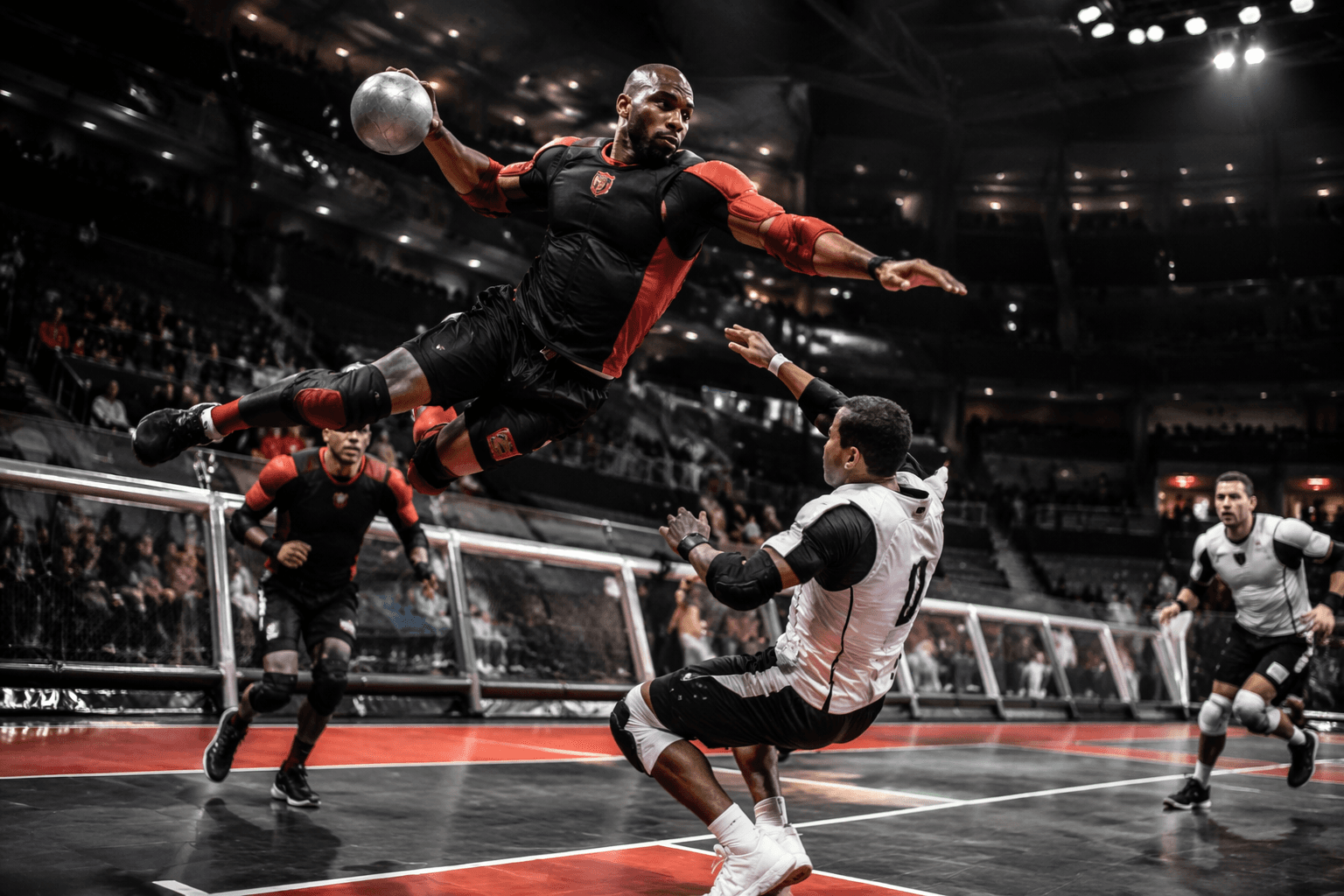
SlamBall’s Las Vegas reboot brings a more serious, strategic league back
A warehouse tune-up beside Allegiant Stadium shows SlamBall's Vegas return is built like a credibility test, not a throwback, with ESPN, coaching and safety.
Inside the warehouse test
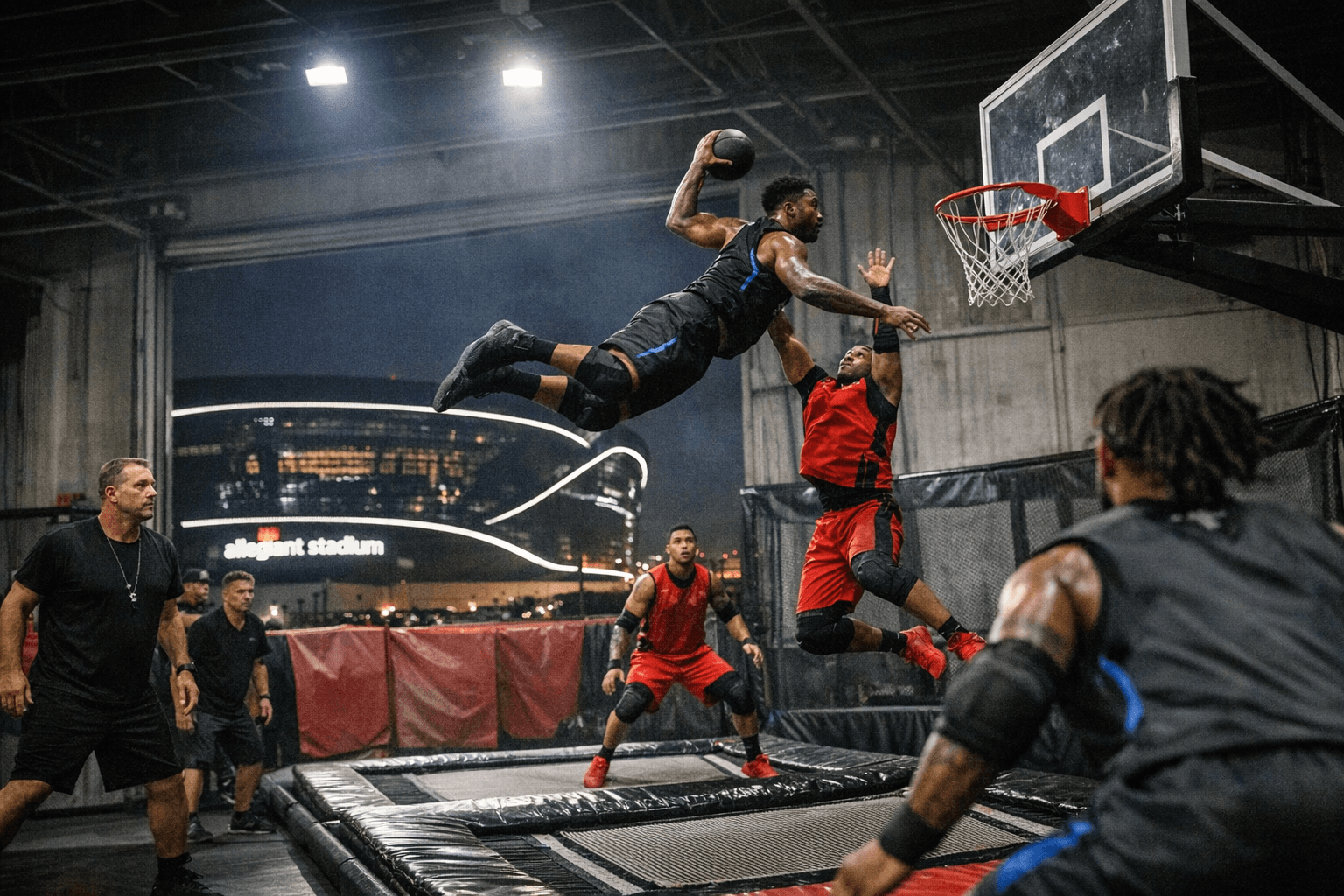
SlamBall’s Las Vegas reboot begins in a place that feels more like a proving ground than a nostalgia act: a warehouse a mile from Allegiant Stadium, where athletes in elbow and knee pads crash into hockey-style boards and glass while coaches shape the next version of the sport. The scene is loud, controlled, and deliberately hard to access. Outsiders can watch, but they cannot take photos or video, a detail that says as much about the league’s discipline as its spectacle.
That contrast matters. The old image of SlamBall was built on chaos and novelty, a sport that looked wild enough to survive on shock value alone. The current version is trying to look engineered instead, with every rep, every hit and every dunk feeding a larger argument: this can be a serious modern sports property, not just a clip machine.
A different SlamBall than the one that disappeared
The league returning to Las Vegas is not the same product that faded from television years ago. SlamBall originally aired on Spike TV in 2002 and 2003, then returned again in 2008, but the 2023 relaunch is being framed as the league’s first organized U.S. run in about two decades. That gap explains why the comeback carries so much weight. It is not only a return to the spotlight, it is a test of whether the sport can sustain itself in a media landscape that now rewards speed, repeatable action and instantly shareable moments.
More than 20 years after Mason Gordon first drew the concept in Los Angeles, the sport has been rebuilt with more structure, more coaching and more strategy. Coaches are not decorative figures on the sideline anymore. They are drawing up sets and guiding play, giving the game a tactical layer that helps the league push beyond the stereotype of a one-off stunt.
What the league is selling now
SlamBall still leans into the collision of basketball and football cultures, and it knows exactly which plays translate best to today’s audience. Dunks, hits, rejections and rapid-fire momentum are the currency here, the kind of action that can travel quickly through social video and still hold up in a full broadcast. The league is clearly built for a generation that consumes sports through highlights first and box scores second.
But the relaunch is also trying to prove there is more underneath the flash. The presence of coaching, the structure of the rosters and the carefully staged reveal all point to the same idea: the league wants viewers to see not just contact, but organization. That matters in a sports market where spectacle is easy to create, but credibility is much harder to earn.
The ESPN deal is the clearest legitimacy signal
Nothing signals seriousness more than the television plan. ESPN and SlamBall announced an exclusive two-year broadcast partnership covering the 2023 and 2024 seasons, and ESPN said more than 30 hours of live SlamBall programming would air across ESPN, ESPN2 and ESPN+. That kind of distribution is not window dressing. It places the league inside a major national sports ecosystem, where repetition, accessibility and editorial attention can help build real awareness.
The 2023 season opened on July 21 at Cox Pavilion in Las Vegas and ran for five weekends, ending with the SlamBall Playoffs and Championship Game on August 17-19. The entire season was staged in one city, which gave the league a controlled environment for production, scheduling and safety. That matters for a property still proving it can operate cleanly and consistently. A compact run also lets the league manage the rhythms of the show, from game flow to camera work to player recovery.
The 2023 roster build showed a more mature league
The June 2023 relaunch introduced eight teams with seven-man rosters, a cleaner, more compact league structure than the loose novelty version many fans remember. The original legacy clubs, the Mob, Rumble and Slashers, were joined by five new teams: the Buzzsaw, Gryphons, Lava, Ozone and Wrath. That mix of familiar names and new branding gave the reboot both continuity and fresh commercial inventory.
The player pool also reflected a more developed system. The average player age was 26.9, which suggests the league is not just drawing raw athletes but players old enough to bring experience and control to a contact-heavy sport. Vincent Boumann, listed at 6-foot-9, was the tallest player in the 2023 group, a reminder that size still matters in a game built around boards, rebounds and vertical pressure. The first overall pick in the 2023 draft was Bryce Moragne, selected by the Lava, and that top selection gave the new era a face from the start.
Why the comeback has cultural reach
The comeback’s cultural footprint has been bigger than the sport itself. Mason Gordon said ESPN’s commitment validated SlamBall’s appeal and growth potential, and that kind of institutional backing has helped the league attract renewed attention from fans, social-media audiences and even celebrity observers like Snoop Dogg and Patrick Mahomes. That matters because culture often determines whether a niche sport becomes a durable entertainment asset or stays trapped as a memory.
SlamBall’s challenge is the same one facing many hybrid sports properties: how to keep the outrageous visuals while building enough structure, safety and repeatability to satisfy media partners and advertisers. The Las Vegas setup suggests the league understands that balance. The controlled warehouse sessions, the coaching emphasis, the concentrated schedule and the ESPN platform all point in the same direction.
If this return lasts, it will not be because SlamBall remembered how wild it used to feel. It will be because the league proved that spectacle can be organized, marketed and televised with enough discipline to survive beyond the first viral clip.
This article was produced by Prism’s automated news system from verified source data, official records, and press releases, then run through automated quality and moderation checks before publishing. The system is built and supervised by the people who set the standards it runs under. Read our full AI policy.
Did this article answer your question?