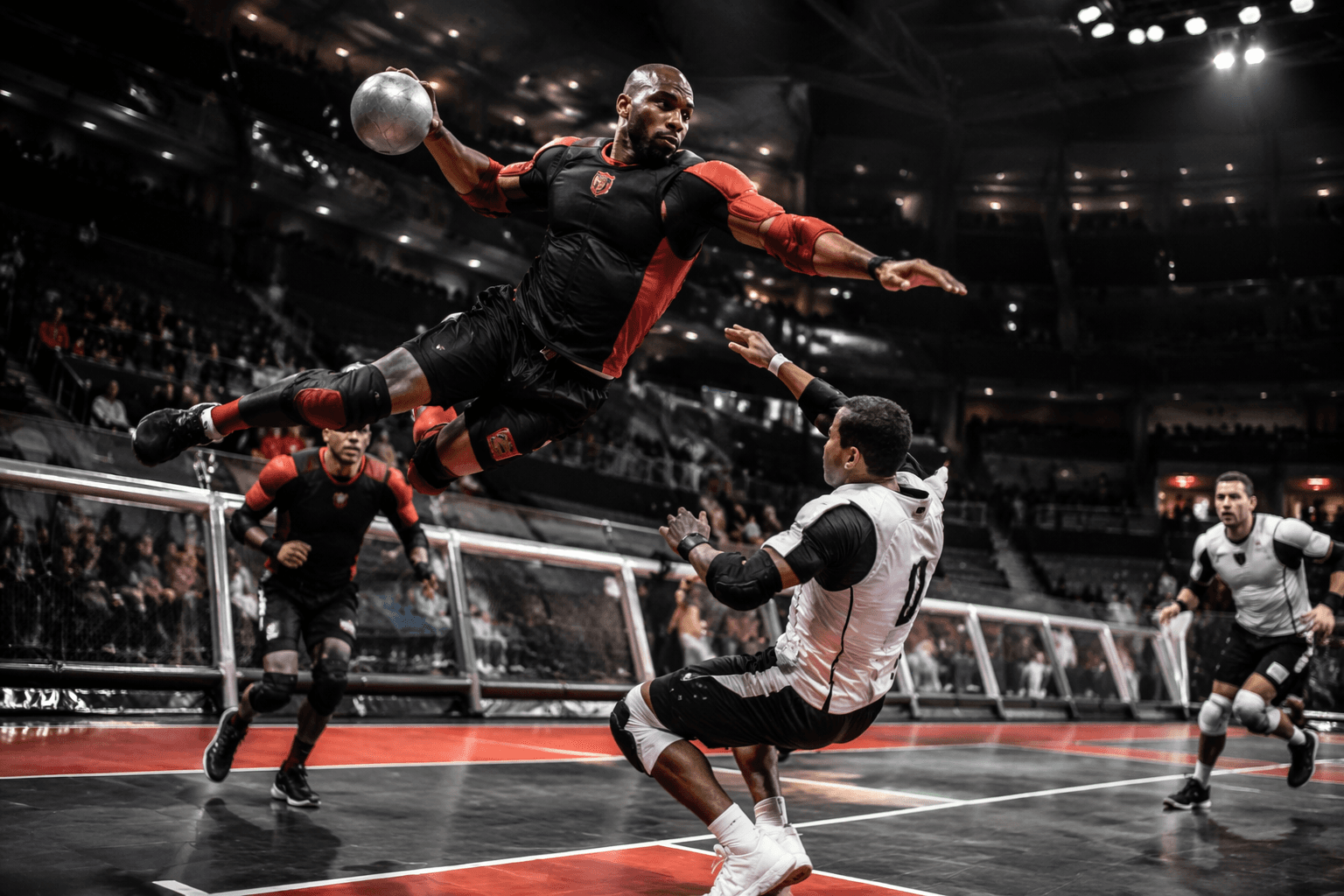
Ty McGee’s scoring touch gives Wrath a dangerous transition weapon
McGee’s scoring, power, and crossover background make Wrath hardest to handle when possessions turn frantic and every loose ball becomes a runway.
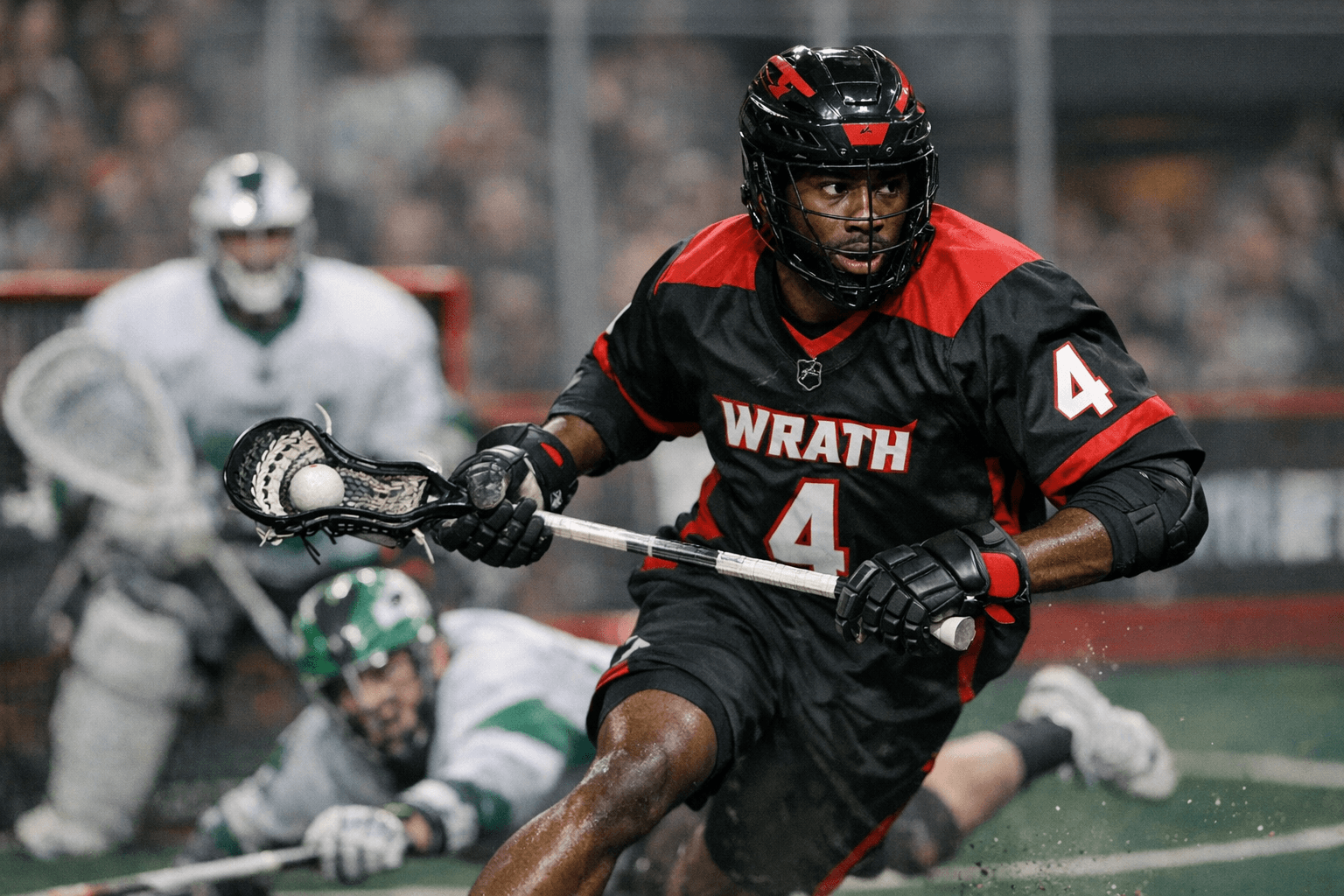
Ty McGee gives Wrath a different kind of problem for opponents
Ty McGee turns broken possessions into points, and that is exactly why Wrath looks most dangerous when a SlamBall game becomes chaotic. At 6-foot-5 and 210 pounds, the Littleton, Colorado native brings a scorer’s mentality into a league that punishes hesitation, rewards force, and can flip on a single loose ball. When the floor opens up, McGee is not just finishing plays, he is changing the rhythm of them.
The value is bigger than raw scoring. SlamBall asks a player to process contact, space, and timing almost at once, and McGee’s profile suggests he is built for that stress. He is the kind of athlete who can keep pressure on defenses in transition, then stay productive when possessions get messy and bodies are flying at the rim.
Why his background travels so well in SlamBall
McGee’s basketball touch matters, but his football background may be the sharper edge. At D’Evelyn High School in Denver, he earned first-team all-conference honors in both basketball and football, was named Jeffco Conference Athlete of the Year, and added second-team all-state basketball honors as a senior. Regis University’s bio adds another layer, identifying him as a first-team all-state football selection and again tying him to his Littleton roots.
That combination is exactly what makes him fit Wrath’s most chaotic possessions. Football-built physicality helps when the game turns into a collision series of rebounds, outlet passes, and sprinting finishers, while basketball scoring instincts keep him dangerous once the space finally appears. In SlamBall, that mix is not decorative, it is functional.
There is also a cultural reason this profile matters. A crossover athlete like McGee helps define what SlamBall sells best, a hybrid game where speed, violence, and skill are all part of the product. When one player can credibly live in both football and basketball, he becomes more than a scorer, he becomes a shortcut for explaining why the sport looks and feels different.
The numbers behind the scoring role
McGee’s case gets even stronger when the production enters the conversation. SlamBall named him Offensive Player of the Year and said he led the league with 26.9 points per game, which marks him as the relaunch’s most important scoring threat. That is not a supporting number, it is the kind of output that shapes how a team survives the league’s fastest possessions.
The published evidence from the floor matches the award. In Wrath’s 70-60 win over the Gryphons, McGee was part of a back-and-forth show with KyShawn Jones, with the league describing them as trading dunk-for-dunk scoring. That game is the cleanest example of McGee’s value: when the match turns into a track meet, he can keep Wrath from losing control of the pace and can turn athletic chaos into a scoreboard advantage.
For Wrath, that matters because transition basketball in SlamBall is never just about speed. It is about surviving contact long enough to create a clean angle, then having the composure to finish before the defense resets. McGee’s scoring touch gives Wrath a player who can do both, which is why he is such a useful weapon in the league’s most unstable moments.
How Wrath’s roster shape makes him more dangerous
McGee is not operating alone. Wrath’s current group includes Darion Slade, Shawn Stith, Steven Julian III, Greg Helt, Trey Landers, and Nick Parks, giving the roster a distinctly big and physical look around him. Stith is listed at 6-foot-8 and 255 pounds, Julian at 6-foot-7 and 210, Helt at 6-foot-5 and 260, and Parks at 6-foot-4 and 200, which means McGee sits inside a lineup with plenty of size.
That matters because a roster built that way can create the exact kind of clutter McGee thrives in. Bigger bodies can absorb contact, challenge the glass, and keep defenders occupied, while McGee becomes the player who can take advantage once the defense loses shape. If the floor clogs, he has the background to score through it; if the ball pops free, he has the burst to turn it into a run.
This is why his role is so important to the way Wrath should want to win. He is not just the guy who finishes open looks, he is the player who can prevent a possession from dying when the action becomes crowded. In a league where every scramble can become a fast-break opportunity, that is a valuable kind of insurance.
Willis ties the present roster to SlamBall history
Wrath’s coaching backdrop deepens the story. The team page links the club to James Willis, and SlamBall describes James “Champ” Willis as one of the first five players recruited after Mason Gordon invented the sport. The league’s history also says Willis led Rumble to the inaugural 2002 championship, won titles in Series 1 with Rumble and Series 2 with Riders, and reached the finals again in Series 3 with Rumble.
That connection gives Wrath a direct line to the sport’s foundation, even as the roster itself is built for the modern game. Willis is not just a name from the past, he is part of the league’s original identity, and that matters when a player like McGee is trying to fit into a system that values both structure and chaos. The combination of a pioneer coach and a scorer with crossover athletic roots creates a clean fit for a league that has always sold itself as something between tradition and spectacle.
Wrath also remains part of SlamBall’s eight-team setup, which keeps McGee’s production relevant beyond one matchup or one run of form. In a league that depends on visible stars to drive its identity, McGee’s scoring, physicality, and comfort in contact-heavy possessions give Wrath a weapon that can travel from one hectic game state to the next. When possessions get ugly, he makes them look intentional, and that is often the difference in SlamBall.
This article was produced by Prism’s automated news system from verified source data, official records, and press releases, then run through automated quality and moderation checks before publishing. The system is built and supervised by the people who set the standards it runs under. Read our full AI policy.
Did this article answer your question?