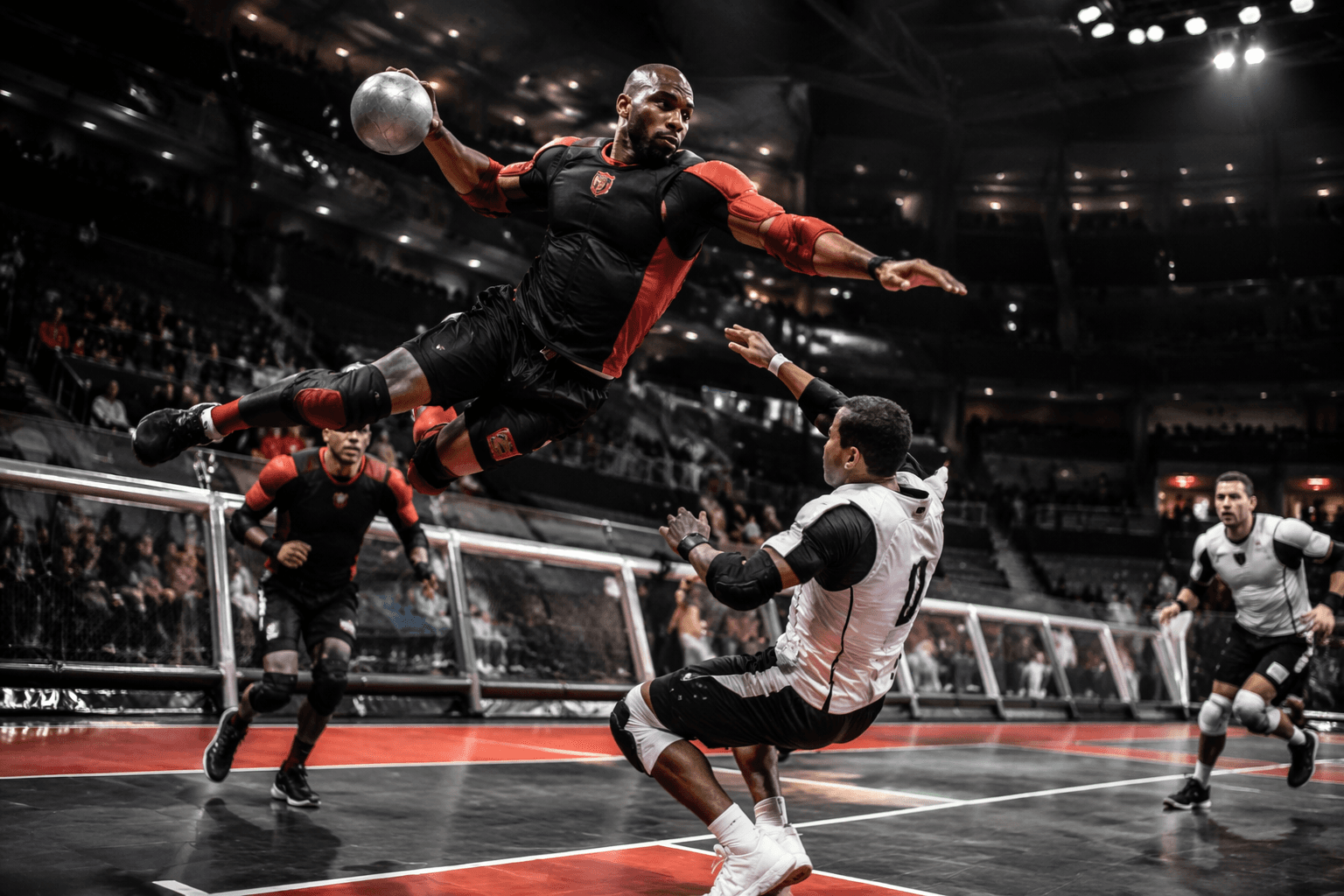
Vincent Boumann brings size, versatility to Ozone after global career
At 6-foot-9 and 285 pounds, Boumann gives Ozone a rare collision weapon, and his basketball-rugby path may be the archetype SlamBall wants.

A frame that changes Ozone’s math
Vincent Boumann does not read like a standard SlamBall roster addition. Listed at 6-foot-9 and 285 pounds, he is the tallest and heaviest player in the league’s current player pool, and that kind of body changes the geometry of a possession before the ball is even inbounded. In a sport built on trampolines, speed and controlled collisions, Boumann is not just a big man, he is a moving constraint.
That is what makes him more than a curiosity. Ozone is not only getting a low-post scorer, it is getting a roster-construction experiment in plain sight, one that asks whether a rugby-built interior player can stabilize a league that still has to prove it is more than spectacle. If SlamBall wants to keep talking about credibility, Boumann is the kind of player that makes the conversation feel serious.
From McMinnville to a multi-sport career
Boumann’s background is rooted in McMinnville, Oregon, where he grew up after being born on July 4, 1996. His last name is pronounced BO-man, and the family details in his profile make him feel less like a made-for-TV oddity and more like a local product who took a very unusual route to a very unusual league. He graduated from McMinnville High School in 2014 and comes from a family that includes his parents, Angela and Mark, plus siblings Jerrett and Allison.
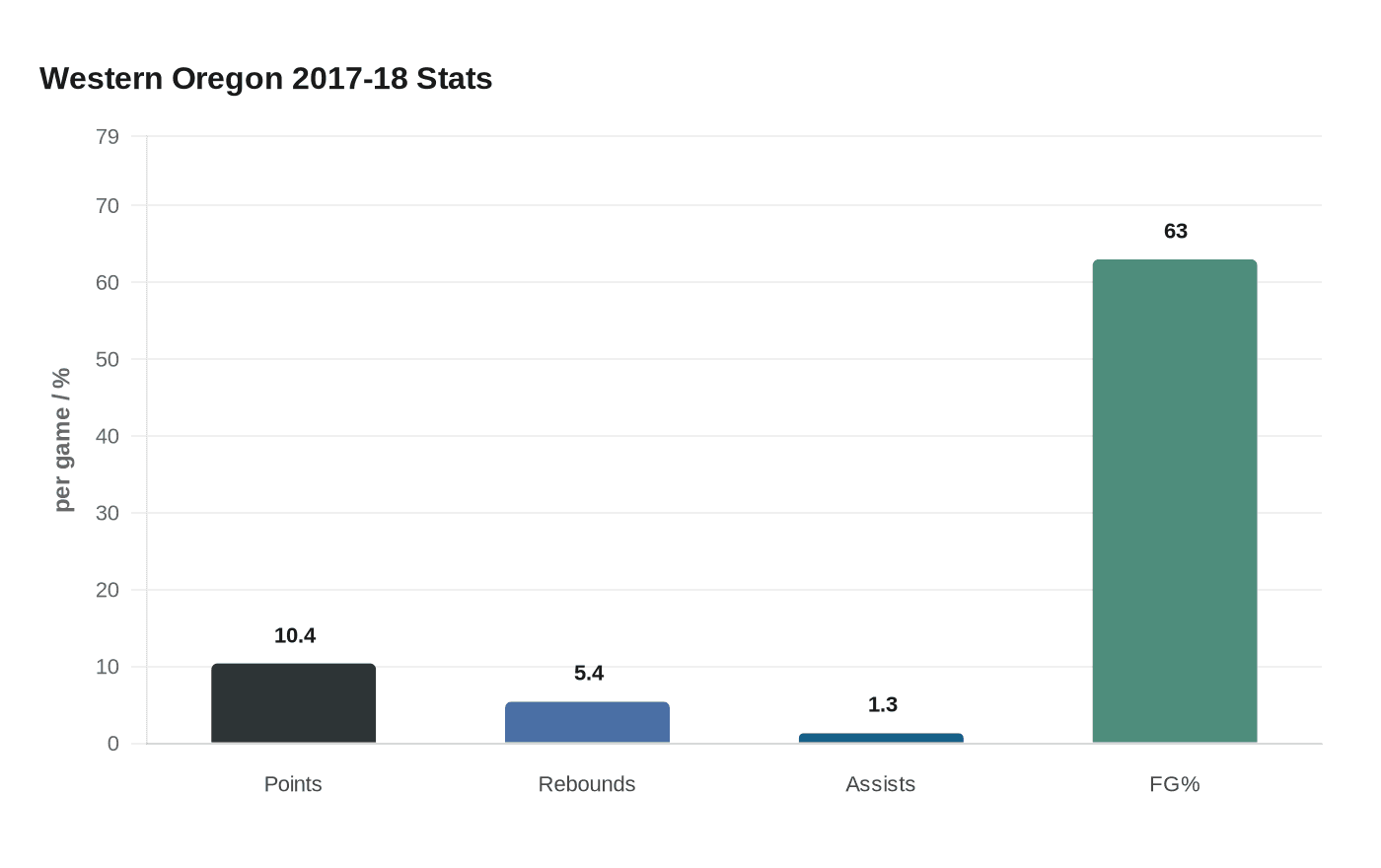
His basketball path began long before SlamBall. He spent time at Point Loma and Clackamas Community College before landing at Western Oregon University, where his senior season showed exactly why he remains such an intriguing fit for any interior-heavy game. In 2017-18, he averaged 10.4 points, 5.4 rebounds and 1.3 assists per game, started 27 of 33 games and appeared in all 33.
The efficiency jumps off the page. Boumann shot 63.0 percent from the field, going 145-for-230, a mark Western Oregon lists as the No. 2 single-season field-goal percentage in school history and the No. 1 career field-goal percentage in WOU history. That is the kind of number that signals more than size. It says he knew how to finish plays, not just occupy space.
Why SlamBall wanted this body type
Boumann’s SlamBall profile says he played four years of professional basketball internationally and domestically, then added one year of professional rugby for the Colorado XOs. That combination matters because SlamBall is not simply basketball with springs. The league’s relaunch model featured eight teams, seven-man rosters and a format built from basketball, football, hockey and trampoline-driven contact. ESPN’s 2023 coverage, which opened July 21 and carried more than 60 hours of programming, leaned on exactly that hybrid identity.
Boumann fits the pitch better than most because he brings two kinds of inside game. Basketball gave him the footwork, finishing touch and understanding of spacing. Rugby gave him a comfort level with contact, leverage and bodies meeting in the air. In a league where the lane can turn into a traffic jam in an instant, that is not a small advantage.
His nickname, Lumberjack, feels apt because Boumann’s value is not delicate. He can clean up possessions near the rim, absorb contact and change the tone of a defensive stand simply by being there. In SlamBall terms, that means he can compress the floor for opponents while also giving Ozone a reliable answer when the game gets physical.
The rugby detour that changed the ceiling
The rugby chapter is what separates Boumann from the usual pro basketball crossover. A Colorado XOs video transcript identifies him as a lock and says he is from McMinnville, Oregon, while DNVR Rugby reported that he was the only true basketball crossover in the original Colorado XO class assembled in spring 2021. That is a rare label in a sport that already values cross-training and physical adaptability.
His basketball trail before rugby also shows how global his path became. DNVR Rugby reported that he played for Gladiators Trier in Germany during the 2018-19 season, and that his most recent basketball stop before SlamBall was Venados de Mazatlán in Mexico’s CIBACOPA league. Taken together, those stops create a player who did not simply bounce from one novelty league to another. He built a career across countries, styles and levels before arriving in SlamBall.
That matters because the league’s next credibility test is not whether it can stage highlights. It is whether it can identify a meaningful athlete archetype that other basketball and collision-sport players might actually chase. Boumann makes a strong case for the idea that SlamBall can recruit beyond pure dunk-chase entertainment. A 6-foot-9 lock who has played pro ball in Germany and Mexico is not a one-off gimmick. He is a scouting argument.
What he changes for Ozone inside the lane
Boumann’s game has been described as traditionally back-to-the-basket and low-post oriented, which is useful context for what Ozone is trying to do with him. In a normal basketball setting, that would make him a classic interior anchor. In SlamBall, the same traits become even more valuable because the game’s vertical angles and collision windows reward control around the rim.
That changes the assignment for opponents. They have to deal with a player who can hold position, finish through contact and, because of his rugby background, seems built to accept the kind of midair punishment that can unsettle a less physical big man. It also gives Ozone a clearer identity. Rather than treating size as a novelty, the team can use Boumann as a structural piece, a player who makes the rim feel smaller and the lane feel narrower.
There is also a broader league implication here. If SlamBall can consistently find athletes like Boumann, big, mobile, collision-tested and comfortable playing across borders, then the sport can start to look less like a throwback spectacle and more like a legitimate talent market. That is the difference between a burst of nostalgia and a real roster ecosystem.
Boumann’s story now sits at the intersection of all of that, McMinnville roots, Western Oregon production, international basketball, Colorado rugby and a relaunch-era Ozone roster built to test how much size can matter in a league defined by speed. If SlamBall is looking for proof that its future can be more than a highlight package, Boumann is already supplying the evidence.
This article was produced by Prism’s automated news system from verified source data, official records, and press releases, then run through automated quality and moderation checks before publishing. The system is built and supervised by the people who set the standards it runs under. Read our full AI policy.
Did this article answer your question?