5W AI Communications maps which sources AI engines actually cite
AI visibility is turning into a measurable market, and that changes PR strategy fast. 5W’s new Retrieval Index shows why agencies need source maps, not guesswork.

The real shift is not that AI gives faster answers. It is that the answer is now built from a narrow, repeatable set of sources, and that makes source selection a communications problem, not just a search problem. 5W AI Communications says its new 220-page Retrieval Index, Volume I maps which media properties, institutional publishers, vendor research arms, community substrates, and data publishers are actually cited by AI engines when they answer buyer questions across 38 sectors of the global economy.
That matters because the publications people read are not always the publications AI engines cite. If you work in PR, SEO, or category marketing, that gap is where the opportunity sits. 5W is treating AI visibility as something you can measure, compare, and plan around, which is exactly why this report reads less like a vanity white paper and more like the start of a usable playbook for agencies chasing AI-era reach.
What the Retrieval Index is really measuring
The index is not just a list of popular domains. 5W says it is the first reference work to systematically compare which sources AI systems cite when answering buyer questions, and it does that with a fixed five-part composite: citation frequency, cross-engine breadth, query-type breadth, extractability, and crawl access. Those inputs are normalized to a 0 to 100 scale, then grouped into four retrieval tiers.
That structure is the useful part for agencies. Citation frequency tells you how often a source appears, but the other four factors explain why some publishers keep getting pulled into answers while others disappear. Cross-engine breadth shows whether a source travels well across models, query-type breadth shows whether it can answer different kinds of prompts, extractability rewards content that AI can lift cleanly, and crawl access reminds you that if a model cannot reach or parse a page, it is not going to cite it.
Why this changes digital PR strategy
The blunt takeaway from 5W’s volume is that earned media alone is no longer enough if the coverage cannot be retrieved cleanly by AI systems. A brand can win a respectable placement in the human-readable press and still miss the answer layer if the page structure, metadata, indexing behavior, or source authority profile is wrong.
For agencies, that means the old “get coverage and hope” model is too loose. The smarter move is to build pitch lists and content plans around the kinds of sources AI systems repeatedly favor: institutional publishers, category-defining trade titles, research-heavy vendor sites, and data-rich community sources that can be extracted without friction. If you are selling visibility, you are no longer only selling impressions. You are selling retrievability.
The sectors matter because the pattern repeats across the economy
Volume I spans beauty, cybersecurity, fintech, legal services, marketing and advertising, B2B SaaS, retail, energy, and public sector topics, plus the rest of the 38-sector map. That breadth is what makes the report strategically interesting. It is not describing one quirky vertical where AI happens to like one unusual publisher; it is trying to show a structural pattern across the global economy.
For communications teams, that means source strategy can finally be tailored by category instead of improvised from generic SEO habits. A cybersecurity brand and a beauty brand may both want AI visibility, but the source mix that earns trust in those categories will not be the same. The index is designed to show which source classes recur, which are overrepresented, and where the retrieval pattern changes by sector.
How agencies should use the findings in day-to-day work
The smartest way to read this report is as an operating manual for earned media planning, content strategy, and category authority work. If you are building a campaign, do not stop at “Which outlet has prestige?” Ask, “Which outlet is likely to be cited by the AI answer layer when a buyer asks a purchase question?”
A practical workflow looks like this:
- Map the source types that show up in your category’s retrieval pattern.
- Build content that can be extracted cleanly, with clear headings, definitions, tables, and plain language.
- Prioritize placements and partnerships with publishers that have both topical authority and crawlability.
- Treat research assets as citation magnets, not just lead-gen PDFs.
- Test whether your own pages answer the kinds of questions buyers actually ask, instead of writing for broad brand awareness alone.
That is the shift agencies need to internalize. AI visibility is becoming measurable enough to justify formal research products, not just ad hoc experimentation.
5W is already productizing the measurement layer
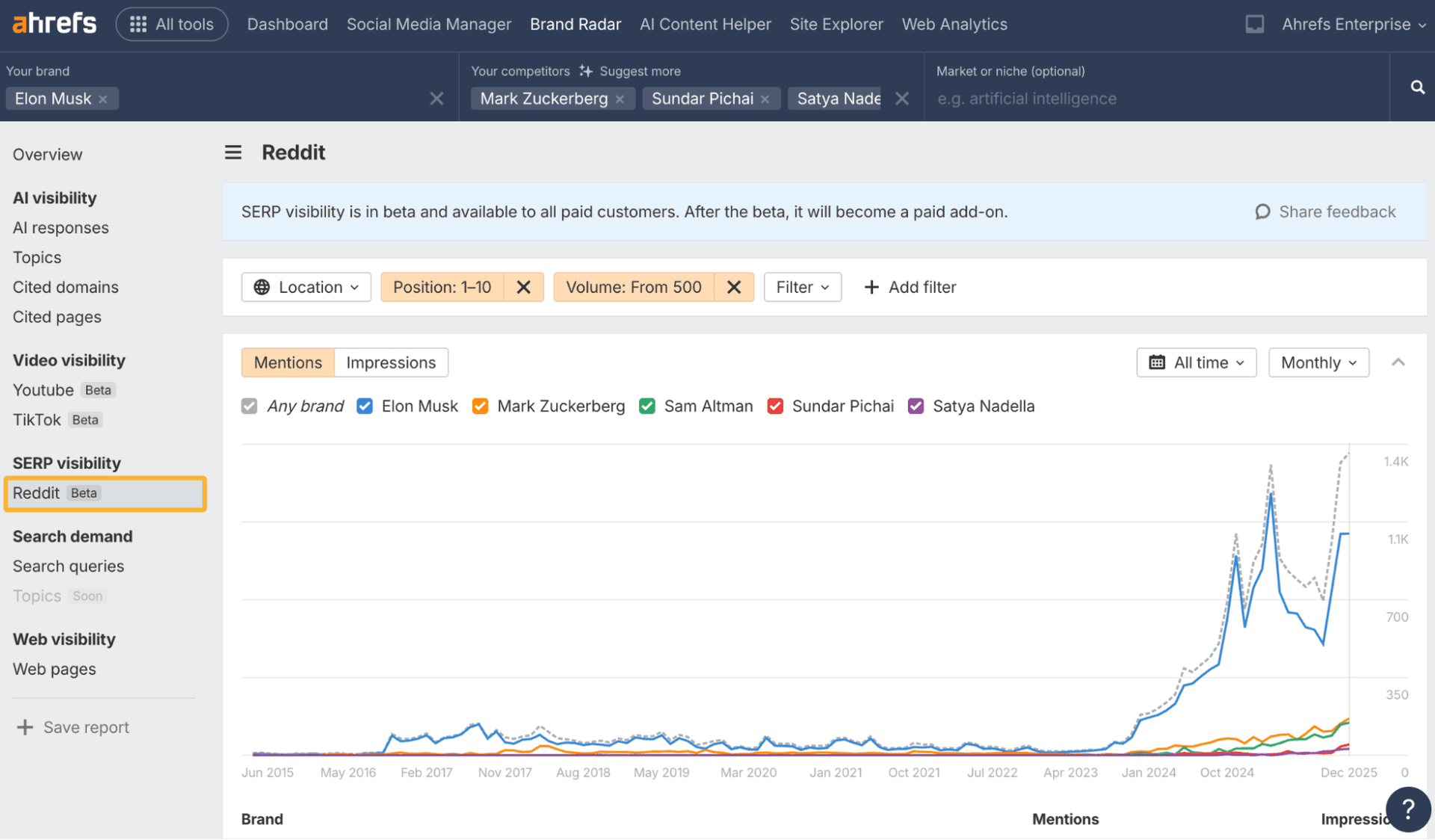
This new volume does not come out of nowhere. On May 1, 2026, 5W released the AI Platform Citation Source Index 2026, which it said synthesized more than 680 million individual citations across ChatGPT, Google AI Overviews, Perplexity, Gemini, and Claude. That earlier index found that Reddit captures about 40 percent of all citations and that the top 15 domains absorb 68 percent of the AI answer pipeline.
Those numbers are doing a lot of work here. Reddit’s share tells you that community substrates can dominate answer generation in ways many brands still underestimate. The top-15 concentration tells you the pipeline is not infinitely diffuse either, which is good news if you know how to compete for a concentrated source pool and bad news if your strategy depends on broad, undifferentiated web presence.
The broader message is that 5W is building a research line, not a one-off splash. It is pushing into generative engine optimization and AI visibility services, and the Retrieval Index looks like another step toward turning citation analysis into a recurring paid intelligence category.
What comes next for agencies that want to keep up
5W says Volume II is scheduled for Q4 2026, with the larger series reaching 60 sectors. It also says its annual flagship report, The State of AI Sources, is slated for December 2026. That tells you the market is maturing quickly: the conversation is moving from “Does AI cite sources differently?” to “Which sources, which tiers, and which content formats win most consistently?”
If you are advising brands right now, the takeaway is simple. Build for retrieval, not just reach. The agencies that learn how to map source preferences, shape extractable content, and connect authority with crawl access will have a real advantage as AI engines keep compressing the buyer journey into fewer, more selective citations.
The public relations playbook is changing because the answer layer is becoming its own media channel, and 5W’s Retrieval Index is one of the clearest signs yet that the channel can be studied, scored, and sold against.
This article was produced by Prism’s automated news system from verified source data, official records, and press releases, then run through automated quality and moderation checks before publishing. The system is built and supervised by the people who set the standards it runs under. Read our full AI policy.
Did this article answer your question?