AI exposes brand identity gaps before visibility problems do
The real SEO problem is often brand drift: if AI, search, and buyers describe a company differently, visibility and conversion split apart.
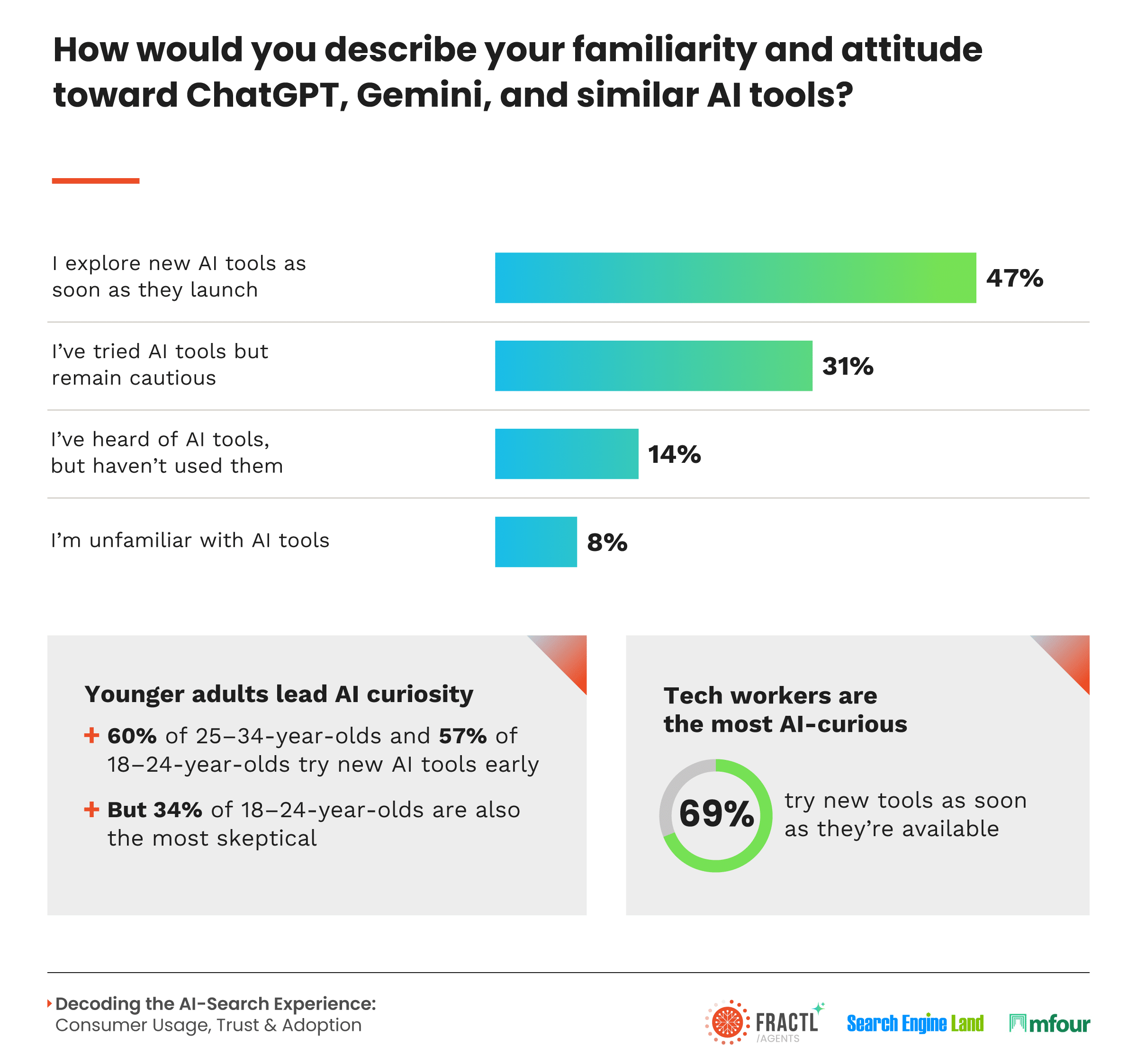
A Fractl and Search Engine Land survey of 1,008 U.S. consumers and 150 marketers in Q2 2026 found the share of consumers who said AI search is more helpful than traditional search fell from 82% to 54% year over year, even as 70% said they use AI tools for search more than they did a year earlier. AI is making brand drift easier to spot, and that shifts the work of SEO agencies from chasing rankings to reconciling identity. When several AI engines describe the same company in different ways, the problem is no longer limited to traffic; it is a signal that the market, search systems, and the brand itself do not share one clear story. For B2B and other high-consideration brands, that mismatch can suppress discovery, weaken trust, and slow conversion long before a dashboard shows a drop.
Identity gaps surface before visibility gaps
The practical issue is not whether a brand has content. It is whether that content, plus entity data, PR coverage, social profiles, and third-party references, all point to the same company definition. When those signals are fragmented, AI systems can assemble an incomplete picture or combine details from different sources in inconsistent ways. That makes brand clarity a search problem, but it also makes it an information architecture problem and a positioning problem.
For agencies, that changes the brief. Optimization is no longer only about being cited or ranking for a term. It is about ensuring that search engines, AI systems, and buyers can all infer the same category, expertise, and offer from the signals the brand publishes and the signals the web repeats.
What Google already reveals about identity
Google’s documentation makes the entity angle hard to ignore. Structured data helps Google understand page content and gives it explicit clues about what a page means. In practice, that means the markup on a page is not decorative metadata; it is a machine-readable layer that helps Google identify people, books, companies, and other entities.
Organization structured data is especially relevant for agency clients. It can carry administrative details such as address, contact information, and business identifiers, and it can influence logos and knowledge panel details. That gives agencies a concrete checklist: if the homepage, about page, Google Business Profile, and schema markup do not describe the business in the same terms, the brand is handing search systems mixed signals. Structured data must follow Google’s guidelines and is not a guarantee of rich-result eligibility, so markup is a signal, not a promise.
Google’s Knowledge Graph Search API is built to find entities in Google’s Knowledge Graph, and it uses schema.org types and JSON-LD. Google is not only matching keywords; it is mapping entities.
Why the pressure is rising now
B2B buying behavior reinforces the same pattern. TrustRadius found that 72% of B2B buyers encounter Google’s AI Overviews during research, and 90% click the cited sources to fact-check information. That means the machine-generated summary is no longer the finish line. Buyers are checking the underlying sources, which makes source consistency, entity clarity, and brand alignment commercially relevant. If the cited sources tell a fragmented story, the buyer sees the fracture immediately.
SparkToro’s January 2026 research found AI brand recommendation results can be highly inconsistent, which makes single-run visibility tracking unreliable. A brand can appear strong in one response and absent or mischaracterized in another, depending on the engine, prompt, and context.
How agencies should audit the identity gap
The audit begins with comparison, not content production. Start with the claim the company makes on its own site, then compare it with what AI engines, search features, and external references say back to the market. The question is simple: does every surface describe the same business, the same category, and the same point of view?
A useful audit should cover:
- Website messaging on the homepage, service pages, and about page
- Structured data, especially Organization markup and any other entity-relevant schema
- Search results, including sitelinks, rich results, and knowledge panel details
- AI answers across major engines, looking for category labels, service descriptions, and competitor confusion
- Sales positioning, so the pitch deck and proposal language match what the site and markup communicate
- Third-party references, including PR hits, directories, partner bios, and social profiles
The most valuable finding is not just whether a page is missing schema. It is whether the brand has three different identities at once: one for the website, one for search systems, and one for the sales team.
What to turn into a retainer
Instead of reporting only on traffic or keyword movement, an agency can show whether the brand is legible to the systems that now mediate discovery. That opens the door to recurring work around entity consistency, knowledge panel maintenance, structured data upkeep, and monitoring of AI-generated descriptions across engines.
For B2B and other complex categories, the retainer value is especially clear. If a company is blurry about its category, its expertise, or its differentiation, search performance and commercial conversion both suffer.
Google’s 2025 and 2026 Search Central update log shows that work around AI features, structured data, and Search Console keeps moving inside mainstream search operations.
This article was produced by Prism’s automated news system from verified source data, official records, and press releases, then run through automated quality and moderation checks before publishing. The system is built and supervised by the people who set the standards it runs under. Read our full AI policy.
Did this article answer your question?