AI search rewards concise, citable content over ultimate guides
AI search is punishing bloated “ultimate guides” and rewarding compact, citable pages that machines can actually extract and reuse.
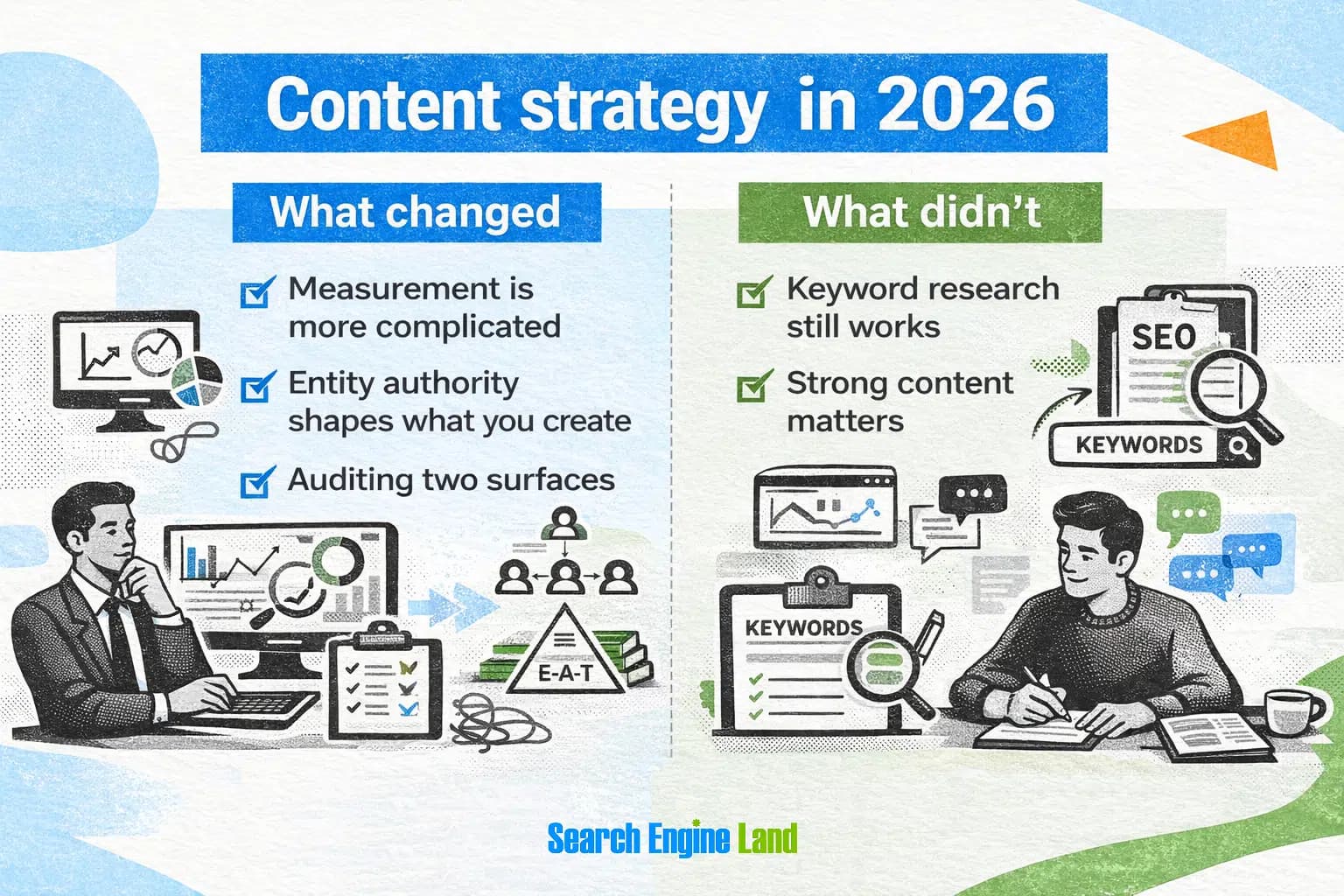
The old content playbook was simple: make the page bigger, cover every angle, and hope the biggest asset in the room won. That logic is breaking down fast. AI search now favors pages that are easy to parse, easy to ground, and easy to quote back to users, which means the best-performing content is often less sprawling and far more deliberate.
Why the ultimate guide is losing its edge
The core problem with the classic ultimate guide is that it was built for a search world that rewarded breadth and length as proxies for quality. Search Engine Land’s June 17 analysis argues that this no longer holds up because AI systems do not treat every extra paragraph as extra value. In practice, a page that keeps stretching can become harder for an AI engine to extract, summarize, and trust.
The shift is not subtle. The article says AI engines such as Gemini operate with a limited grounding budget per page, so only so much material from a single document is likely to be pulled into an answer. It also cites data showing pages under 5,000 characters had a much higher AI extraction rate than pages over 20,000 characters. That is a brutal reminder that bloat can backfire: if the page is too long, too padded, or too repetitive, it may lose visibility right when it is supposed to be helping.
What replaces length: modular, citable structure
The better move is not to write less for the sake of brevity. It is to write with a structure that gives AI systems clean material to work with. That means building pages out of modular topic clusters, tight explanations, and specific claims that stand on their own instead of burying the point in a wall of text.
Think in terms of extractability. Use entity names, relationships, conditions, and concrete outcomes that a model can identify without guessing what matters most. A sentence that says exactly who did what, under what condition, and with what result is far more useful than three paragraphs of background that never lands the point. In the AI search era, every sentence has to earn its place.
This is also where expert POV pieces start to outperform generic mega-guides. If a page contains a sharp observation, a tested method, a concrete example, or a specific tradeoff, it is easier for an AI system to cite it and easier for a reader to trust it. The content does not need to be thin. It needs to be dense with information that can be lifted cleanly.
Problem-first positioning changes the brief
One of the most important ideas in the June 17 essay is the problem-first framework. Instead of asking what keyword someone typed, it asks what situation produced the search in the first place. That is a major strategic shift, because it pushes content planning away from abstract topic coverage and toward the real-world problem the searcher is trying to solve.
This is where a lot of agencies will need to rethink their briefs. A topic map built around broad keywords can produce a lot of text without producing much utility. A problem-first map produces content that matches intent, context, and urgency, which is exactly what AI systems need when they are deciding what to surface or summarize.
In practical terms, that means planning around situations such as troubleshooting, comparison, decision-making, setup, or risk reduction. Each of those deserves its own focused asset, not a single oversized page that tries to swallow the entire category.
What agencies should change in practice
For agencies, the takeaway is not “write shorter” and move on. It is to rebuild the content system around structure, clarity, and information gain. Client plans cannot simply be longer or more exhaustive and expect the same results. They need to be more modular, more specific, and easier for both humans and machines to extract.
That changes the way briefs get written. It changes template design, because a one-size-fits-all article shell is too blunt for machine-readable content. It changes audits too, because the question is no longer just whether a page ranks, but whether it contains distinct claims, usable subtopics, and enough specificity to be cited without distortion.
It also changes what “good” looks like in a content library. A pile of long AI-generated articles is not a moat. A set of compact, problem-oriented pages with sharp POV, clear entities, and obvious information gain is much harder to copy and much more likely to survive in both traditional results and AI answer surfaces.
Google keeps pushing the market in the same direction
Google has been telegraphing this shift for more than a year. In May 2024, it launched AI Overviews to everyone in the United States and said hundreds of millions of users would have access that week. Google also said at the time that it expected AI Overviews to reach over a billion people by the end of 2024.
The rollout kept expanding. By October 2024, Google said AI Overviews were in more than 100 countries and territories and serving more than 1 billion monthly users. Google later said AI Overviews are now used by more than a billion people, and in 2025 it said people were asking longer, more complex, and multimodal questions in Search. That is the clearest possible signal that search behavior is moving toward richer answers, but not necessarily toward longer pages.
Google’s own guidance points the same way. It says generative AI can be useful for research and structure, but mass-producing low-value pages without added value may violate its spam policy on scaled content abuse. It also continues to emphasize helpful, reliable, people-first content rather than search-engine-first content. So the winning move is not to flood the web with more pages. It is to publish better ones that deserve to be surfaced.
The real opportunity for brands and agencies
The June 17 Search Engine Land study adds another layer to the story. It surveyed 1,008 consumers and 150 marketers, and the trend line is hard to ignore: AI search adoption is rising while consumer trust is falling. That combination explains why visibility alone is no longer enough. If people are checking AI answers more often but trusting them less, brands need content that is both easy to find and easy to verify.
That is the opening for tighter editorial strategy. The agencies that win here will not be the ones shipping the longest guides. They will be the ones building content that can be extracted, cross-checked, and cited without hesitation. In a search landscape shaped by AI Overviews and machine-readable answers, the most valuable page is no longer the biggest one. It is the one that says something precise enough to matter.
This article was produced by Prism’s automated news system from verified source data, official records, and press releases, then run through automated quality and moderation checks before publishing. The system is built and supervised by the people who set the standards it runs under. Read our full AI policy.
Did this article answer your question?