BrightEdge finds ChatGPT and Google AI Overviews assign Reddit different roles
Reddit is no longer just a citation source. BrightEdge says ChatGPT casts it as peer review while Google AI Overviews treats it like social proof, forcing agencies to plan for roles.

The bigger shift is not whether AI cites your content, but what job it gives it. BrightEdge’s latest analysis says ChatGPT and Google AI Overviews are assigning different roles to the same source, and Reddit is the clearest example. In one system it sits next to clinical and reference authorities; in the other it gets grouped with social platforms, which changes how agencies should think about visibility, trust, and content design.
What BrightEdge found
BrightEdge used its AI Hyper Cube to pull the full universe of prompts where Reddit and LinkedIn earned citations on Google AI Overviews and ChatGPT. It then classified each prompt by topic, query intent, functional job, and the other sources cited alongside the social channel. That matters because the result was not just a list of mentions. It was a map of how the engines interpret source types inside different answer environments.
The headline pattern is what BrightEdge calls a “6x authority flip.” In Google AI Overviews, Reddit shows up with YouTube in roughly 36% of citations, while editorial authorities appear only about 6% of the time. In ChatGPT, the pattern is inverted: Reddit appears alongside Healthline, Mayo Clinic, Cleveland Clinic, and Encyclopaedia Britannica, with authoritative publishers appearing about 36% of the time. Same platform, very different role.
BrightEdge’s framing is simple and useful. Google AI Overviews treats Reddit as part of the open social web, a community content signal alongside YouTube, TikTok, Instagram, and Facebook. ChatGPT treats Reddit more like a community authority or peer-review layer. That distinction is the whole story, because AI visibility is no longer just about being cited. It is about being selected for a function.
Why this matters more than a normal ranking story
Traditional SEO has always cared about authority, but AI search adds a second layer: contextual assignment. A source can be used as evidence, commentary, validation, or a recommendation trigger depending on the query and the engine. BrightEdge’s research suggests the model is not merely retrieving information. It is deciding whether a source behaves like an expert, a crowd signal, or a supporting proof point.
That changes the way agencies should read a brand mention in AI results. A citation near Mayo Clinic, Healthline, Cleveland Clinic, or Britannica sends a different signal than a citation near YouTube or Facebook. The mention itself matters, but the neighborhood matters too. If the engine places your source in the wrong neighborhood, you may win visibility without winning trust.
The same logic applies to LinkedIn. Even though the research notes focus most heavily on Reddit, the larger point is that platforms can be interpreted differently depending on the answer context. For agencies, that means content planning can no longer stop at “How do we get cited?” The better question is, “What role do we want the model to assign when it cites us?”
How agencies should redesign content portfolios
The practical answer is to stop building one generic pile of content and start building a portfolio with distinct jobs. BrightEdge’s findings point toward platform-specific authority building, citation engineering, and a more nuanced strategy for YMYL, local, and B2B queries.
Think of the portfolio in four roles:
- Definition sources
These are the pages that explain a term cleanly and confidently. For AI systems, they need precise language, clear structure, and enough credibility signals to be treated as a safe explainer. These assets are especially useful when the query is early-stage and informational.
- Evidence sources
These pages support claims with data, examples, case studies, or expert corroboration. If ChatGPT is treating Reddit like a peer-review layer, agencies need evidence assets that can sit near the authoritative names that AI models already trust, such as clinical references, major publishers, or well-known institutions.
- Comparison sources
These are the pages that help an engine distinguish among options. They matter for B2B tooling, consumer products, and service selection queries where the answer is not just “what is it?” but “what is better and why?” Comparison content should make tradeoffs explicit instead of hiding them in marketing language.
- Transactional recommendation sources
These are the pages meant to influence action, such as choosing a vendor, bookable service, or product category. In AI systems, these pages need clean positioning, strong proof, and enough specificity to be considered useful at the decision point.
This is where agencies need to get more disciplined. A single client site cannot expect every page to do every job. The strongest content portfolios separate explanatory pages from proof-heavy assets, and both from recommendation pages that are designed to close.
Reddit, LinkedIn, and the new citation neighborhood
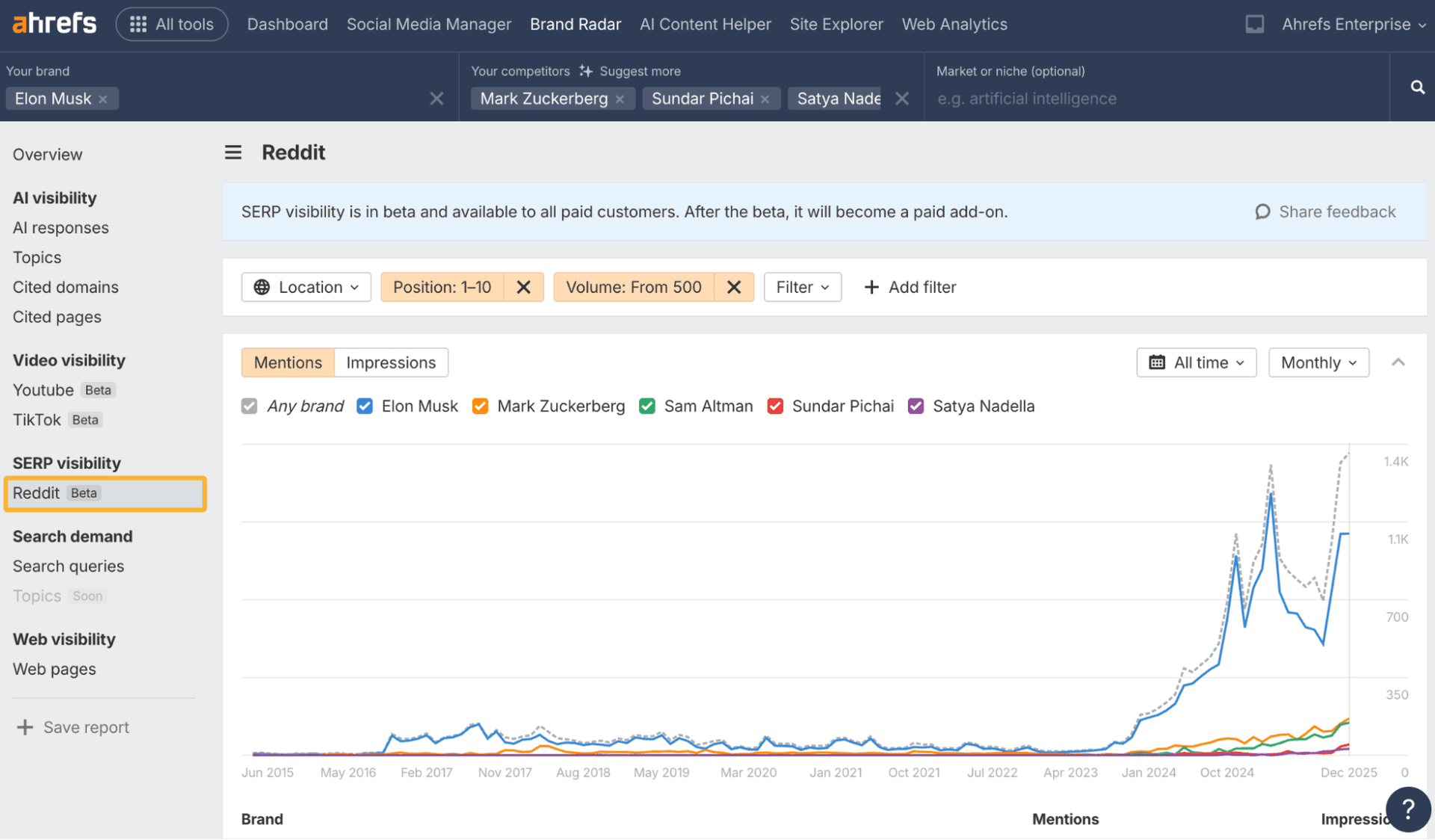
BrightEdge’s analysis also reinforces a broader truth about social platforms: social proof is now part of the answer graph. Google AI Overviews seems more willing to read Reddit as social context, while ChatGPT is more willing to fold it into a quasi-expert discussion. That helps explain why Reddit has become so prominent in AI results, especially after OpenAI and Reddit announced their partnership on May 16, 2024.
Under that deal, OpenAI said it would access Reddit’s Data API to bring enhanced Reddit content into ChatGPT and new products. OpenAI’s Brad Lightcap and Reddit CEO Steve Huffman made the partnership feel strategic, not incidental. Huffman described Reddit as one of the internet’s largest open archives of authentic, up-to-date human conversations, and that description matches the way AI systems increasingly use it: as living human consensus, not static documentation.
For agencies, the implication is straightforward. If a client’s category lives on community proof, you need content that can survive in a social-first environment. If the category depends on expertise, you need pages that look and behave like evidence. If the goal is comparison, you need structured differentiation that an engine can lift cleanly.
The traffic reality underneath the strategy
This shift is happening while clicks are becoming less reliable as a measurement of visibility. BrightEdge has pointed to research showing the click is becoming optional, and MediaPost reported that in the first four months of 2026, 68.01% of Google searches ended without a click because AI features, instant answers, and other interface elements kept users in the results. That does not make visibility less important. It makes interpretation more important.
BrightEdge also said some industries see the top five publishers and platforms account for a quarter of all citations in AI-generated recommendations. That level of concentration means a small number of sources can shape the answer space faster than old-school ranking models would suggest. If a client is absent from those source neighborhoods, it may be invisible even when it ranks well in conventional search.
The real takeaway is uncomfortable but useful: agencies that still talk only about rankings are missing the mechanism. AI engines are choosing roles, not just links. The winning content strategy is the one that makes those roles obvious, credible, and reusable across answer contexts.
This article was produced by Prism’s automated news system from verified source data, official records, and press releases, then run through automated quality and moderation checks before publishing. The system is built and supervised by the people who set the standards it runs under. Read our full AI policy.
Did this article answer your question?