China Shows How Search Fragments Across Apps, AI, and Social Platforms
China’s search market is splintering across apps, AI, and social feeds. For SEO agencies, that means visibility now depends on where discovery happens, not just who owns search.

China is the clearest warning that search no longer lives in one place
Search in China is no longer something you find in one box. It moves across Baidu, DeepSeek-powered interfaces, ecommerce surfaces, short-video feeds, and social apps, and each layer changes how people compare, validate, and act on information.
That matters far beyond China. If visibility can fragment in a market with more than 1.12 billion internet users and 79.7 percent internet penetration, then every agency planning for global growth needs to assume the same pressure will reach other markets too. China’s 1.08 billion social media user identities show how deeply discovery is embedded inside app ecosystems, not just in standalone search pages.
The scale is what makes the lesson impossible to ignore
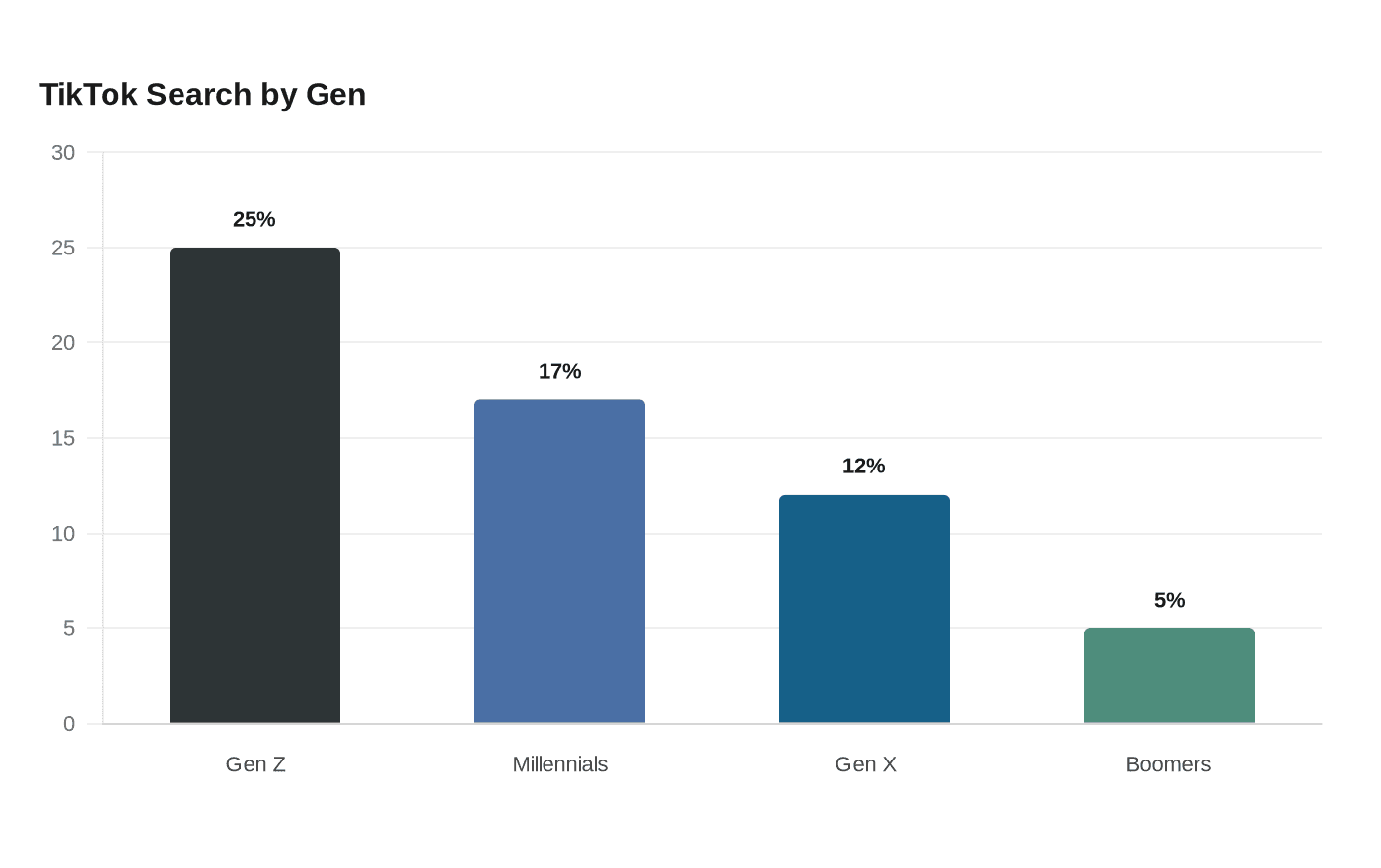
China’s short-video economy shows how quickly discovery habits can shift when platforms become search destinations as well as entertainment channels. By June 2024, the country’s short-video app user base reached 1.05 billion, and more than a third of new internet users in the first half of that year were drawn to short-video apps. That is not a side trend. It is the kind of behavior change that rewrites how audiences find products, services, and answers.
The old shorthand that China is simply a super-app market with no real search story misses the point. Baidu still matters, especially for B2B demand, but it no longer sits alone at the center of discovery. Users move depending on intent, category, and format. A software buyer may still start with search, while someone researching a consumer product may trust a short video, a social recommendation, or an ecommerce review first.
Discovery now starts where trust is easiest to build
In China, search intent can surface inside RedNote, Douyin, WeChat, ecommerce apps, or traditional search depending on what the user is trying to do. That means the same query can produce different discovery paths, and the winning brand is often the one that shows up in the channel where the user is already comparing options.
This is why dismissing web search as dead in China is a mistake. Web search still plays an important role, but it is no longer the only place where relevance is earned. A buyer looking for technical documentation, vendor comparisons, or B2B leads may still land in Baidu. A consumer looking for reviews, proof, or demonstrations may never leave a social or video platform before making a decision.
The platforms themselves are converging
The fragmentation is not happening because search vanished. It is happening because the platforms are borrowing each other’s strengths. Tencent’s Weixin, the app better known globally as WeChat, began testing DeepSeek-powered search in February 2025, a sign that even the biggest social and messaging ecosystems want more AI-assisted discovery built directly into the experience.
Douyin moved in a similar direction when it launched a stand-alone search app in August 2024, pushing beyond video recommendations and into more direct query behavior. At the same time, Baidu has been leaning harder into AI search. In its Q4 and full-year 2025 results, the company said AI had become its core, with Baidu Core AI-powered business revenue exceeding RMB 11 billion in the fourth quarter and Baidu AI Applications revenue reaching RMB 10.2 billion for the year.
That creates a market where search is no longer defined by one interface. Instead, AI, video, social, and ecommerce all compete to become the first place a user asks a question. Baidu still held 44.62 percent of China’s search-engine market in April 2026, according to StatCounter, but Bing and Haosou still have meaningful share. The result is not winner-take-all. It is a layered market with multiple discovery fronts.
What agencies need to change in client reporting
This is the strategic warning for SEO agencies: if search fragments, your reporting has to fragment too. Ranking reports that only track one engine miss the way people actually discover brands inside apps, social feeds, and AI-assisted search experiences. If your client only sees blue-link visibility, you are undercounting the discovery that happens before the click and outside the browser.
Your reporting model needs to reflect platform ecology, not just keyword positions. That means separating visibility by channel, content format, and intent type. It also means understanding when a platform is acting as a search engine in practice, even if it does not look like one in the traditional sense.
- Search visibility on traditional engines like Baidu, Bing, and Haosou
- In-app discovery on Douyin, Weixin, RedNote, and ecommerce surfaces
- Content performance by format, including short video, Q&A, product pages, and social posts
- Branded demand and assisted conversion signals, not only final-click traffic
- Local trust markers, including reviews, creator validation, and community proof
A stronger reporting stack should cover:
Channel strategy now matters as much as keywords
When search fragments, keyword strategy alone stops being enough. Agencies need to plan for where the user is most likely to research, compare, and verify. In China, that may mean building a presence in video-led discovery for consumer categories, while preserving Baidu visibility for B2B demand and technical searches.
That shift also changes content distribution. Translation and hreflang are not a strategy by themselves. Agencies have to think about how each market’s discovery ecosystem works, which entities need to be understood by machines, and what proof points build trust inside each platform. In practice, that means creating market-specific playbooks instead of pushing one global template through every channel.
The strongest teams will treat content as a multi-surface asset. One product brief may need to become a Baidu-optimized landing page, a Douyin explainer, a Weixin-friendly summary, and a social proof package for ecommerce or community platforms. The format changes, but the underlying job stays the same: help the user trust the answer before they leave the platform.
Regulation is shaping discovery, not just algorithms
The future of search fragmentation in China is also being shaped by policy. In January 2025, major platforms including Douyin and Xiaohongshu pledged to improve their algorithms after scrutiny from the mainland internet watchdog. Later, in September 2025, Chinese social platforms began rolling out features to comply with rules requiring AI-generated content labeling.
That matters because discovery is no longer just a product decision. It is also a compliance decision. Recommendation systems, AI summaries, and content labels can all affect what users see first and which sources feel credible. Agencies working in markets like this have to watch policy as closely as platform product updates, because both can shift discoverability overnight.
China’s search market is not an outlier. It is a preview. The agencies that adapt first will stop treating search as a single engine problem and start treating it as a discovery system spread across apps, AI, and social platforms. That is where global visibility is heading, and China is already showing the shape of it.
This article was produced by Prism’s automated news system from verified source data, official records, and press releases, then run through automated quality and moderation checks before publishing. The system is built and supervised by the people who set the standards it runs under. Read our full AI policy.
Did this article answer your question?