Microsoft says AI search needs grounding, not traditional ranking
Microsoft is reframing search as a grounding system, and that forces SEO to prove facts, provenance, and freshness, not just rankings.
What Microsoft is really changing
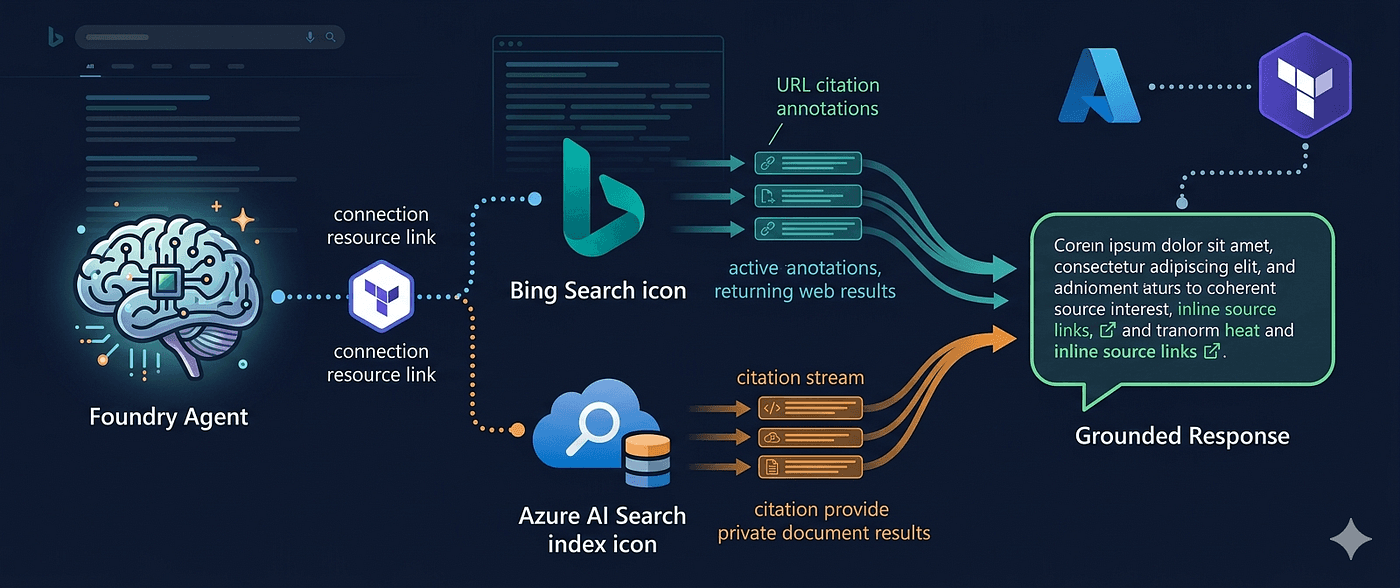
Microsoft is drawing a bright line between traditional search and AI search. In a Bing post published May 6, 2026, the company said the two systems share the same foundation, crawling, understanding, and ranking the web, but they are optimized for different outcomes. Traditional search asks which pages a person should visit; grounding asks what information an AI system can responsibly use to construct an answer.

That distinction matters because AI does not simply hand back a list. It produces a committed response, which means the index has to do more than organize documents. Microsoft’s language points to a shift from page retrieval to answer support, with the index acting like a reasoning layer that can supply evidence, provenance, and enough confidence to justify a final answer.
Why grounding changes the job of the index
Microsoft says grounded AI systems need “groundable information” with clear provenance, not just documents. That is a much stricter bar than classic ranking, where a page can succeed by matching intent, links, and relevance signals even if the user still needs to do the judging.
In grounding workflows, meaning has to survive chunking and transformation. Sources need to remain identifiable after content is broken apart, compressed, or recombined. Facts have to be fresh enough to trust, important details have to be retrievable, and contradictions between sources have to be detected before the model compresses them into a single answer. Microsoft also said errors can compound across reasoning steps, which is why a grounded system should abstain when the evidence is insufficient.
That is the practical difference SEO teams need to internalize: a page can still rank well and fail to be useful to an answer engine if it is stale, vague, poorly structured, or hard to extract cleanly.
What AI systems are being measured on
Microsoft said grounding quality should be evaluated through factual fidelity, source quality, freshness, evidence strength, and conflict detection. That is a very different scorecard from the one most agencies have used for years, where visibility often meant rankings, traffic, and clicks.
Grounded systems also behave differently during retrieval. Microsoft said they may pull information repeatedly, refine based on earlier results, combine evidence, and reassess confidence before answering. In other words, the system is not just finding one page and stopping there. It is testing the evidence trail until it feels safe enough to answer or decides it should not answer at all.
What this means for SEO deliverables
For agencies, this is the clearest sign yet that technical SEO and content operations need a broader quality bar. It is no longer enough to make pages crawlable and indexable. Pages must also be understandable to systems that are trying to cite, synthesize, and validate claims.
That pushes deliverables in a few practical directions:
- Freshness becomes an operational requirement, not a nice-to-have.
- Structured data matters because it helps identify entities, facts, and relationships.
- Source clarity becomes part of the asset itself, especially when pages need to be cited.
- Semantic consistency across a site matters because contradictions can weaken grounding confidence.
- Content formatting needs to support extraction, with clear headings, concise claims, and evidence that survives chunking.
This is where the consulting pitch changes. Agencies are not just optimizing for pages that can rank. They are helping brands become trustworthy sources for answer engines, which means the deliverable is as much about retrievability and citation readiness as it is about search visibility.
How Microsoft has been building toward this
This did not appear overnight. On January 31, 2025, Microsoft launched Grounding with Bing Search in Azure AI Agent Service to bridge the gap between large language model training cutoffs and dynamic real-time web data. That launch framed grounding as the way to connect model outputs to current information beyond what the model learned during training.
By February 12, 2026, Microsoft said grounding connects AI to current, authoritative information and that its grounding technology powers nearly every major AI assistant in the market. The company was making the case that grounding is now part of the infrastructure of modern assistants, not an edge case.
Then on February 10, 2026, Microsoft introduced AI Performance in Bing Webmaster Tools in public preview. That feature shows when a site is cited in AI-generated answers across Microsoft Copilot, AI-generated summaries in Bing, and select partner integrations. Microsoft also said the new visibility includes citation and grounding signals, which gives site owners a way to see whether content is actually being used in AI answers, not just indexed in the traditional sense.
Why this looks like the rise of GEO
Microsoft’s framing lines up with what many in the industry now call generative engine optimization, or GEO. The shift is simple to describe and hard to execute: visibility is moving from ranking pages to being a dependable source that an AI system can ground an answer in.
Microsoft said in February 2026 that grounding is moving onto the critical path between human questions and digital knowledge. It also said AI agents are acting more like retrievers than users who browse and click. That changes what web infrastructure needs to optimize for, because the system is not just serving human navigation behavior anymore. It is serving machine reasoning.
For agencies, that means future-proof SEO strategy has to treat content as evidence. Pages need clear claims, strong provenance, current data, and formatting that survives transformation into chunks and citations. The brands that win will not just be the ones that can attract a visit. They will be the ones whose information is structured well enough for an AI system to trust it, retrieve it, and use it without hesitation.
That is the core lesson in Microsoft’s latest shift: the next competitive advantage in search is not only ranking higher. It is becoming the kind of source that an answer engine can safely build on.
This article was produced by Prism’s automated news system from verified source data, official records, and press releases, then run through automated quality and moderation checks before publishing. The system is built and supervised by the people who set the standards it runs under. Read our full AI policy.
Did this article answer your question?