Claude visibility tracks closer to Brave Search than marketers expected
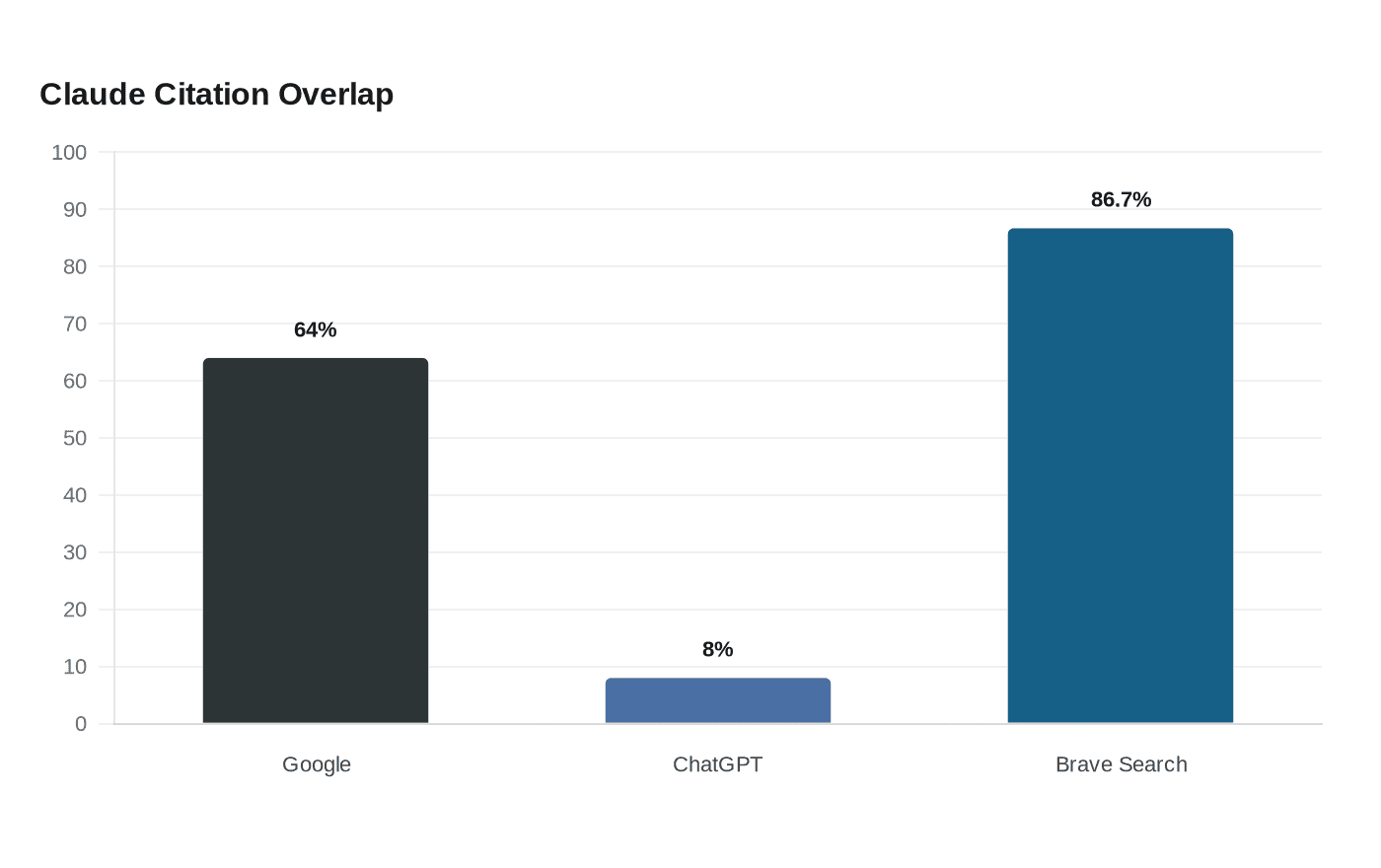
Claude’s citations lined up 64% with Google rankings, but only 8% with ChatGPT. That makes Brave rankings and citation patterns a new reporting line for SEO teams.

Claude is looking less like a generic AI answer engine and more like a system with its own source habits. In the prompt data reviewed around its web behavior, Claude searched in 36.6% of requests, far less often than ChatGPT, yet its citations overlapped with Google rankings 64% of the time and with ChatGPT only 8%. For agencies, that changes the reporting problem immediately: Claude visibility is not just another AI metric, it is a separate discovery layer that can reward classic SEO work while still depending on Brave Search behavior.
The timing matters because Claude web search launched on March 20, 2025, first in preview for paid U.S. users and later across all plans worldwide. Anthropic’s Trust Center lists Brave Search among subprocessors, and the same documentation says TurboPuffer provides web search for all Anthropic products except Claude for Government. Independent 2025 analysis also found that Claude’s cited results overlapped with Brave Search’s top non-sponsored organic results 86.7% of the time, or 13 of the top 15 Brave results in that sample. That is the kind of alignment agencies cannot ignore when a client asks why one page keeps showing up in Claude and another does not.

The practical lesson is to start tracking Brave rankings with the same seriousness usually reserved for Google. If a page sits high in Brave’s organic results, Claude appears more likely to lift it with little or no re-ranking, which means Brave position can become a proxy for Claude exposure. Agencies should watch citation patterns by page type, not just by keyword: comparison pages, location pages, and content that signals freshness were the strongest triggers for search in the June 2026 data, and years often showed up in the resulting fan-outs. That points to a narrow but useful playbook for client work, where current-year signals, explicit comparisons, and clear local or ranking language may matter more than broad topical coverage.
It also means the old habit of treating “AI visibility” as one bucket is already outdated. Claude’s overlap with Google rankings suggests standard SEO still carries weight, but the strong Brave connection says discovery strategy now has to account for where the model actually pulls its answers. Agencies that want to stay ahead will need to monitor Brave rankings, citation overlap, and the content formats most likely to surface in answers, because Claude is already telling the market that one general-purpose AI search strategy will not work everywhere.
This article was produced by Prism’s automated news system from verified source data, official records, and press releases, then run through automated quality and moderation checks before publishing. The system is built and supervised by the people who set the standards it runs under. Read our full AI policy.
Did this article answer your question?