Dig Designs Outlines White Label Development Workflow Guide for Scaling Agencies
White-label dev only scales agencies when airtight SOPs govern every handoff. Dig Designs' new operational playbook turns that gap into a concrete implementation system.
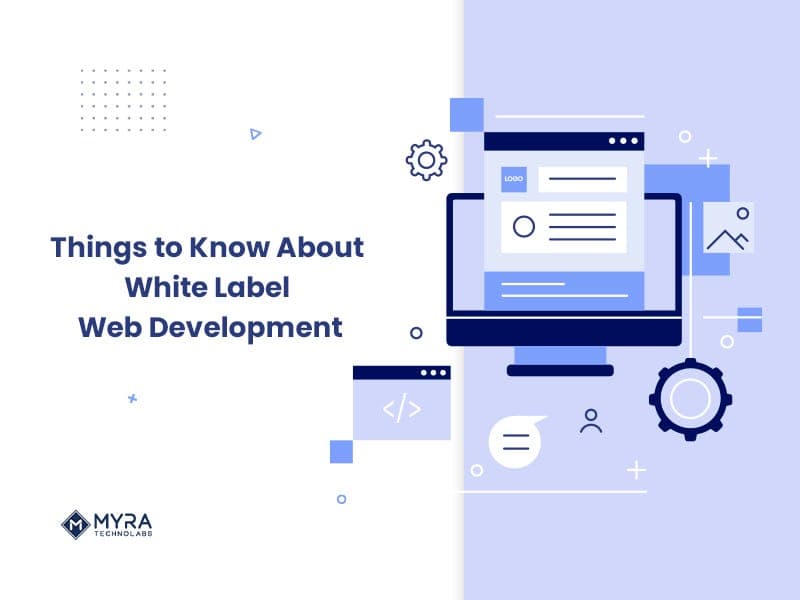
White-label development partnerships break down in predictable ways: a partner engineer ships code directly to a client, a missed NDA clause exposes your agency to a non-solicitation nightmare, or an outsourced QA pass lets a bug through that your client discovers in production. Dig Designs published a detailed operational playbook designed to eliminate those failure modes, and it reads less like a vendor pitch and more like an internal SOP manual for agencies that are serious about scaling technical delivery without expanding headcount.
The core argument is a reframe: white-label partners are not contractors you manage at arm's length. They are embedded capabilities that require the same legal, communication, and technical infrastructure you'd build around an internal engineering team. Here's how to implement that infrastructure across five operational stages.
Stage 1: Lock Down the Legal Framework Before Any Work Starts
The playbook's first stage is non-negotiable and non-skippable. Before a single brief is shared, agencies need a legal framework that covers three distinct layers: a mutual NDA protecting client identities and project specifics, explicit non-solicitation clauses preventing the partner from poaching your clients directly, and clear IP and ownership language that assigns all developed work to the agency, not the vendor.
This matters more than it seems. Agencies that operate on informal agreements or generic contractor templates are exposed the moment a relationship sours or a partner pivots their business model. The non-solicit clause in particular is the one most agencies skip, and it's the one that creates the most reputational damage when violated. Your client relationships are the asset; the legal wrapper around the partnership is what protects them.
Stage 2: Embed Partners Inside Your Project Management Stack
The single most common friction point in white-label delivery is communication overhead: status updates that live in a separate inbox, project timelines that exist in a vendor's PM system you don't have access to, and handoffs that rely on email threads instead of structured workflows. The playbook's solution is direct integration.
Practically, this means creating dedicated, shared Slack channels for each active project, provisioning branded project management views that the partner populates directly inside your existing PM stack (whether that's Asana, Linear, ClickUp, or Notion), and routing all partner communications through masked email aliases so external teams never appear visible to the client. The goal is that from the client's perspective, every status update, question, and deliverable comes from your agency. Operationally, you're eliminating the translation layer between your team and theirs.
Track one KPI here from day one: cycle time per deliverable, defined as the elapsed time from brief submission to partner handoff ready for agency review. If that number drifts above your baseline on consecutive sprints, the communication integration has broken down somewhere and needs to be diagnosed before it becomes a missed deadline.
Stage 3: Write Technical Briefs That Translate Business Goals Into Acceptance Criteria
Vague briefs produce vague work. The playbook is specific about what a technical brief needs to accomplish: it must translate the client's business objective into measurable engineering acceptance criteria that the partner can implement and QA against without interpretation.
A brief that says "build a dashboard for our SaaS client" is a liability. A brief that says "build a multi-user dashboard displaying real-time subscription metrics, with role-based access for admin and viewer tiers, load time under 1.5 seconds on 4G mobile, and passing all WCAG 2.1 AA accessibility checks" is an acceptance criteria document. The difference between those two determines whether your agency reviews a deliverable against a standard or against a feeling.
Building this discipline into your intake SOP takes time upfront but eliminates the most expensive problem in outsourced development: rework caused by ambiguous scope. Define the acceptance criteria before any sprint begins, get explicit sign-off from your client contact on them, and share them with the partner as the literal definition of done.

Stage 4: Architect for Multi-Tenant Reuse and Automated Rebranding
This is where the operational playbook intersects with gross margin. Agencies that build custom, one-off codebases for every white-label client are leaving revenue on the table because every project starts from scratch. The playbook recommends a fundamentally different architecture: multi-tenant or modular systems that allow a single core codebase to serve multiple clients through configuration, not custom builds.
In practice, this means designing feature modules as toggleable components at the tenant level, separating client-specific branding assets into configuration files rather than hardcoding them into templates, and using automated rebranding tools to apply logos, color systems, domain masking, and email template theming at deployment time. When a new client signs on, you're configuring an existing system, not commissioning a new one.
The margin math here is straightforward. If your first client build costs 80 hours of partner development time and your third client on the same modular system costs 20 hours, your gross margin on that delivery has roughly tripled on equivalent revenue. Track gross margin per delivered project and watch what happens to that number as the codebase matures.
Stage 5: Enforce QA and Release Governance Before Anything Ships
Outsourced QA is the most common place agencies cut corners and the most visible place they pay for it. Shipping a white-label partner's work directly to a client without a structured review layer is a reputational risk that no margin improvement justifies.
The playbook calls for robust release governance, meaning a staged review process where agency-side QA runs against the acceptance criteria defined in Stage 3 before any deliverable goes to the client. This doesn't require a dedicated QA hire; it requires a checklist-driven review process that any competent project manager can execute. Typical checkpoints include functional testing against acceptance criteria, cross-browser and cross-device checks, performance baseline validation, and a branded-environment review confirming no partner identifiers are visible in the UI, codebase comments, or metadata.
Track defect rate as the percentage of deliverables that require rework after the initial agency review. A healthy operation runs below 10 percent on established partner relationships. If you're running higher, the root cause is almost always one of two things: the technical brief was underspecified in Stage 3, or the partner wasn't properly integrated into your PM stack in Stage 2.
Auditing Your Current White-Label Relationships
Before implementing the playbook forward, run a quick audit backward against your existing partnerships:
- Do your contracts include explicit non-solicitation and IP ownership language?
- Are partner engineers visible inside your PM workflows with branded views, or are they operating in a separate system?
- Do your active projects have written acceptance criteria, or is "done" defined informally?
- Is your codebase architected for multi-tenant reuse, or is every client build a custom one-off?
- Does your agency run a structured QA stage before partner work ships?
Any "no" in that list is a failure mode waiting to activate. The agencies that scale white-label delivery safely are the ones that treat these five stages not as best practices to aspire to but as operational prerequisites that apply to every partner relationship, every project, from day one. The technical capabilities of your white-label partner matter far less than the operational infrastructure you build around them.
This article was produced by Prism’s automated news system from verified source data, official records, and press releases, then run through automated quality and moderation checks before publishing. The system is built and supervised by the people who set the standards it runs under. Read our full AI policy.
Did this article answer your question?