Google Ads adds Journey-aware Bidding to improve lead quality
Google's new Journey-aware Bidding beta pushes Target CPA toward the full lead-to-sale path, while demand-led pacing shifts daily spend to hotter demand.

Google is pushing its bidding stack farther down the funnel, with a new beta called Journey-aware Bidding aimed at lead quality instead of simple form fills. In Search and Shopping campaigns, the change is built to help Google AI understand the full lead-to-sale process, and Search campaigns using Target CPA will be able to learn from both biddable and non-biddable conversion goals. For lead-generation advertisers, that is a real shift: a conversion no longer has to mean the first touch that happens to get counted.
That matters most in B2B, healthcare, education, and financial services, where a lead can sit in a CRM for days or weeks before it turns into revenue. Google’s own Target CPA guidance describes the strategy as an automated bid model that sets bids to get as many conversions or customer actions as possible, but the new beta suggests Google is trying to make those signals more representative of actual business value. Google has also said its Smart Bidding systems can learn from conversion signals beyond the primary bid goal in some cases, which makes the direction here pretty clear: better downstream data, better bidding.

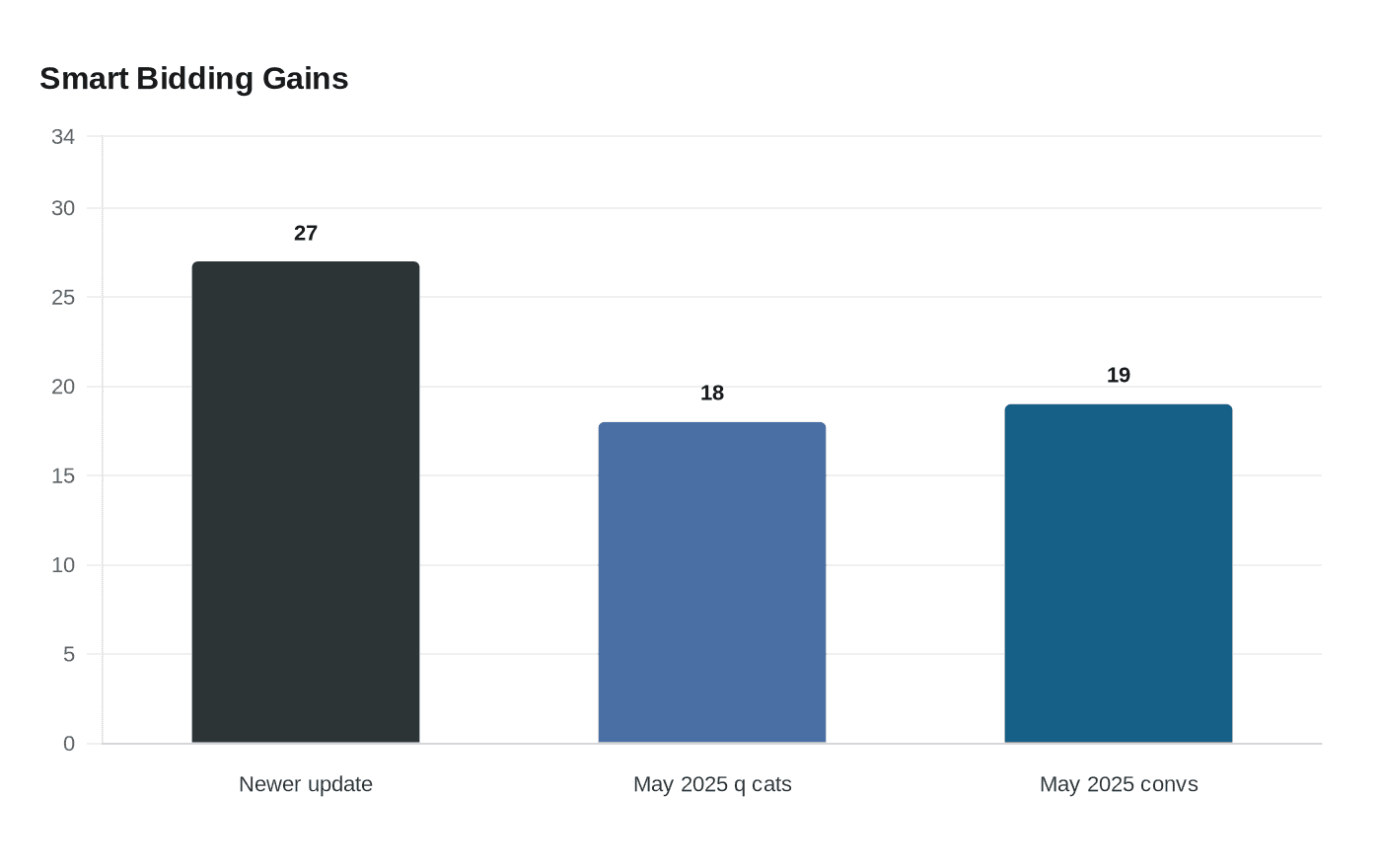
The other big move is broader access to Smart Bidding Exploration. Google said it is now available not just in Search, but also in Performance Max and Shopping campaigns. Google said campaigns using Smart Bidding Exploration saw, on average, a 27% increase in unique converting users in the newer update. That builds on the May 2025 launch, when Google called Smart Bidding Exploration its biggest update to bidding in over a decade and said campaigns using it saw an 18% increase in unique search query categories with conversions and a 19% increase in conversions.
Google also introduced demand-led pacing, which will automatically adjust daily spend to match consumer interest while staying within a total budget. That is a useful lever when agencies are trying to catch demand spikes without burning through budgets too early, but it also makes spend allocation less transparent if reporting is sloppy. Google Ads Help already frames budget pacing around monthly cost and performance forecasts, with statuses like limited by budget, budget remaining, and on track. It also says a campaign marked limited by budget may be missing out on 5% or more of potential traffic.
For agencies, the practical lesson is blunt: the more Google automates bid and budget decisions, the more pressure falls on the measurement layer. Cleaner CRM integrations, stronger offline conversion tracking, and tighter client definitions of what counts as a qualified lead are no longer nice-to-haves. As Google keeps expanding campaign total budgets across Search, Performance Max, and Shopping, the teams that can explain where money moved, why it moved, and what it returned will be the ones best positioned to protect margin and prove value.
Know something we missed? Have a correction or additional information?
Submit a Tip