Google AI Overviews squeeze traffic, forcing agencies to rethink SEO
AI Overviews are cutting clicks before they reach the site, and agencies are being pushed to sell revenue, visibility, and conversion lift instead of raw traffic.
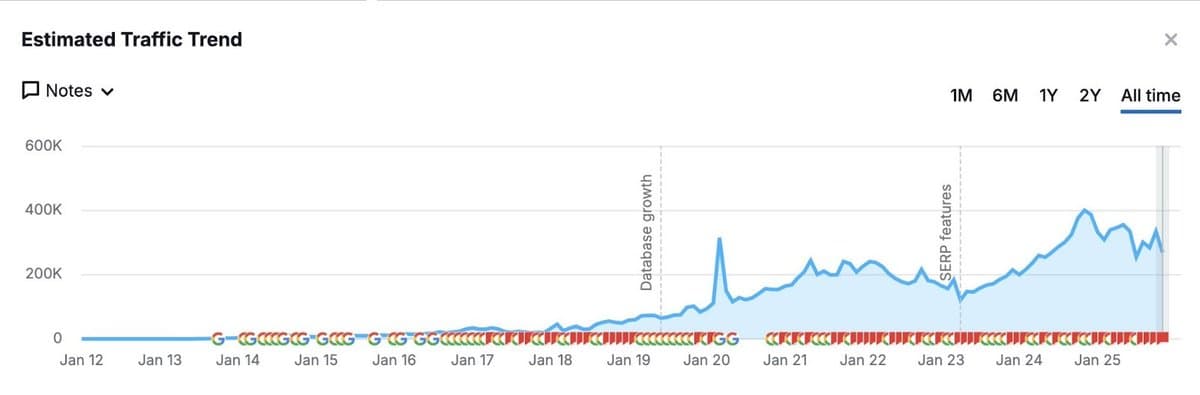
Google’s AI Overviews are changing the economics of search before agencies have fully rebuilt their pitch around it. If an answer now shows up on the results page, the old promise of SEO, more clicks that turn into pipeline, gets a lot harder to defend with traffic alone.
The real disruption is the business model
For years, agencies could justify SEO with a familiar story: rank higher, get more visits, win more leads. AI Overviews break that chain by answering more queries directly in Google, which means the value of a click is no longer the whole game. The agencies that keep selling traffic as the end product are going to sound dated fast; the ones that survive will sell revenue, pipeline, and visibility clients can actually measure.

That shift matters because AI Overviews are not just a cosmetic feature. They change the moment when a user decides whether to visit a site at all, which means the agency’s job is no longer only to capture the click. It is to influence the search result, the cited source, the brand recall, and the conversion path that follows.
Google’s rollout made the problem too big to ignore
Google first rolled out AI Overviews to users in the United States at Google I/O in May 2024, after saying the feature had already been used billions of times inside Search Labs. By October 2024, Google had expanded AI Overviews to more than 100 countries and territories, and by May 2025 it said the product was available in more than 200 countries and territories and more than 40 languages. At Google I/O 2025, Google said AI Overviews had reached 1.5 billion monthly users, and it also said the feature was driving more than a 10% increase in Google usage for the kinds of queries that trigger AI Overviews in its biggest markets.
That scale matters for agencies because this is no longer an experimental interface sitting on the side of search. It is becoming part of the default search journey, and every expansion makes it harder to treat organic traffic as stable or predictable.
The click loss is measurable, and it is ugly
Semrush’s 2025 study, which analyzed more than 10 million keywords, shows how uneven the rollout has been and how quickly the landscape can move. AI Overviews appeared for 6.49% of keywords in January 2025, climbed to nearly 25% in July, then fell back to 15.69% in November. The point is not just that the numbers rose and fell. The point is that the SERP is in motion, which makes classic SEO ROI modeling much less reliable than it was when ten blue links were the norm.
Pew Research Center’s analysis adds the part agencies cannot afford to wave away. In March 2025, users clicked on traditional search links in only 8% of visits when an AI summary appeared, compared with 15% without a summary. They clicked on sources cited inside the AI summary in just 1% of visits. That is the zero-click problem in plain sight: fewer people leave Google, and even fewer follow the citations that AI surfaces.
The hard part is that AI Overviews are spreading into the money queries
This is not just an informational-search problem anymore. Semrush found that AI Overviews were increasingly appearing on commercial and navigational searches, not just informational ones. That is the part agencies need to pay attention to, because commercial and navigational intent is where lead gen, brand demand, and client revenue live.
If AI Overviews mostly touched top-of-funnel queries, agencies could shrug and reallocate effort. But when they show up on searches tied to buying intent or brand seeking, they start interfering with the very queries clients expect to convert. That is why the discussion has shifted from “How do we rank?” to “How do we stay visible when ranking is no longer the whole page?”
What agencies need to sell next
The next service package cannot be built around traffic reports alone. Agencies need to sell a broader demand-capture system built around brand search growth, owned audience, conversion rate gains, and multi-channel presence. If organic clicks keep shrinking, then the job is to make sure the user still recognizes the brand, returns through another channel, or converts faster once they arrive.
- Build brand demand so people search for the company by name, not just the category.
- Grow owned channels like email, SMS, and community so search is not the only acquisition engine.
- Improve landing-page conversion rates so each click is worth more.
- Capture demand across paid search, organic, YouTube, social, and retargeting so one channel does not own the entire funnel.
- Measure assisted revenue, not just last-click traffic.
The practical playbook looks different from old-school keyword reporting:
That is where the new agency value lives. The best SEO work is becoming upstream brand and downstream conversion work, not just rankings work.
Visibility may matter more than the visit
There is still a case for optimizing inside the AI era, but the KPI changes. Semrush later said AI search visitors convert 4.4 times better than traditional organic search visitors, which is why some analysts see opportunity instead of pure loss. If that number holds in a client’s category, then a smaller stream of visits can still be more profitable than a larger stream of low-intent traffic.
That is the split in the market right now. Some agencies see AI Overviews as a threat to be defended against. Others see them as a filter that rewards stronger brands, better content, and tighter conversion systems. In practice, both views are right: traffic is harder to earn, but the traffic that survives may be more valuable.
Pricing and packaging have to change with the SERP
AI Overviews are also forcing agencies to rethink how they package SEO, PPC, and AI search services. Third-party analyses have warned that the changing SERP layout will push agencies to move away from simple rank-and-report retainers and toward service lines tied to business outcomes. That means fewer promises about position one and more commitments around qualified demand, conversion lift, and share of branded search.
Google’s growing use of ads inside AI Overview pages only sharpens that pressure. The page is becoming a denser commercial environment, and agencies need to account for that when they plan media, content, and search strategy together instead of treating them as separate silos.
The old search playbook still matters, but it is no longer enough
Every major Google search change has forced agencies to adapt, from mobile-first indexing to featured snippets to the rise of zero-click results. AI Overviews are different because they can answer the question before the user reaches a website, which changes the value proposition of search traffic itself. That is why this moment is not just about surviving an algorithm update.
The agencies that win from here will be the ones that stop selling “more clicks” as the main outcome and start selling a system that still creates demand when clicks decline. In an AI Overview world, the best SEO strategy is no longer just about being found. It is about being chosen, remembered, and converted even when Google keeps more of the session for itself.
This article was produced by Prism’s automated news system from verified source data, official records, and press releases, then run through automated quality and moderation checks before publishing. The system is built and supervised by the people who set the standards it runs under. Read our full AI policy.
Did this article answer your question?