Google’s UCP could reshape agent-ready websites beyond retail
Google's UCP hints at a web where agents need structured actions, not just polished pages, to discover, compare, and complete tasks.
Google’s UCP is a lot bigger than retail
Google’s Universal Commerce Protocol looks like a checkout story until you read the architecture closely. The important shift is not just that an agent can buy something. It is that a site can describe what it can do, expose those actions in a machine-readable way, and keep the transaction state on the backend instead of trapping everything inside rendered HTML.

Google unveiled UCP on January 11, 2026, at the National Retail Federation annual show, and framed it as an open standard for agentic commerce across the full journey: discovery, buying, and post-purchase support. That matters because the protocol is already being built around the idea that agents should not stop at a product page. They should be able to understand a site, interact with it, and complete a task with clear rules and predictable endpoints.
Why the architecture matters more than the storefront
The key technical idea starts with discovery. UCP uses the well-known path `/.well-known/ucp`, which lets an agent learn what a website can do, what it sells, what actions it exposes, and what transports it supports. That is a much bigger deal than a new commerce widget, because it gives software a standard place to ask, “What kind of system are you?”
Google’s UCP profile documentation goes even further. The profile declares capabilities, specifies versions, and provides endpoints. In plain English, that means the site can tell an agent what it supports instead of forcing the agent to infer everything from page layout, button labels, and brittle browser automation. Google’s integration UI also supports real-time testing in sandbox and production environments, including endpoint validation for checkout operations, which is exactly the kind of thing agencies need if they want this to work before it hits customers.
- Can the site declare capabilities cleanly?
- Can those capabilities be versioned without breaking clients?
- Can endpoints be tested in sandbox and production without custom glue every time?
- Can an agent discover what to do without scraping the page like a human workaround?
For technical teams, this is the part to watch first:
Checkout becomes a backend conversation
UCP reduces checkout to three calls: create a session, update a session, and complete a session. That structure sounds simple, but it is the point. Once checkout is session-based, the source of truth lives in the backend, not in the visible interface alone. A glossy front end still matters for humans, but it is no longer the only thing that matters for transaction success.
That same backend-first logic is why UCP is more interesting than a retail protocol explainer. If the session is durable, the site can support retries, state changes, and handoffs without making the agent rediscover everything from scratch. It also opens the door to post-purchase support, including order lifecycle handling, so the protocol is not just about buying. It is about what happens after the confirmation page, when a customer wants status, updates, or service.
Google’s materials describe UCP as broader than payments, with support for the shopping journey powered by Google’s Shopping Graph. That framing matters because the protocol is not simply a way to move money. It is a commerce standard designed to cover the sequence from discovery to support, which is exactly how more agent-led workflows will need to behave.
The transport layer is the real clue
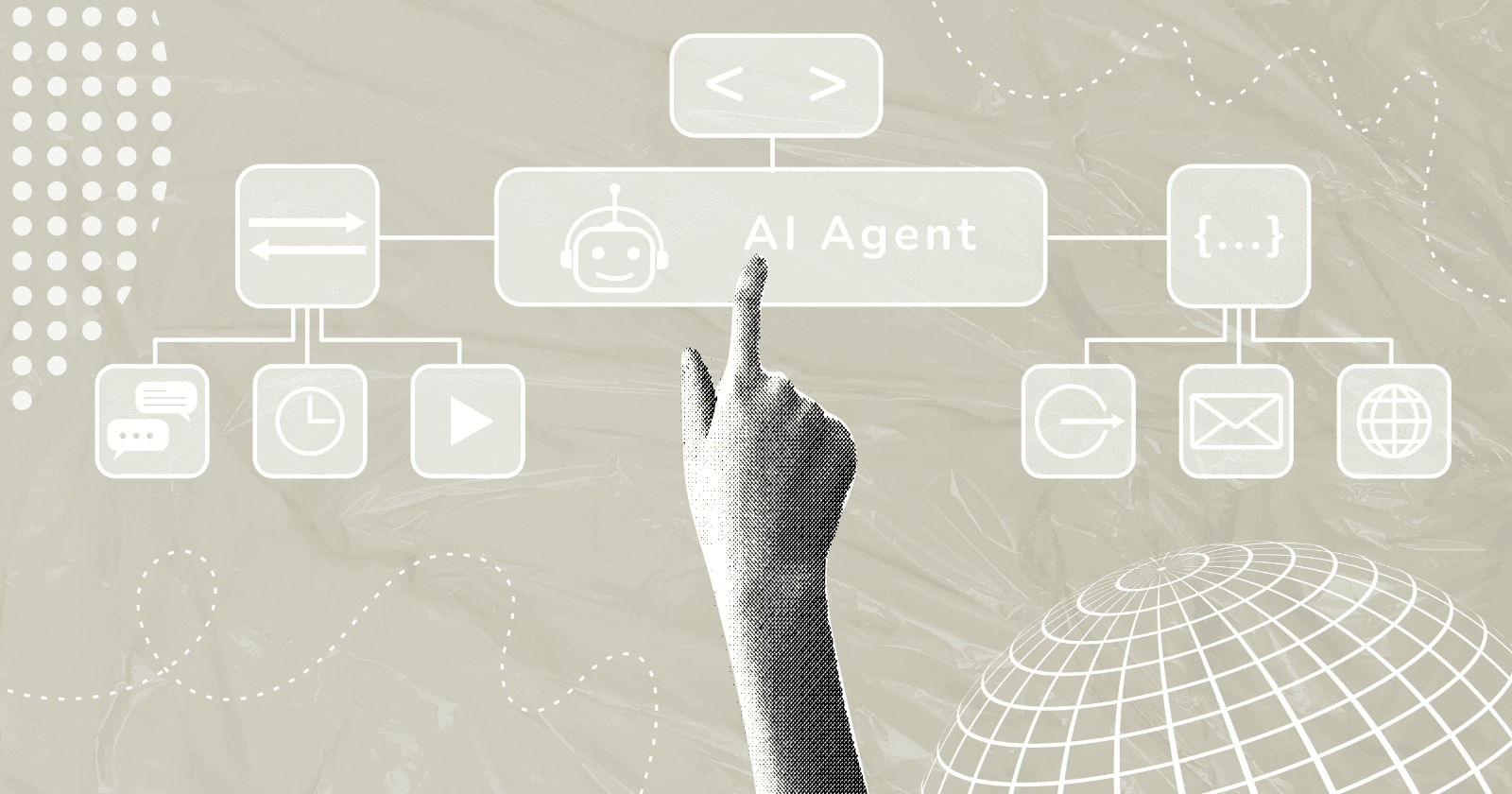
UCP supports REST, MCP bindings, and A2A transport, which means different kinds of agents can talk to the same backend without everyone inventing a separate integration pattern. Google’s under-the-hood explanation says UCP is built to work with existing retail infrastructure and is compatible with Agent Payments Protocol, or AP2. Google’s broader A2A work positions Agent2Agent as an open protocol for interoperability, and AP2 builds on that for secure agent-led payments across platforms.
That combination is what makes UCP feel less like a single product feature and more like a stack component. REST helps keep it accessible to standard web systems. MCP bindings make it easier to plug into tool-using agents. A2A gives agents a way to coordinate. AP2 keeps the payment path aligned with Google’s larger agent-payment direction. If you are auditing a site now, the question is not whether it has a checkout button. The question is whether its commerce logic can be expressed in a way multiple agent systems can reliably use.
The rollout already shows Google means to ship this
Google said UCP-powered checkout was already rolling out in the United States for Etsy and Wayfair, with Shopify, Target, and Walmart coming soon. That detail matters because it shows UCP is not staying in a lab. It is being introduced through major merchants and platforms that already have serious traffic, catalog complexity, and operational scale.
Google also said the protocol was co-developed with industry partners, which is the sort of detail agencies should not ignore. These systems do not become useful because a platform publishes a spec. They become useful because major merchants can actually adopt them without ripping out their entire commerce stack. UCP’s pitch is that it can sit on top of existing infrastructure and still give agents a cleaner, more reliable way to transact.
- Map every action a customer can take, not just every page they can visit.
- Separate content from state so sessions can persist cleanly.
- Define what agents are allowed to do, and what they are not.
- Make sure sandbox testing mirrors production behavior closely enough to catch failures early.
- Treat checkout, order status, and support as one connected workflow, not disconnected modules.
For agencies, that means the early work is not speculative. It is practical:
Why this goes beyond retail SEO
This is where the conversation leaves ecommerce and lands in broader site strategy. If AI assistants, agentic browsers, and future shopping or booking flows become meaningful discovery layers, then website architecture has to be built for more than ranking and rendering. Sites will need machine-readable actions, stable state handling, and explicit rules for agent behavior. That changes the work for SEO and technical teams, because the goal shifts from attracting a visit to enabling a task.
Google’s Chrome team signaled the same direction with WebMCP, an early-preview browser standard published on February 10, 2026. Its goal is to let websites expose structured tools so AI agents can act with more speed, reliability, and precision instead of guessing through screenshots and clicks. Taken together with UCP, it suggests a web where the interface an agent uses may be as important as the interface a person sees.
That is why UCP should matter to agencies even outside retail. It is a blueprint for how future sites may need to identify themselves, expose actions, validate transactions, and support post-purchase or post-task workflows. The sites that prepare now will not just be easier to buy from. They will be easier for agents to trust, and in the next phase of discovery, trust is the new conversion layer.
Know something we missed? Have a correction or additional information?
Submit a Tip