How Agencies Can Scale Link Building Without Losing Strategy Control
Agencies outsourcing link building without owning the strategy are renting someone else's risk. A vendor QA system built around quality tiers and shared SOPs changes the equation.
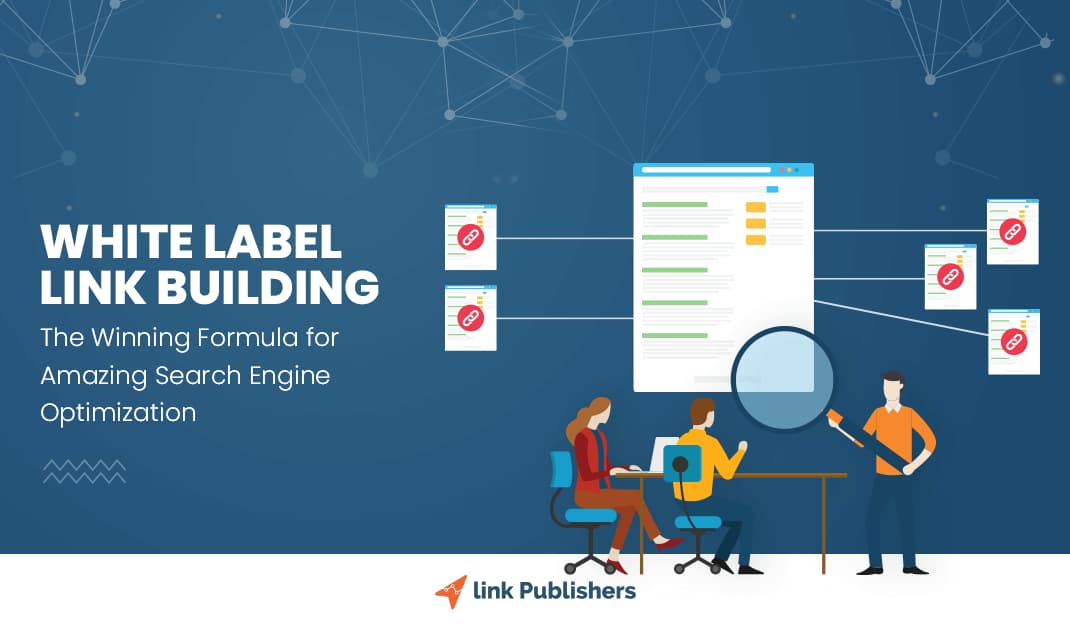
Volume is a trap. The agencies that have scaled link building most profitably aren't the ones placing the most links per month; they're the ones who figured out exactly where their responsibility ends and their partner's begins, and built an operating system around that line.
That distinction sits at the center of OutreachFrog's operational manual, "White Label Link Building Services: A Playbook for Agencies in 2026." The document reframes white-label link building not as a commodity procurement exercise but as an integrated operating system, one that requires agencies to be deliberate about strategy ownership even as they delegate the labor-intensive work of prospecting, outreach, and placement.
Strategy Belongs to the Agency. Execution Belongs to the Partner.
The playbook's core thesis is disarmingly simple: agencies should retain strategy, partners should handle execution. In practice, that means agencies own target page selection, intent mapping, anchor text rules, velocity planning, and the narrative framing of results for clients. Partners own prospecting pipelines, outreach sequences, content production, placement logistics, and delivery documentation.
What sounds like a clean division gets blurry fast when agencies treat white-label link building as a fulfillment subscription rather than a managed service. The playbook specifically warns against "we got the link" thinking, the tendency to accept a placement as a win based on delivery alone. Modern algorithms don't reward raw link counts; they reward editorial relevance, publisher quality, and placement defensibility. An agency that hands strategy to a vendor isn't outsourcing work; it's outsourcing accountability.
The Quality Control Checklist Vendors Won't Always Volunteer
Vetting a white-label link building partner requires the same rigor you'd apply to any operational supplier. OutreachFrog recommends a procurement-style approach: request sample placements and reports before committing, check references from agencies working in comparable client verticals, and scrutinize outreach methods for anything that signals network dependency or paid placement without proper rel attribute compliance.
Reproducibility is the test most agencies skip. It's not enough to see one impressive placement; the question is whether a partner can replicate that quality across multiple targets, different industries, and varying domain authority ranges. Test for it explicitly.
Once a partner is onboarded, QA doesn't stop. A defensible ongoing process includes:
- Random audits of live placements to verify they match agreed standards
- Anchor text verification against the agency's approved rules for each campaign
- Content review for originality and the presence of credible citations, not just word count
- Downstream impact measurement: SERP movement, referral traffic, and assisted conversions, not raw placement totals
That last point matters commercially as much as it does editorially. Clients who can see ranking movement and traffic attribution alongside a delivery log are far more likely to renew than clients who receive a monthly spreadsheet of URLs.
Pricing White-Label Link Building to Protect Margins
The commodity framing of link building, priced per link with no quality tier, is what compresses agency margins and invites the kind of vendor shortcuts that create reputational exposure. OutreachFrog's playbook lays out alternative commercial structures that allow agencies to position the service as editorial-first authority building instead.
Three pricing levers are worth understanding:
1. Placement quality tiers: Charge clients based on the publisher quality band rather than a flat per-link rate. A placement on a high-authority, editorially strict domain commands a different price than a mid-tier niche blog, and your pricing should reflect that distinction.
2. Outcome-based pricing: Structure fees around assisted ranking improvements rather than placements delivered. This aligns agency incentives with client results and justifies premium pricing to clients who understand what they're buying.
3. Blended retainer plus performance: A base retainer covers operational overhead and consistent output; a performance component rewards demonstrable SERP lift. This model smooths revenue while giving clients a stake in results.
According to the playbook's example commercial models, resellers can capture 30 to 60 percent gross margin depending on partner costs and how aggressively they tier their value proposition. The upper end of that range is available to agencies that have built quality assurance into their delivery stack and can articulate why their placements hold up longer than a competitor's cheaper alternative.
Reputational Risk Is the Metric Most Agencies Aren't Tracking
Growth through white-label partnerships is genuinely achievable without adding headcount, but it introduces a category of risk that doesn't appear on a placement report: brand exposure. If a partner places links on manipulative networks, buys placements without disclosure, or produces thin content that violates Google's spam enforcement standards, the agency's client relationships absorb the fallout, not the vendor's.
The playbook frames reputational risk mitigation as the underlying purpose of every QA practice it recommends. Random audits, content reviews, and anchor text checks aren't bureaucratic overhead; they're the mechanisms that keep a vendor relationship from becoming a liability.
The agencies that navigate this most effectively treat partners as an extension of their editorial team rather than an external supplier. That means shared standard operating procedures, joint KPI dashboards that both sides review, and integrated client communications so the agency controls the narrative around what results mean and why they were achieved. When a partner understands your client's brand standards and not just their target URLs, the output is qualitatively different.
Building a Service That Renews Itself
The operational model OutreachFrog describes isn't just about scaling placements; it's about building a service architecture that clients want to stay inside. Defensible, renewable link building programs share a few structural features: transparent QA documentation that agencies can share with clients, pricing that reflects placement quality rather than volume, and partner relationships governed by contracts that specify outreach methods, rel attribute standards, and reporting obligations.
Agencies that get this right aren't selling links. They're selling a managed authority-building function with predictable inputs, measurable outputs, and clear accountability at every stage. In a search environment where Google's spam enforcement has made low-quality link profiles genuinely costly to clean up, that positioning isn't a premium upsell; it's the baseline expectation sophisticated clients are already arriving with.
This article was produced by Prism’s automated news system from verified source data, official records, and press releases, then run through automated quality and moderation checks before publishing. The system is built and supervised by the people who set the standards it runs under. Read our full AI policy.
Did this article answer your question?