SEO roles split as Google’s AI search reshapes visibility strategy
SEO is splitting into two jobs: classic search and AI visibility. Agencies that staff both will be better positioned as Google turns AI answers into the new discovery layer.
The split is already taking shape
The smartest agency org charts are starting to treat SEO as two different jobs. One side still owns technical fundamentals, content, links, and classic rankings. The other side is emerging around AI visibility, with a mandate to win mentions, citations, and inclusion inside Google’s AI-driven search experiences and other LLM surfaces.
That split is not theory. It is a response to Google’s own product roadmap, and it is already changing what clients expect, what agencies package, and who gets hired.
Google has changed the ground under search
Google rolled out AI Overviews broadly in the U.S. in May 2024, then scaled them to 1.5 billion monthly users across 200 countries and territories by May 2025. Google also said those summaries were driving more than 10% higher usage on the kinds of queries where they appear in its biggest markets, including the U.S. and India. Add AI Mode in Search, launched in the U.S. in 2025 after testing in Labs, and the message is clear: AI is no longer a side feature hanging off search. It is becoming part of the core experience.
That matters because the user journey is changing with it. Pew Research Center found that in March 2025, 58% of U.S. adults in its panel encountered at least one Google search with an AI-generated summary. Pew also found people were less likely to click links when those summaries appeared, and clicks on cited sources were especially rare. Google has disputed the methodology of some click-impact studies, but it has also emphasized user satisfaction and longer, more complex queries in AI Overviews. For agencies that still sell traffic alone, that is the pressure point.
Why the old SEO team is not enough anymore
The classic SEO function is still necessary. You still need crawl health, indexation control, internal linking, content planning, and SERP analysis. But AI search changes the unit of success. A page can rank and still be skipped by the answer layer, while a weaker-ranking page with clear structure and entity signals can get surfaced, summarized, or cited.
That is why the new role is coalescing around AI Visibility or AISEO. The job is not just to rank a URL. It is to make a brand legible to search systems that synthesize answers from entities, structured data, and source credibility. In practice, that means schema, knowledge graph thinking, citation strategy, and monitoring how brands show up across LLM-driven discovery.
What the two-track org chart looks like
On the traditional SEO side, the work does not disappear. It becomes more precise. This team should still own:
- Technical audits, including crawlability, canonicals, redirects, and indexation
- Content briefs built around search demand and intent
- Internal linking, topical clustering, and page architecture
- Link acquisition and digital PR support
- Reporting that still tracks rankings, traffic, and conversions
The AI Visibility side is different. It should own the signals that help machines understand who a brand is, what it does, and why it should be cited. That means:
- Structured data implementation and validation
- Entity mapping across people, products, services, and locations
- Knowledge base hygiene and content consistency
- Citation strategy across reputable sources and surfaces
- Monitoring prompt universes and LLM-generated visibility
- Measurement across AI search engines and answer surfaces
Google Search Central says structured data helps Google understand content and entities, including information about people, books, or companies included in markup. Google’s AI features documentation also tells site owners how to approach inclusion in AI features and how to measure performance. The catch is important: schema can make a page eligible for rich results or AI-related features, but it does not guarantee inclusion. That is the line agencies need to teach clients.
Hiring is already moving in this direction
Search Engine Land has documented a real job market forming around this shift. Recent titles have included Manager, SEO & AI Enablement at Vans, Head of AI Discovery & SEO at The Washington Post, and Digital Visibility Manager, Search and AI Optimization at OhioHealth. Those titles are revealing because they combine the old search discipline with a new discovery layer that stretches beyond the website.
Salary matters too. AI Visibility Lead roles are showing up in the $120,000 to $160,000 range, which is enough to force a decision for agency owners. Either you build this capability in-house and compete for that talent, or you continue selling a traditional SEO package while clients ask why their brand is missing from AI answers. The firms that move first get the compounding advantage, because they will be learning on live accounts while competitors are still trying to define the job.
How to package the work without confusing clients
The cleanest way to sell this is not as a buzzword-laced AI add-on. Treat it as a second service line with a different output. Traditional SEO still sells growth in organic traffic and conversion efficiency. AI Visibility sells inclusion, mention quality, citation coverage, and consistency across answer systems.
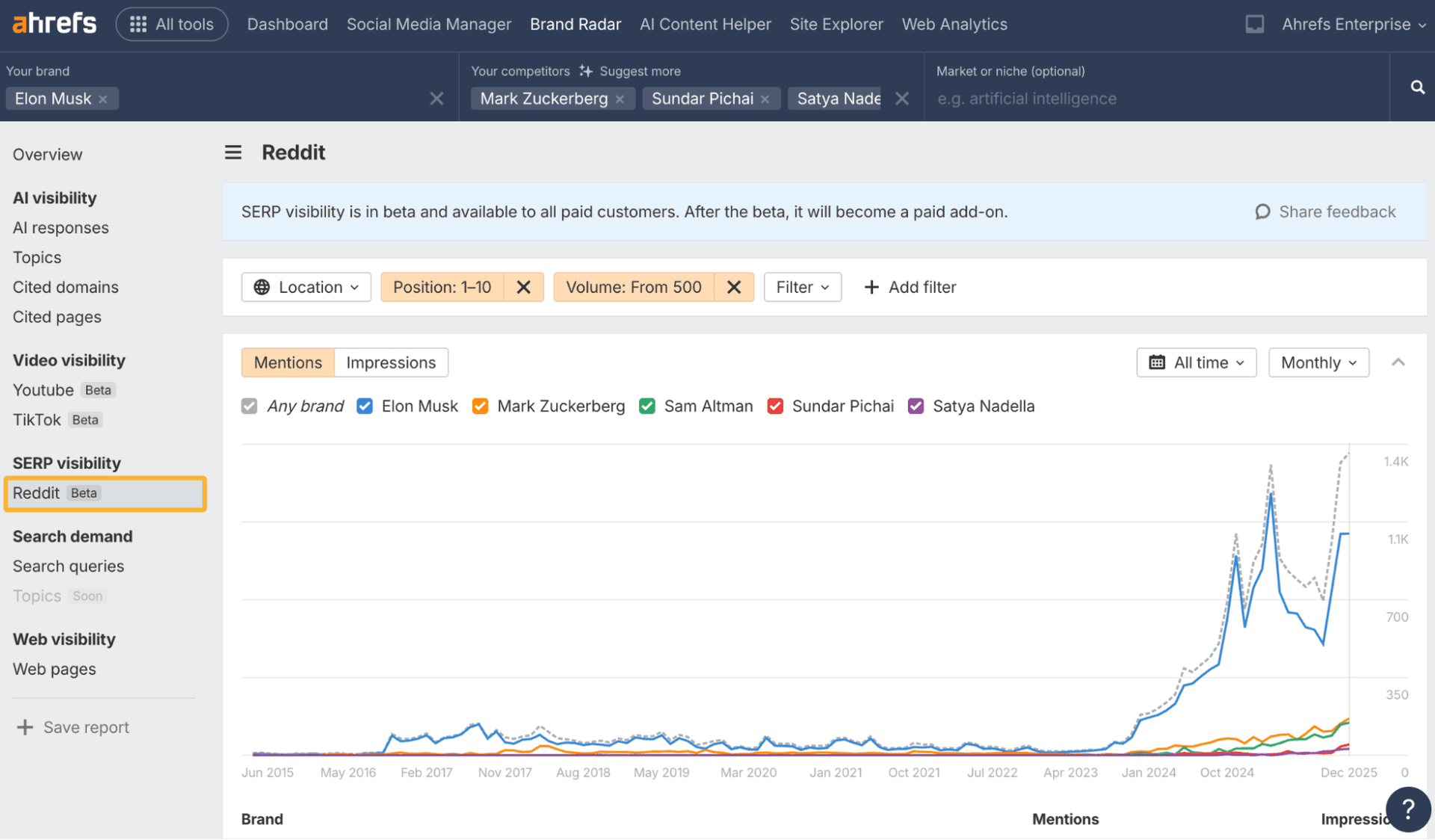
That means your monthly reporting needs to split as well. For classic SEO, keep the dashboards clients already understand. For AI Visibility, add measures that show whether the brand appears in summaries, whether cited sources are accurate, whether key entities are connected correctly, and where gaps show up across AI engines. Semrush’s AI Visibility Index is a good sign that the market is moving toward standardized measurement, and its awards and tooling show that major vendors now treat LLM visibility as a competitive channel. Ahrefs has framed the change bluntly: the goal is shifting from ranking high to being mentioned and recommended by AI assistants.
What agencies should train on in the next 24 months
If you are building the team now, the training plan should be practical, not mystical. Focus on the skills that will actually change delivery.
- Schema strategy beyond breadcrumbs and FAQ markup, especially for entities, organizations, and products
- Entity consistency across site copy, bios, author pages, and external profiles
- How to read Google’s AI features guidance and turn it into implementation checklists
- LLM visibility audits, including prompt testing and citation tracking
- Content systems that keep facts, names, and relationships consistent across pages
- Client education, so they understand that eligibility is not the same as guaranteed inclusion
The big mistake is assuming AI search is just SEO with prettier screenshots. It is closer to a new layer of discovery, one that rewards brands with clean structure, strong entity signals, and a consistent presence wherever answer systems pull context. Agencies that separate the work now will be able to hire for it, price it cleanly, and train teams without blurring the basics.
The next 24 months should not be about chasing hype. They should be about building an org chart that matches the way search actually works now.
This article was produced by Prism’s automated news system from verified source data, official records, and press releases, then run through automated quality and moderation checks before publishing. The system is built and supervised by the people who set the standards it runs under. Read our full AI policy.
Did this article answer your question?