How SEO content can persuade readers as AI Overviews cut clicks
AI Overviews are shrinking clicks, so SEO has to earn action, not just visibility. The pages that convert now borrow from sales psychology, not keyword stuffing.

SEO content has a new job
The old brief was simple: rank for the query, pull the click, and let the page do the rest. That model is getting brittle as AI Overviews absorb more of the first look, and as Search Engine Land puts it, SEO content is often built to rank, not necessarily to persuade. The shift now is from traffic capture to conversion efficiency: if fewer people click, every visit has to do more work.

That is the right way to read this moment. Google rolled out AI Overviews to all U.S. users in May 2024, and the early evidence suggested a real squeeze on organic clicks. If the page used to be judged by visibility alone, it now has to prove that visibility can turn into action.

The click gap is the problem agencies have to solve
The numbers explain why this matters so much. Ahrefs analyzed 300,000 keywords and found that when an AI Overview appeared, the top-ranking page saw a 34.5% lower average clickthrough rate. Pew Research Center reported in July 2025 that users were less likely to click result links when an AI summary appeared, and they very rarely clicked the sources cited inside those summaries.
That changes the content game for agencies. Ranking still matters, but ranking without persuasion is a leaky bucket. If the search page gives people enough of an answer to delay the click, then the page has to arrive ready to close the gap between interest and intent.
The best model is not search, it is commerce psychology
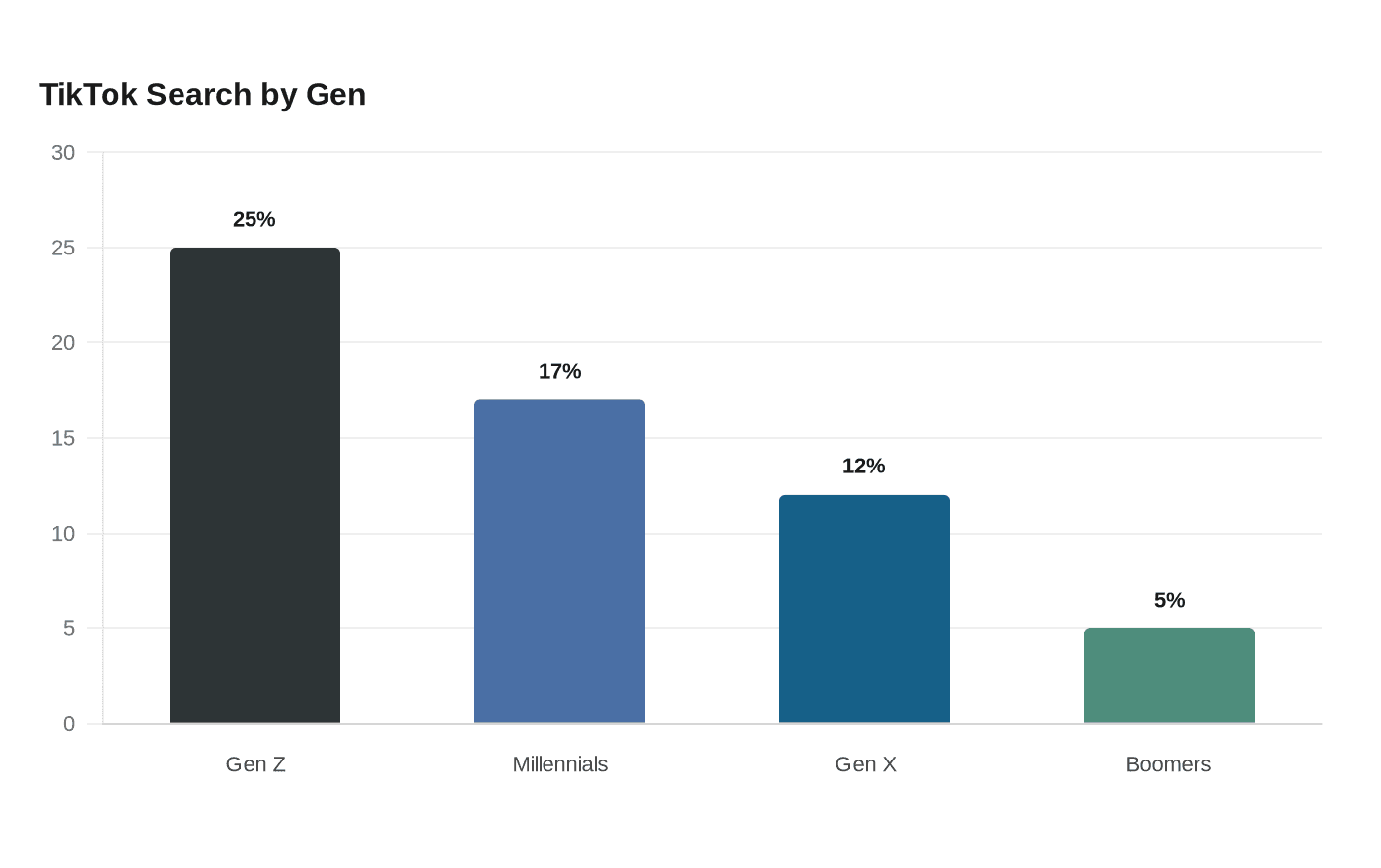
Search Engine Land’s useful move here is to borrow from TikTok Shop, where the point is not just reach but action. NIQ said in June 2024 that it released a report with TikTok on the power of TikTok Shop, underscoring how social and video platforms now shape shopping behavior. TikTok Shop’s creator page also makes the incentive structure obvious: creators can earn commission by featuring products in shoppable videos and LIVE streams.
That matters because the mechanics are familiar across channels. The highest-performing creators are not winning only because they have huge audiences. They are winning because they understand what gets a person to stop, trust, and buy. SEO content needs the same instincts now: not just relevance, but persuasion architecture.
Start with the hook, because attention is already rationed
A good hook does the job of a strong headline and a sharp first screen. Toluna’s TikTok hooks whitepaper said ads were coded across 163 variables to identify the most impactful hooks, which is a blunt reminder that creative is testable, not mystical. In practice, that means the first line of a service page, landing page, or blog post has to do more than restate the keyword.
The hook should signal a payoff, a risk, or a strong point of view. If the page is for a B2B service, lead with the outcome the buyer actually wants, not the category label. If it is for a product page, show the difference between this offer and the boring alternatives. In a search environment where AI Overviews can keep a user from ever landing, the first sentence has to earn the next one.
Write to the reasons people act, not only the questions they ask
The strongest part of this argument is the psychology underneath it: people buy emotionally and justify rationally. A page that only satisfies informational intent may leave the emotional trigger untouched, which is why so many “helpful” pages generate impressions but weak conversion. The point is not to manipulate. The point is to align the page with the motive already sitting behind the search.
- Safety and certainty, especially on high-consideration services
- Status and identity, when the buyer wants to feel smart or early
- Convenience, when the friction of choosing is the real enemy
- Belonging and trust, when social proof matters more than features
That means folding in the classic triggers without making the copy feel like a stunt. Natural human desires still do a lot of work here:
Peer-reviewed studies from 2023 through 2025 on TikTok-related commerce back this up. They found that emotional arousal, flow experience, perceived usefulness, and influencer credibility all shape purchase intention and loyalty. Different channel, same psychology: attention is cheap only until the buyer has to make a decision.
Turn those triggers into page structure
This is where agencies can get concrete. A service page should not just list capabilities. It should open with a promise, prove that promise with specific outcomes, and reduce doubt with proof, process, and plain-language next steps. If the buyer is comparing three vendors, the page should make the decision easier by clarifying who the offer is for, what happens next, and why this is the safer bet.
Landing pages need the same discipline. Use one offer, one next action, and one argument. If the page tries to sell everything at once, it usually sells nothing. Content briefs should reflect that logic from the start, with a clear conversion goal, the emotional obstacle, the proof needed, and the objection that has to be removed before the form fill or inquiry.
Testing is not optional anymore
The TikTok hooks example matters because it proves what good performance teams already know: assumptions rot fast. If a team codes ads across 163 variables to isolate what works, SEO teams should be just as methodical about headlines, intros, proof points, and calls to action. The content itself becomes a series of testable decisions, not a block of prose that is handed off and forgotten.
That is especially important as the search environment keeps shifting. Search Engine Land reported in April 2026 that organic CTR on searches with AI Overviews was showing early signs of recovery, and Search Engine Journal also described rising click-through rate on Google searches with AI Overviews, breaking a year-long slide. The exact level of recovery may change, but the strategic lesson is already clear: the system is not frozen, and neither is user behavior.
What agencies should brief differently now
The practical fix is to stop briefing SEO content as if its only job is to answer a query. Every brief should now include the conversion logic alongside the keyword target. That means defining the emotion to activate, the proof to include, the objection to neutralize, and the action the page is supposed to produce.
In other words, the brief should ask for more than topical coverage. It should ask for persuasion. As AI Overviews make discovery more automated and clicks harder to win, agencies that can connect visibility to action will look far more valuable than the ones still measuring success by traffic alone.
This article was produced by Prism’s automated news system from verified source data, official records, and press releases, then run through automated quality and moderation checks before publishing. The system is built and supervised by the people who set the standards it runs under. Read our full AI policy.
Did this article answer your question?