International SEO Fails When Brands Copy U.S. Site Structures
Copying a U.S. site abroad can quietly crush conversion. The fix is to read local SERPs, use LLMs for pattern-finding, and build structure around how each market actually searches.
Why the same site structure misses the market
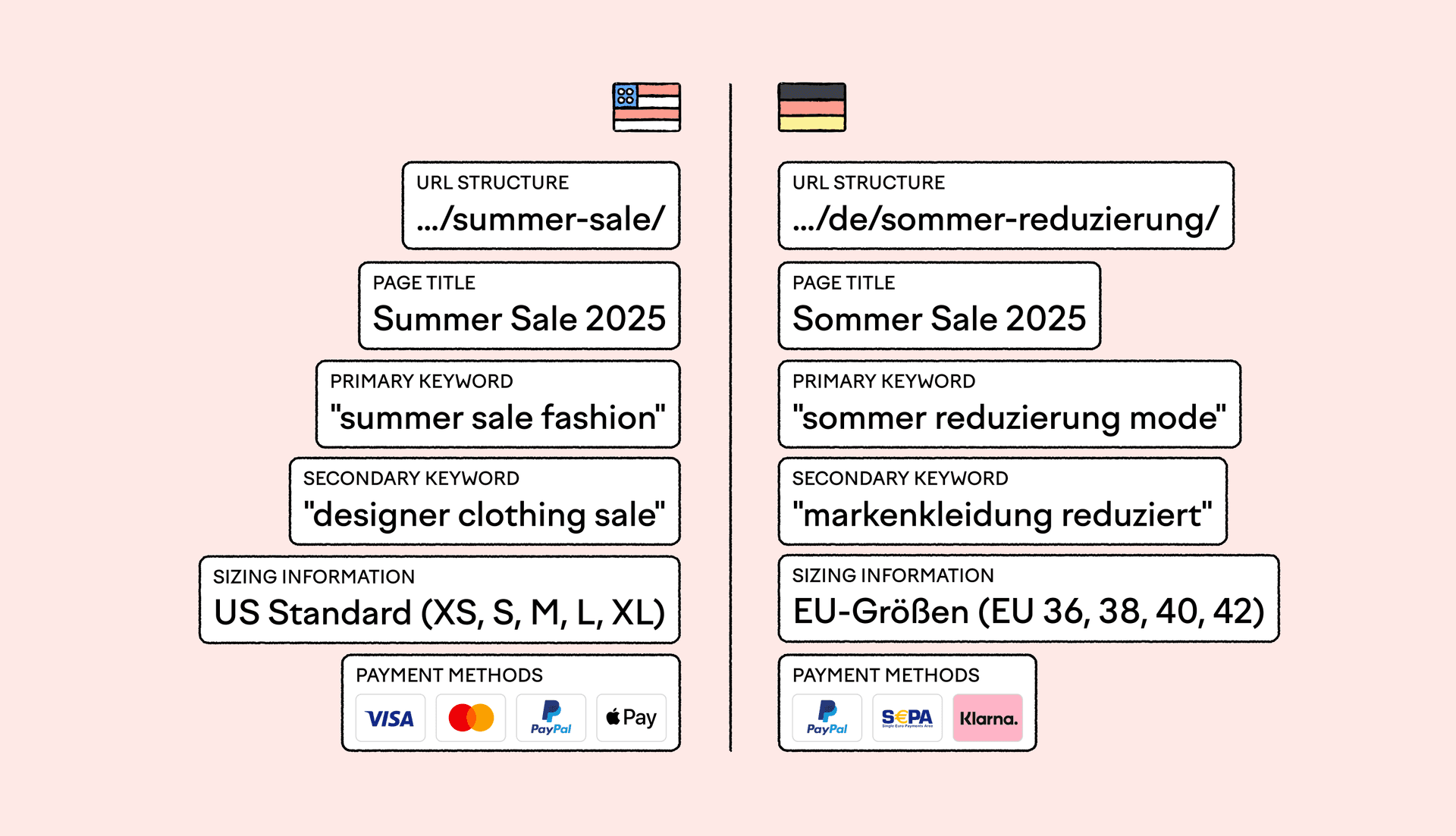
The fastest way to lose international momentum is to assume translation equals localization. Too many brands take a U.S. site, swap the language, keep the same architecture, and expect the same funnel to work everywhere. In practice, that approach often leads to stalled traction, weaker conversion rates, and pages that technically exist in a market but do not fit how people there search, compare, and decide.
That is the core warning in international SEO right now: the failure is rarely just the words on the page. It is the mismatch between the site structure and the market’s real behavior. Search Engine Land’s international SEO guidance has repeatedly pointed to execution gaps, even when the technical base looks sound, and it has flagged hreflang errors as common across international sites. The lesson for agencies is blunt but useful: localization is structural work, not a translation task with extra polish.
Read the SERP like a field report
The most interesting part of the strategy is that Google is already giving away the answer. Its search interface is localized by market, and not just in obvious ways like language. Menu order, topic filters, People Also Ask boxes, image tags, tags, and AI structures can vary by locale because Google has learned different behavior patterns from different regions.
That means the same query can reveal different expectations in the United Kingdom and Italy, even when the topic is identical. For an agency, that is not just a curiosity. It is a practical research method. The SERP becomes a live map of what users in a market want first, what they trust enough to click, and how much depth or comparison they expect before they convert.
This is where site architecture gets much smarter. If the local SERP surfaces comparison-heavy results, the market may want category pages, buying guides, or clearer navigation between options. If People Also Ask boxes and visual results dominate, the site may need stronger topical clustering, clearer internal paths, and content that answers questions earlier in the journey. The point is not to imitate Google. It is to treat Google’s local results as evidence of how a market is wired.
LLMs help agencies turn signals into strategy
Google SERPs show what is happening. LLMs help explain why it matters. Used together, they can give agencies a sharper read on market-specific intent than translation alone ever could. Google data can surface the concrete patterns, while LLMs can help organize those patterns into themes, content gaps, and likely user expectations that are easier to explain to clients.
That combination matters when you need to justify localization strategy beyond “we translated it.” If the SERP in one country favors educational content, another favors product-led comparison, and a third pushes visual browsing, an agency can use that evidence to recommend different navigation, different page depth, and different content grouping. The value is not only better SEO performance. It is also stronger internal buy-in, because the strategy is tied to observed behavior rather than taste.
For growth-minded agencies, this creates a real edge. The firm that can show a client why one market needs a different information architecture can move the conversation from translation costs to revenue logic. That is a much easier sell, especially when the alternative is a global template that looks efficient on a slide deck and underperforms in the wild.
What Google says international sites need
Google Search Central is unusually direct about multi-regional and multilingual sites. It recommends different URLs for different language versions, explicit language signals, and a clear way for users to switch languages. It also says Search tries to find pages that match the searcher’s language, and that alternate pages should be explicitly indicated when possible so Google can point users to the most appropriate version by language or region.
There is also a caution that matters for any brand using dynamic localization. Google warns that locale-adaptive pages may not be crawled, indexed, or ranked consistently for different locales. In other words, if content shifts too much based on perceived country or preferred language, the site can become harder for Search to interpret reliably.
That guidance lines up with the common failure mode agencies see in the field. A site may have the right language and the right hreflang tags on paper, but the layout still reflects a U.S. journey, the navigation still assumes U.S. category logic, and the content depth still ignores how the local market compares options. Google can help connect versions, but it cannot fix a structure that was never built for the market in the first place.
The scale of the opportunity is still enormous
The reason this matters so much is simple: Google still dominates. Statcounter reported Google at 90.04% worldwide search engine market share in April 2026, and 92.53% mobile search engine market share in the United States in March 2026. Agencies that can win in Google’s localized surfaces are still winning the main battleground.
The AI layer makes the opportunity even bigger. Google said in May 2025 that AI Overviews were available in more than 200 countries and territories and more than 40 languages. It also said those overviews drove more than 10% growth in usage of Google for the kinds of queries that show them in its biggest markets, including the United States and India. Later in 2025, Google expanded AI Mode to Hindi, Indonesian, Japanese, Korean, and Brazilian Portuguese, a sign that its AI search experiences are becoming more linguistically and regionally nuanced.
For international SEO, that changes the job description. Discovery is no longer just a set of blue links. It is a mix of localized interface behavior, AI-mediated answer surfaces, and market-specific query patterns. Agencies that ignore those layers will keep shipping translated sites that underperform.
Why the upside is real, not theoretical
The best argument for doing the hard localization work is that the upside is measurable. Ahrefs reported a case where its Spanish blog traffic grew from 5.4K visits to more than 22K visits in 18 months. In another analysis, Ahrefs said leading brands see an average lift of over 58% in organic traffic from multilingual SEO, and that multilingual search contributes more than half of total organic traffic for brands such as Amazon, Wise, and Canva.
That is the growth story agencies should care about. The win is not just more pages in more languages. It is better fit between local demand and the site’s structure, which can improve international conversion efficiency and reduce the waste that comes from launching a global clone that nobody quite knows how to use.
The agencies that will stand out are the ones treating international SEO as a blend of market research, information architecture, and SERP analysis. They will use Google’s localized results, Google Search Central’s guidance, and LLM-driven synthesis to map intent market by market. That is how a translated site becomes a localized one, and how international SEO stops failing at the exact moment it should start scaling.
This article was produced by Prism’s automated news system from verified source data, official records, and press releases, then run through automated quality and moderation checks before publishing. The system is built and supervised by the people who set the standards it runs under. Read our full AI policy.
Did this article answer your question?