Microsoft adds citation share and query insights to Bing Webmaster Tools
Microsoft’s new Bing Webmaster Tools metrics now show citation share, intent and topic clusters, giving agencies a clearer read on AI visibility. The rollout began globally in preview on June 16.
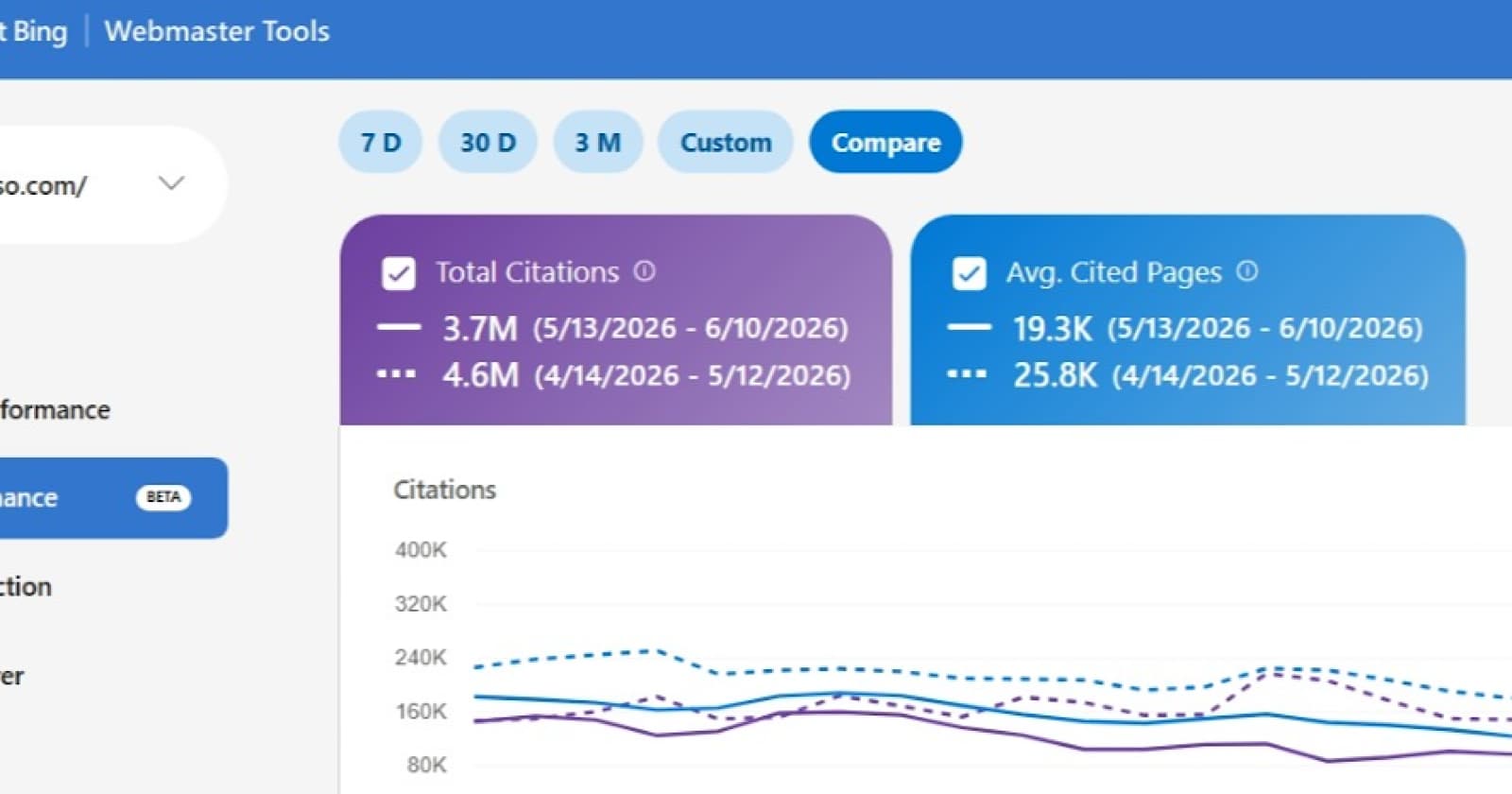
Microsoft has turned Bing Webmaster Tools into something more useful than a simple citation counter. The company’s latest AI Performance update added Citation Share, Intents, Topics and Compare, giving site owners a way to see not just whether content was cited in AI answers, but how much of the citation pie they actually captured and what kinds of queries drove that visibility.
That matters because the numbers now tell a better story. Citation Share shows a site’s share of citations for a grounding query, which makes competitive benchmarking possible instead of relying on raw counts. Intents sorts those grounding queries into categories such as Informational, Commercial, Navigational, Learn and Solve, Research, Creation and Local. Topics groups related queries into clusters, while Compare adds time-based reporting so teams can track movement across periods instead of staring at a single snapshot. Microsoft said the new tools began rolling out globally in preview on June 16, 2026.

The June release did not come out of nowhere. Microsoft launched AI Performance in public preview on February 10, 2026, and that first version already exposed total citations, average cited pages, grounding queries, page-level citation activity and visibility trends over time. In March, Microsoft added query-to-page mapping, so users could connect a grounding query to the cited URL and back again. Then on April 27, Krishna Madhavan, principal product manager at Microsoft AI and Bing, previewed the next wave at SEO Week in New York City.
For agencies, the practical shift is obvious. Bing is no longer asking teams to guess why a page showed up in AI-generated answers. The dashboard is moving toward a repeatable reporting layer that can show which intent buckets are winning, which topic clusters are gaining traction and how citation share changes relative to competitors. Microsoft Advertising put it plainly: the big win is not just counting citations, but understanding the grounding queries behind them.
That reporting lives inside a broader Microsoft push. The Bing Search Blog has described grounding as the critical layer that connects AI to current, authoritative information, and on June 2 Microsoft launched Web IQ, a suite of AI-native grounding APIs built for the agentic era. The message is hard to miss: Bing’s publisher reporting and Microsoft’s developer stack are being built as parts of the same system. For agencies trying to prove AI-search value to clients, Bing just handed them a measurement framework that Google has not matched with the same level of transparency.
This article was produced by Prism’s automated news system from verified source data, official records, and press releases, then run through automated quality and moderation checks before publishing. The system is built and supervised by the people who set the standards it runs under. Read our full AI policy.
Did this article answer your question?


