Nexal Growth 2026 Guide Helps Agencies Scale White Label SEO Operations
White label SEO hits $5.2B in 2026 as Nexal Growth's Growmatic guide gives agencies a concrete playbook for scaling without hiring.
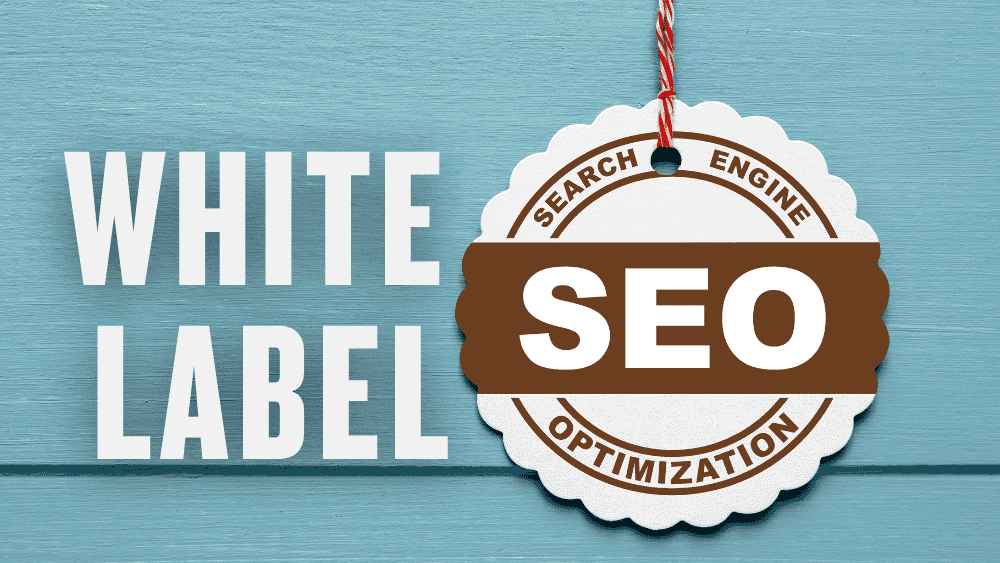
The SEO services market reached an estimated $83.98 billion in 2026, up from $74.9 billion in 2025, growing at a compound annual rate of 12.3%. That kind of growth means tens of thousands of agency clients are actively searching for SEO help right now, and the agencies that can credibly present a complete service offering are the ones capturing that demand. Nexal Growth's "White Label SEO Growmatic" is built for exactly that moment: an operationally oriented scaling guide that walks agency leaders through productizing SEO services for resale without expanding headcount.
The guide, authored by Rafay Naveed, includes a detailed launch checklist covering service packaging, pricing tiers, SLAs, and branded reporting. It is one of the more practically assembled resources available for agencies trying to move from ad-hoc fulfillment to a repeatable white label operation in 2026.
The Market Case for White Label SEO
Beyond the broader SEO services market, the white label segment specifically is projected to hit $5.2 billion by 2026 according to the SEO Industry Outlook. Digital marketing outsourcing as a broader category is on track to expand from $25.4 billion in 2024 to $74.76 billion by 2034, according to Almcorp analysis. These are not abstract projections. As Almcorp puts it, they "represent tens of thousands of agency clients actively searching for SEO help right now, many of whom will choose the first agency that can credibly present a complete SEO service offering."
The performance data supports the model's appeal. Agencies using white label SEO report 40% faster client acquisition and 25% higher retention rates, based on industry benchmarks cited from SEMrush. Separately, agencies adopting white label partnerships see average profit margins rise by up to 40%, and at least one documented case study shows an agency doubling its revenue within a year of switching to this model.
What Growmatic's Tiered Link Building Actually Does
One of the more distinctive technical components in the Nexal Growth guide is its treatment of link building through the Growmatic approach. Rather than pursuing raw backlink volume, Growmatic's tiered system builds five levels of supporting links per primary backlink, with the explicit emphasis on organic traffic over quantity. Rafay Naveed's guidance here is direct: "Look for tiered systems emphasizing relevance and organic traffic, avoiding black-hat tactics."
This matters more in 2026 than it did even two years ago. With Google's Helpful Content Update emphasizing user-first experiences, poor SEO can tank rankings overnight. A link-building strategy that prioritizes signal quality and organic relevance through a multi-tiered structure is more aligned with where Google's algorithmic direction is heading than approaches that chase link counts. SUSO Digital is mentioned in the guide as a provider leading with specialized services for international markets, and tools like SerpEmpire and SerpSEO are referenced as comparison points for agencies evaluating platforms.
Navigating 2026 Google Updates and AI Search
The guide directly addresses compliance concerns: white label SEO is compliant with 2026 Google updates "when focused on E-E-A-T and helpful content — top providers adapt to AI changes." That framing matters because the search landscape has shifted in ways that affect how agencies structure their deliverables.
Rafay Naveed identifies four key shifts agencies need to build around:
- AI-Powered Audits: Tools now automate SEO audits, spotting issues like duplicate content in seconds. After analyzing 100+ agency campaigns, Naveed found that integrating AI tools boosts efficiency by 50%.
- Voice and Visual Search: 25% of queries are now voice-based, and white label services need to optimize for conversational keywords accordingly.
- Sustainable Link Building: The Growmatic five-level tiered system addresses this directly, prioritizing organic traffic signals over quantity.
- Local SEO Enhancements: "SEO services near me" searches rose 15%, driving demand for geo-targeted campaigns that white label providers are well positioned to fulfill at scale.
The AI dimension extends beyond audits. Writing for Seovendor Co in March 2026, Elisa Murphy laid out the emerging challenge clearly: "PR efforts are now key, since without outside proof, your content may not show up in AI-driven search." AI assistants that can call stores or generate custom buying guides represent a new path for user interaction that bypasses traditional SERPs entirely. Murphy's conclusion: "You now have to plan for both chat and classic search, as you expect research and tips right in chat interfaces. The result is that SEO needs broader outreach, great PR, and steady change as AI search engines evolve."

Pricing, Packages, and Partnership Models
For agencies evaluating what a white label SEO engagement actually costs, Pageonepower provides the most detailed public pricing structure available. Trial services start at $299 per month. Flexible managed plans begin at $1,499 per month. Advanced programmatic SEO and AI-driven strategies start at $4,500 per month. This tiered structure is designed to let agencies match services to specific budget and client needs rather than committing to a single contract tier.
Pageonepower structures its partnerships across three models: Reseller Partners who scale agencies with turnkey fulfillment, and Referral Partners who offer SEO under their own brand. Services span website optimization, link building, local listings management, content creation, and Google Business Profile optimization. Partners receive branded reports through LaunchPad, Pageonepower's reporting platform, which integrates Google Analytics, keyword rankings, and task completion visibility, making it possible to track SEO tasks at any campaign stage.
For agencies with a SaaS or B2B client base, Embarque is positioned as an analytical white label provider that emphasizes keyword intent and content performance over surface-level metrics, making it suitable for situations where attribution precision matters.
Operations, Branding, and Integration
The mechanics of running a white label operation well require more than picking the right vendor. Almcorp's analysis of the model is clear-eyed about this: "The white label model does not remove the need for strategic thinking, client understanding, or operational discipline — it provides the execution resources that allow agencies to" scale without the proportional overhead.
The agencies that execute well, according to Almcorp, are the ones that "take ownership of the work as if it were their own, select partners based on quality and transparency rather than price alone, and invest in the account management and communication infrastructure that turns good execution into strong client retention."
On the branding side, every deliverable from a white label partner should match the agency's brand voice and style. Custom-branded reports, dashboards, and emails reinforce the agency's expertise rather than revealing the fulfillment layer. Integrating white label services into existing workflows, whether through shared project management tools, agency design guidelines, or standardized communication templates, is essential for maintaining consistency at scale.
Client transparency compounds retention. As one analysis notes, "when clients understand the process, they're more likely to appreciate your efforts and stay loyal." The metrics tell that story: one tracked campaign shows organic traffic at +16% against a +20% goal, keyword rankings at top 7 against a top 5 target, and conversions at +8% versus a +10% objective. Those numbers are close enough to demonstrate traction while identifying exactly where optimization effort should be concentrated.
Expanding Beyond Single-Channel SEO
Scaling a white label operation doesn't stop at SEO. Almcorp makes a strong case for combining white label SEO with white label PPC, content marketing, social media management, and email marketing under a unified agency brand. Agencies that offer integrated digital marketing present a more compelling value proposition than those delivering single-channel services, and the white label model applies cleanly to each discipline: select specialized partners for each service, maintain brand ownership throughout, and present integrated performance reporting that demonstrates cross-channel effects.
The Nexal Growth guide frames this correctly: white label SEO is the foundation, not the ceiling. Agencies that build the operational discipline to run a clean white label SEO program are well positioned to layer additional services on top of that infrastructure. The market is large enough, growing fast enough, and complex enough in 2026 that the agencies building systematic fulfillment capacity now are the ones that will own the client relationships worth having in two or three years.
This article was produced by Prism’s automated news system from verified source data, official records, and press releases, then run through automated quality and moderation checks before publishing. The system is built and supervised by the people who set the standards it runs under. Read our full AI policy.
Did this article answer your question?